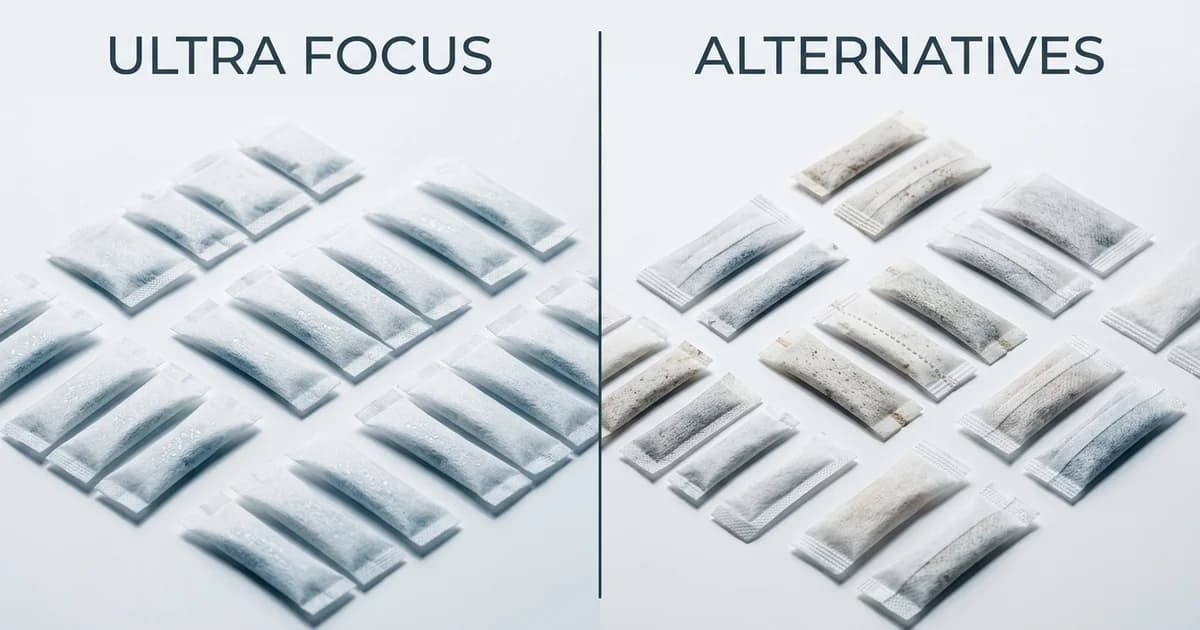
Best Nootropic Pouches in 2026: Complete Buyer's Guide
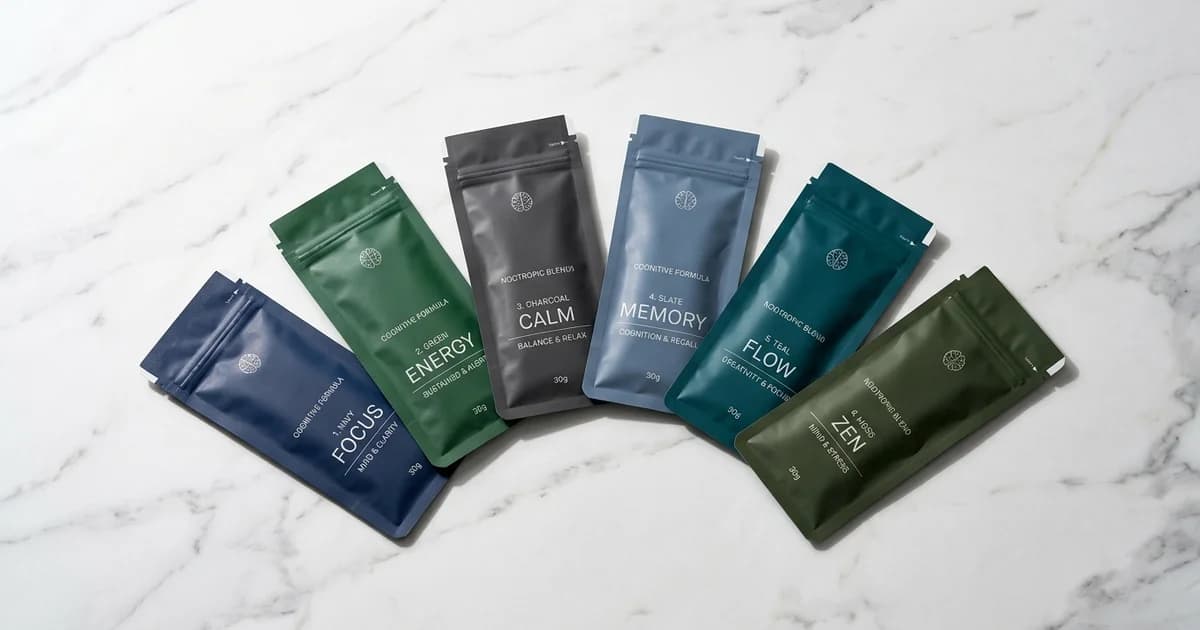
Best Nootropic Pouches in 2026: Complete Buyer's Guide
Short answer: Roon ranks first for long work blocks, with every dose printed: 80 mg caffeine, 60 mg L-theanine, 25 mg methylliberine and 5 mg theacrine, from $0.61 per pouch. Nectr Focus+ has the largest disclosed non-caffeine stack (100 mg L-theanine, 85 mg Alpha-GPC, 85 mg L-tyrosine). Ultra Focus is the caffeine-free pick, built on 100 mg paraxanthine.
Disclosure: Roon makes a competing caffeine pouch, and this page links to it. Every competitor number below comes from the brands' published labels and product pages, checked October 2026, so you can check it yourself.
Last reviewed: September 12, 2026. Prices and milligram doses checked against the live buy box. Roon starts from $9.16 per tin, as little as $0.61 per pouch, on the 12-tin subscription. There is no single-tin checkout.
The best nootropic pouches combine transparent dosing, clinically meaningful amounts, and complementary compounds, not just caffeine in a pouch. We compared seven products across ingredient quality, dose transparency, duration, tolerance design, and price per pouch. The top three: Roon (best for sustained all-day focus), Nectr Focus+ (best deep non-caffeine-dominant stack), and Ultra (best caffeine-free stimulant). A 2022 systematic review confirmed the caffeine-plus-L-theanine pairing improves attention and reduces mind-wandering, and a randomized trial in tactical personnel showed that adding methylliberine and theacrine to caffeine improved vigilance reaction time with fewer hemodynamic side effects. Match the formula to your use case: a two-ingredient pouch suits a quick 60-minute boost, while a four-compound stack supports 6 to 8 hours of sustained work.
This category has exploded over the past two years. A dozen brands now compete for your upper lip, each promising "clean focus" and "no crash." Most of them are caffeine stuffed into a pouch with a few underdosed extras sprinkled on top. The differences between top nootropic pouches come down to three things: what's inside, how much of it is there, and whether the ingredients actually complement each other.
We compared the published labels, prices and doses of seven of the most popular cognitive pouches on the market. Here's what separates the best from the rest.
Every Nootropic Pouch Label, Sorted by Caffeine Dose
This table is neutral: it is sorted by caffeine per pouch, highest first, not by our ranking. Doses are as printed on each label (mg unless noted). The price column is the lowest per-pouch price each brand lists, on subscription or in bulk.
| Product | Caffeine (mg) | Other actives (mg as printed) | Pouches/can | Lowest listed $/pouch | $ per 100 mg caffeine | Nicotine |
|---|---|---|---|---|---|---|
| Wip (200 mg) | 200 | B3, B6, B12, chromium (no mg) | 15 | $0.42 (6-pack subscription) | $0.21 | No |
| Ultra Energy | 180 | L-theanine 10, B3 10, B6 2, B12 2 mcg | 15 | $0.80 (single-can subscription) | $0.44 | No |
| Wip (100 mg) | 100 | B3, B6, B12, chromium (no mg) | 15 | $0.38 (6-pack subscription) | $0.38 | No |
| Berserker | 100 | Alpha-GPC, L-tyrosine, GABA, taurine, theobromine (no mg) | 20 | $0.35 (10-pack) | $0.35 | No |
| Nitro | 100 | Cognizin, Alpha-GPC, L-theanine, B12 (no mg) | 20 | $0.34 (9+ can subscription) | $0.34 | No |
| Mojo (100 mg line) | 100 | L-theanine, niacin (no mg) | 15 | $0.54 (subscription) | $0.54 | Not stated on product page |
| Smile+ | 100 | Smile Protection blend (no mg) | 15 | $0.57 (10-tin subscription) | $0.57 | No |
| Roon | 80 | L-theanine 60, methylliberine 25, theacrine 5 | 15 | $0.61 (12-tin subscription) | $0.76 | No |
| Alpha Fuel (Fully Loaded) | 50 | Alpha-GPC 50, L-tyrosine 50, taurine 20, guarana 20, theobromine 15 | Not published | $0.30 (200-pouch pack) | $0.59 | No |
| TRGT Energy | 50 | L-theanine 75, L-tyrosine 15 | 20 | $0.36 (10-can subscription) | $0.72 | No |
| NZE Energy | 50 | L-theanine, Alpha-GPC, L-tyrosine (no mg) | 15 | $0.37 (5-pack subscription) | $0.75 | No |
| Neutonic Focus | 50 | Cognizin citicoline 125, B5, B9, B12 | 20 | $0.29 (5-pack subscription) | $0.58 | No |
| Nectr Focus+ | 50 | L-theanine 100, Alpha-GPC 85, L-tyrosine 85, huperzine A 30 mcg | Not published | Not published ($8.00 per can, Fresh Mint 5-pack) | Not computable | No |
| Motion | 40 | Alpha-GPC, citicoline, L-theanine, rhodiola, ginseng, B12 (no mg on site) | 20 | $0.45 (5-can subscription) | $1.12 | No |
| Dialed In Daily Focus | Not stated (guarana 22) | NALT 48, citicoline 48, L-theanine 48, theobromine 29, guarana 22 | 20 | $0.24 (250-pouch bag) | Caffeine not stated | No |
| Ultra Focus | 0 | Paraxanthine 100, Alpha-GPC 30, L-theanine 10, ginseng 1, B6 2 | 15 | $0.69 (9-can subscription) | No caffeine | No |
| TRGT Focus | 0 | Alpha-GPC 55, L-theanine 35, L-tyrosine 15 | 20 | $0.36 (10-can subscription) | No caffeine | No |
| ALPHA (Fully Loaded) | 0 | Alpha-GPC 60, L-tyrosine 60, GABA 20 | Not published | $0.30 (200-pouch pack) | No caffeine | No |
| Flow | 0 | Lion's mane 300, cordyceps 150, reishi 150, theacrine 5 | 20 | $0.40 (8-can pack) | No caffeine | No |
Formula: $ per 100 mg caffeine = lowest listed price per pouch / caffeine mg per pouch x 100. Example: Roon $9.16 per tin / 15 pouches = $0.61, and $0.61 / 80 x 100 = $0.76.
Why Roon uses 80 mg instead of chasing the top of this table. A bigger dose mostly buys a higher peak. Roon's lift sits at small-coffee level; the 25 mg of methylliberine (Dynamine) is there to lengthen it. In a randomized crossover study (n=12), methylliberine took caffeine's half-life from 7.2 to 15 hours with no rise in peak, though at 100 mg methylliberine plus 150 mg caffeine, roughly 4x and 1.9x one pouch. That shows up as a 6 to 8 hour felt window. You set the dose: one pouch, two together (160 mg), or another later, up to 4 a day and 400 mg of caffeine from all sources.
Source: brand labels and product pages, prices checked Oct 2026. Ultra Focus doses come from the supplement-facts panel on Ultra's Amazon listing; takeultra.com does not print them. The original Nectr Focus is left out because nectr.energy no longer lists it.
How We Compared These Pouches
This is desk research. We read each brand's supplement-facts panel, product page and Shopify product feed in October 2026 and recorded caffeine, other actives, pouch count and every listed price. From those we calculated price per pouch and price per 100 mg of caffeine. No product was lab-tested or trialed by us for this page. Roon makes one of the products ranked here, so every competitor number comes from a public page you can check.
What Are Nootropic Pouches?
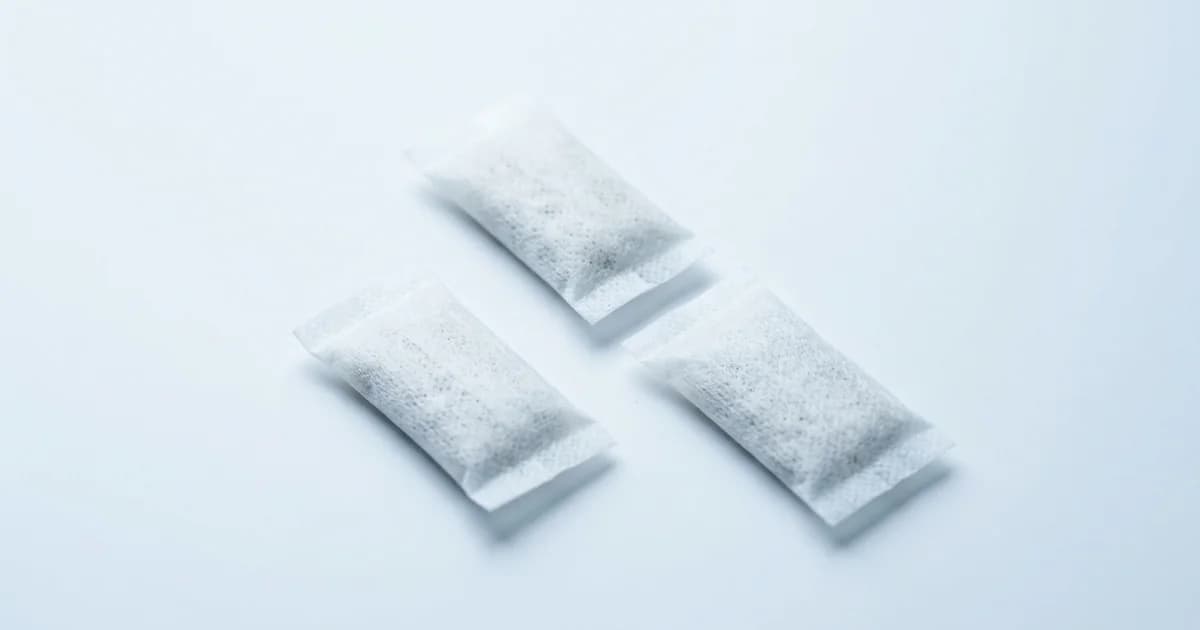
A nootropic pouch is a small, nicotine-free packet you place between lip and gum. The actives absorb through the oral mucosa instead of the stomach, so onset is typically 5 to 10 minutes. The category ranges from caffeine-only pouches wearing a nootropic label to four-compound stacks with printed milligram doses.
This page ranks the pouches. If you already know you want the Roon stack (80 mg caffeine, 60 mg L-theanine, 25 mg Dynamine®, 5 mg TeaCrine®), shop Cool Mint nootropic pouches.
Key Takeaways
- Roon Cool Mint (Best for 6-8 hr sustained focus): 80mg caffeine, 60mg L-theanine, 25mg Dynamine, 5mg TeaCrine, zero nicotine, sublingual onset 5-10 min, from $0.61 per pouch ($9.16 per tin) on subscription.
- Ingredient quality matters more than ingredient count. A focused stack of 3-4 well-dosed compounds beats a label with 10 underdosed ones. The best nootropic pouches keep their formulas tight.
- The divide between caffeine pouches vs nootropic pouches matters. If the only active doing real work is caffeine, you're buying an expensive alternative to coffee.
- Sublingual delivery is the differentiator. Cognitive pouches that use sublingual absorption skip your digestive system and hit faster, typically within 5-10 minutes.
- Tolerance is the hidden problem. Most pouches rely on compounds your body adapts to within weeks, meaning you need more over time to get the same effect. An 8-week study (n=60) found zero habituation with theacrine at doses up to 300mg/day.
| Brand | Best For | Caffeine (mg) | Key Actives | Pouches/Can | Price/Pouch (One-Time) | Nicotine-Free |
|---|---|---|---|---|---|---|
| Roon | Sustained all-day focus (6-8 hrs) | 80 | L-Theanine (60mg), Dynamine (25mg), TeaCrine (5mg) | 15 | from $0.61 (subscription) | ✅ |
| Nectr Focus+ | Deepest multi-ingredient stack | 50 | L-Theanine (100mg), Alpha-GPC (85mg), L-Tyrosine (85mg), Huperzine A (30mcg) | Not published | $8.00-$9.00 per can (5-pack) | ✅ |
| Ultra Focus | Caffeine-free stimulant | 0 (100mg paraxanthine) | Alpha-GPC (30mg), L-Theanine (10mg), Ginseng (1mg), B6, B12 | 15 | ~$1.07 | ✅ |
| Nectr Focus | Quick mild boost (no longer listed by Nectr) | 30 | Cognizin Citicoline (62.5mg) | 15 | No current price | ✅ |
| NZE Energy | Budget caffeinated nootropic | 50 | Alpha-GPC, L-Theanine, L-Tyrosine (mg not published) | 15 | ~$0.47 | ✅ |
| Dialed In | Most pouches per can | Not stated (22mg guarana) | Citicoline (48mg), L-Theanine (48mg), NALT (48mg), Theobromine (29mg) | 20 | ~$0.30 | ✅ |
| Alpha (Fully Loaded) | Stim-free evening use | 0 | Alpha-GPC (60mg), L-Tyrosine (60mg), GABA (20mg) | Not published | $5.29 per can | ✅ |
How Did We Rank the Best Nootropic Pouches?
Every brand claims clinical backing. Few deliver on it. We evaluated each product across five criteria, weighted toward the factors that matter over weeks of daily use, not just a single session:
- Ingredient transparency: Are doses listed per pouch, or hidden behind a proprietary blend?
- Active ingredient quality: Are the nootropics research-backed at the doses provided?
- Stimulant balance: Does the formula manage energy without jitters or a crash?
- Duration and tolerance: How long does the cognitive effect last, and does it hold up after 30+ days of daily use?
- Value: Price per pouch relative to what you're getting.
Prices across the category range from about $0.24 per pouch (Dialed In's 250-pouch bag) to $1.67 (a single Smile+ tin). Roon starts from $9.16 per tin, as little as $0.61 per pouch, on the 12-tin subscription. Roon sits in the upper half of the category on price, so the question is whether the formula justifies the price. The answer depends on your use case.
Nootropic Pouches Ranked: The 2026 Comparison
Here's how each brand performed across our five criteria, broken down with real numbers.
#1. Roon, Best for Sustained All-Day Focus
Verdict: Best overall for people who need 6-8 hours of consistent focus from a single pouch and use daily without tolerance buildup.
Roon runs a four-compound sublingual stack: 80mg of caffeine, 60mg L-theanine, 25mg methylliberine (Dynamine), and 5mg theacrine (TeaCrine). The active ingredients absorb through the tissue under your lip directly into your bloodstream. Among the seven pouches whose published labels we compared, Roon's formula is the most deliberately engineered for duration and daily repeatability.
The caffeine dose is comparable to a standard cup of coffee at 80mg. But caffeine alone isn't the point. It acts as a base, while L-theanine smooths out the stimulant curve and promotes calm alertness. A 2022 systematic review of 11 randomized controlled trials concluded this pairing improves attention and task switching, with measurable reductions in mind-wandering. Theacrine and methylliberine are the less common additions, and they're the reason this formula stands apart. Both compounds activate adenosine and dopamine pathways similar to caffeine but without building the same tolerance over time. A 2016 study (n=60, 8 weeks, up to 300mg/day) found no evidence of habituation with theacrine, a stark contrast to caffeine's well-documented tachyphylactic response. The result is a 6-8 hour window of sustained focus that holds up with daily use.
The honest limitation: Roon sits in the upper half of this list on price, from $0.61 per pouch on the 12-tin subscription; Ultra Focus ($1.07 one-time) and a single Smile+ tin ($1.67) cost more per pouch. If you only need 30-60 minutes of focus and don't care about tolerance, cheaper options exist. The Cool Mint flavor is the only option, which limits variety. And 80mg of caffeine, while moderate, is not zero; if you're fully caffeine-averse, Ultra or Alpha are better picks.
No nicotine. No sugar. No crash. That's the pitch, and the printed doses are there to check it against.
#2. Nectr Focus+, Best Deep Multi-Ingredient Stack
Verdict: Best non-Roon formula for people who want the widest nootropic coverage per pouch at a lower price point.
Nectr offers multiple pouch lines: Energy (50mg caffeine), Zero (flavor only, no actives), and Focus+, the flagship nootropic product. The older Focus line (30mg caffeine plus 62.5mg Cognizin Citicoline) is no longer listed on nectr.energy as of October 2026. Focus+ packs 50mg caffeine, 100mg L-theanine, 85mg Alpha-GPC, 85mg L-tyrosine, and 30mcg Huperzine A per pouch, totaling 320mg+ of active ingredients. For any Roon vs Nectr comparison, Focus+ is the one worth discussing.
This is the closest formula rival to Roon in this roundup. The ingredient list is genuinely well dosed, with L-theanine at 100mg (higher than Roon's 60mg) and meaningful amounts of Alpha-GPC and L-tyrosine for choline and dopamine support. Nectr Focus+ costs $8.99 a can in Fresh Mint ($11.99 in Mango, Wintergreen and Watermelon), or $8.00 a can in the Fresh Mint 5-pack ($39.99). A first subscription order takes 35% off, then 25% off reorders. Nectr's product page does not print the pouch count, so a per-pouch price is not published.
The gap versus Roon: Focus+ runs lower caffeine (50mg vs 80mg) and lacks methylliberine and theacrine entirely. Those two compounds are what extend Roon's window beyond 2-3 hours and resist tolerance over weeks of daily use. Nectr Focus+ leans on compounds your body still adapts to. For a single work session, Focus+ is excellent and cheaper. For daily use over months, the tolerance question matters.
Nectr also has the best retail presence in the category, listed by its store locator at Walmart, Target and Royal Farms. If you want to grab a nootropic pouch in a store rather than waiting for shipping, Nectr wins by default.
#3. Ultra Focus, Best Caffeine-Free Stimulant
Verdict: Best pick for caffeine-sensitive users who still want a stimulant effect, or anyone trying to quit caffeine entirely.
Ultra raised $11M in 2025 to scale its nicotine-free pouch line. Their formula centers on Enfinity paraxanthine at 100mg, a caffeine metabolite that delivers focus with a shorter half-life and fewer jittery side effects than caffeine itself. Ultra upgraded from 75mg to 100mg paraxanthine per pouch in January 2026.
The supporting cast includes Alpha-GPC, L-theanine, Panax Ginseng, and B vitamins. Ultra's paraxanthine-based formula sidesteps caffeine entirely, which appeals to people who are sensitive to it or trying to quit. Among top nootropic pouches, Ultra's approach is the most unconventional.
The trade-off: Paraxanthine is still relatively new as a standalone supplement ingredient, with less long-term human data than caffeine or L-theanine. Effects last roughly 1-2 hours per pouch, and Ultra recommends using 3-4 pouches per day, which means a full afternoon costs $3-4 in pouches. Pricing runs $48.00 for 3 cans one-time ($1.07 per pouch). The recurring 3-can subscription is $36.00 ($0.80 per pouch) and the 9-can plan is $10.40 per can ($0.69 per pouch); $31.20 is the discounted first 3-can box only. Ultra's own site prints no doses for the supporting ingredients, but the supplement-facts panel on its Amazon listing shows 30mg Alpha-GPC, 10mg L-theanine and 1mg ginseng extract. For comparison, Roon discloses every dose and holds a 6-8 hour window from a single pouch.
#4. Nectr Focus, Best for a Quick Mild Boost
Status, October 2026: nectr.energy now lists only Focus+, Energy and Zero pouches, so the original Focus is no longer sold there. It keeps its #4 slot here for readers who still find it in stock; Nectr Focus+ (#2) is its current replacement.
Verdict: Best two-ingredient pouch for people who want a clean, simple 30-60 minute cognitive lift without heavy stimulation.
Nectr's original Focus line pairs 30mg caffeine with 62.5mg of Cognizin Citicoline. Cognizin is a patented, clinically studied form of citicoline that supports brain energy metabolism and attention. The 30mg caffeine dose keeps things mild, roughly a third of a standard coffee.
The limitation: this is a two-ingredient formula. Caffeine plus citicoline gives you a short-to-medium window of alertness, but there's nothing in the stack to extend duration or manage tolerance. Good for a quick boost, but not among the best nootropic pouches for a long afternoon. Nectr no longer lists it, so there is no current price to check; Focus+ is what Nectr's site and store locator now carry.
#5. NZE Energy, Best Budget Caffeinated Nootropic
Verdict: Best value per pouch among caffeinated pouches that name nootropic actives, though NZE does not print their doses.
NZE has evolved since its early days of limited disclosure. The Energy line lists 50mg caffeine per pouch and names Alpha-GPC, L-theanine and L-tyrosine without printing their milligrams. NZE also offers a separate caffeine-free Focus line that names the same three actives, also without doses. Pricing runs about $34.99 per 5-pack (75 pouches, ~$0.47 per pouch), making it one of the cheapest options in the category.
The downside: NZE does not print its nootropic doses, so you cannot check them against the levels used in clinical research for Alpha-GPC (300-600mg in studies) and L-tyrosine (500-2,000mg in studies). The ingredients are legitimate, but the amounts are constrained by the pouch format and price point. NZE is a solid budget entry for light daily use, not a performance stack for deep work.
#6. Dialed In, Best Pouch Count per Can
Verdict: Best pick if you want the most pouches per dollar and don't need a stated caffeine figure.
Dialed In takes a stimulant-light approach. Their stack includes Citicoline, L-theanine, N-Acetyl L-Tyrosine (NALT), Theobromine, and Guarana. The caffeine content comes only from the guarana (22mg of guarana per pouch; Dialed In notes guarana weight is not the same as caffeine content), which means it's relatively low. Cans contain 20 pouches at about $5.95 per can (~$0.30 per pouch), the best pouch count and among the lowest prices in this roundup. Stacking low-key stimulants with dopaminergic support is close to the logic behind building a dopamine menu for focus, which we cover separately.
NALT supports dopamine production under stress, theobromine provides a gentler stimulant effect than caffeine, and citicoline handles the cognitive sharpness piece. The brand also offers a nootropic gum line.
The downside: the renamed Daily Focus pouch now prints its nootropic doses (48mg N-acetyl L-tyrosine, 48mg citicoline, 48mg L-theanine, 29mg theobromine, 22mg guarana), but not its caffeine. If you want to know your stimulant dose, that missing number is the gap that keeps it from ranking higher. By contrast, Roon publishes every dose: 80mg caffeine, 60mg L-theanine, 25mg methylliberine (Dynamine), and 5mg theacrine (TeaCrine) per pouch.
#7. Alpha (Fully Loaded), Best for Stim-Free Evening Use
Verdict: Best caffeine-free, stimulant-free pouch for people who want neurotransmitter precursor support without any stimulant at all.
Alpha pouches from Fully Loaded contain 60mg Alpha-GPC, 60mg L-Tyrosine, and 20mg GABA. No caffeine and no stimulants in this base line. Worth knowing before you buy: Fully Loaded also sells ALPHA Fuel, a different product under a similar name, which does contain 50mg caffeine plus guarana and theobromine. Check the tin says ALPHA, not ALPHA Fuel.
The concept is interesting: cognitive pouches designed purely around neurotransmitter precursors and calming agents. GABA is included for stress relief, while Alpha-GPC and L-Tyrosine support acetylcholine and dopamine production respectively. Pricing is $5.29 a can, or $25.19 for a 5-pack ($5.04 per can). Fully Loaded's site does not print the pouch count, so a per-can price is the firm number.
The problem is dosing. Alpha-GPC at 60mg is well below the 300-600mg range used in most clinical studies on cognitive performance. L-Tyrosine at 60mg faces the same issue; research typically uses 500-2,000mg. These are trace amounts compared to what the science says you need for a noticeable effect. The pouch format limits how much active ingredient you can fit inside, and Alpha's formula feels constrained by that reality. Roon works within the same format constraint by choosing compounds effective at pouch-scale doses: 80mg caffeine, 60mg L-theanine, 25mg Dynamine, and 5mg TeaCrine.
Every Nootropic Pouch Brand in September 2026: Dose, Price per Pouch, and Where Sold
Every price was checked against the brand's own site on September 5, 2026. Rows for Ultra, Nectr, Alpha Fuel, Grinds, Neutonic, Mojo, Wip, Bum, Motion, TRGT, Smile+ and Nitro were re-checked in October 2026 and corrected where the brand had changed a price or label. "Doses disclosed" means the brand prints individual milligrams for every active, not just a blend total. If you want to find brands near you, the nootropic pouches near-me guide maps retail availability.
| Brand | Stimulant (mg) | Nootropics (mg) | Doses disclosed? | Pouches/can | $/can (one-time) | $/can (sub) | $/pouch (one-time / sub) | Nic-free | Where sold |
|---|---|---|---|---|---|---|---|---|---|
| Roon | Caffeine 80 | L-theanine 60, Dynamine 25, TeaCrine 5 | Y | 15 | From $9.16 (subscription; one-time 4-tin bundle available) | $9.16 | from $0.61 | Yes | takeroon.com |
| Ultra | Paraxanthine 100 | Alpha-GPC 30, L-theanine 10, ginseng 1, B6 2 (Amazon panel) | Amazon panel only | 15 | $16.00 (3-pack) | $10.40 (9-can plan) | $1.07 / $0.69 | Yes | takeultra.com, Amazon |
| NZE | Caffeine 50 | L-theanine, L-tyrosine, Alpha-GPC | N | 15 | $7.00 (5-pack) | $5.60 | $0.47 / $0.37 | Yes | nzepouches.com, Amazon, Costco |
| Nectr Focus+ | Caffeine 50 | L-theanine 100, Alpha-GPC 85, L-tyrosine 85, huperzine A 30 mcg | Y | Not published | $8.00-$9.00 (5-pack, by flavor) | 35% off first order, then 25% off | Not published | Yes | nectr.energy, Amazon |
| Alpha Fuel | Caffeine 50 | Alpha-GPC 50, L-tyrosine 50, taurine 20, guarana 20, theobromine 15 | Y | Not published | $5.29 ($5.04 in a 5-pack) | Not published | about $0.30 in the 200-pouch pack | Yes | fullyloadedchew.com, Amazon |
| Grinds Focus (Innovation Lab) | Caffeine 0 | 50 mg electrolytes; other doses not confirmed in Oct 2026 check | Partial | Not confirmed | $7.95 | Not published | Not published | Yes | getgrinds.com, Amazon |
| Neutonic | Caffeine 50 | Cognizin citicoline 125, B vitamins | Y | 20 | $7.29 | $5.78 (5-pack sub) | $0.36 / $0.29 | Yes | neutonic.com |
| Mojo (100 mg; a 50 mg line is also sold) | Caffeine 100 | L-theanine, niacin (B3) named, no mg | N | 15 | $8.99 | $8.09 | $0.60 / $0.54 | Not stated on product page | grabmojo.com, Amazon, gas stations |
| Wip | Caffeine 100 or 200 | B3, B6, B12, chromium (no mg) | N | 15 | $7.33 (3-pack, 100 mg) | $5.67 (6-pack sub, 100 mg) | $0.49 / $0.38 | Yes | wip.com, Amazon |
| Bum (Raw Nutrition), sold out Oct 2026 | Caffeine 30 | Cognizin citicoline 125 | Y | Not published | $8.99 | 15% off recurring | Not published | Not confirmed | getrawnutrition.com, Amazon |
| Rivox | Caffeine 60 | L-theanine 75, theobromine 50, B6, B12 | Y | 15 | $12.99 | $8.44 | $0.87 / $0.56 | Yes | rivoxlabs.com |
| Super Focus | Caffeine 0 | Alpha-GPC 50, L-theanine 30, lion's mane 8, cordyceps 6, reishi 6, B6, B12 | Y | ~15 | $13.32 (3-pack) | $8.99 | $0.89 / $0.73 | Yes | superbonsai.com, Amazon |
| Motion | Caffeine 40 (guarana and green coffee) | Alpha-GPC, citicoline, L-theanine, rhodiola, ginseng, B12 (no mg on site) | N (site) | 20 | $13.99 | $8.99 (5-can sub) | $0.70 / $0.45 | Yes | motionpouches.com |
| Berserker | Caffeine 100 | "155 mg of nootropics" per its Amazon listing (Alpha-GPC, L-tyrosine, GABA, taurine, theobromine) | N | 20 | $7.60 (bundle) | N/A | $0.38 | Yes | berserkerpouches.com, Amazon |
| Xendurance | Caffeine 30 | Alpha-GPC, L-theanine, L-tyrosine (50 mg per brand table) | Partial | 20 | $7.59 (5-pack sale) | N/A | $0.38 | Yes | xendurance.com |
| TRGT Focus | Caffeine 0 | Alpha-GPC 55, L-theanine 35, L-tyrosine 15 | Y | 20 | $9.99 | $7.20 (10-can sub) | $0.50 / $0.36 | Yes | taketrgt.com |
| Smile+ | Caffeine 100 | Smile Protection blend (dose not published) | Partial | 15 | $24.99 (1 tin) | $8.50 (10-tin sub) | $1.67 / $0.57 | Yes | getsmileplus.com, Amazon |
| Nitro | Caffeine 100 | Cognizin, Alpha-GPC, L-theanine, B12 ("Paxatine Blend") | N | 20 | $11.00 | $6.75 (9+ cans) | $0.55 / $0.34 | Yes | nitropouch.com, Amazon |
Every brand here is sold as a nicotine-free pouch; Mojo's product page and Bum's current page do not state it, so check the tin. Prices reflect the smallest one-time order and the deepest subscription tier available. For a cost-focused breakdown, see cheapest nootropic pouches per serving.
What Each Label Leaves Out
Every pouch in this guide prints something, and almost every one leaves something out. This is the gap list from the October 2026 label check, Roon included.
- Roon: all four doses are printed. It comes in one flavor (Cool Mint), it is sweetened with sucralose, and there is no caffeine-free version.
- Ultra Focus: takeultra.com prints no doses for the supporting actives. The Amazon panel does (30 mg Alpha-GPC, 10 mg L-theanine, 1 mg ginseng) and prints B12 as "2mg", which matches 2 mcg by its % daily value.
- Nectr Focus+: a full dose panel, but no pouch count on the product page, so the per-pouch price cannot be worked out.
- NZE Energy and Focus: L-theanine, Alpha-GPC and L-tyrosine are named with no milligrams.
- Dialed In Daily Focus: nootropic doses are printed, caffeine is not. The label lists 22 mg guarana and says guarana weight is not caffeine content.
- Fully Loaded ALPHA and Alpha Fuel: doses are printed; the pouch count is not on the brand site.
- Mojo: L-theanine and niacin are named without milligrams, and the product page carries no nicotine statement.
- Wip, Nitro and Berserker: caffeine is printed (100 to 200 mg), the extras are named without doses.
- Motion: the site gives 40 mg natural caffeine and names six other actives with no milligrams.
- Grinds Energy: 80 mg caffeine, but the product page says about 15 pouches per can and the FAQ says about 18.
A missing number is not proof of a weak formula. It does mean you cannot compare that ingredient with the doses used in published research.
Energy Pouches vs Nootropic Pouches: What's the Difference?
An energy pouch delivers caffeine. A nootropic pouch pairs a stimulant with complementary, disclosed actives at clinical doses. Some popular pouches are really caffeine-energy products, not nootropic stacks, and they show up in "best nootropic pouches" searches anyway. Mojo sells a 50mg line and a 100mg line depending on flavor, with undosed extras, and Wip comes in 100mg or 200mg caffeine with undosed B vitamins and chromium. Wip is nicotine-free and Mojo's page carries no nicotine statement; both are fine for what they are, but if the only active doing real work is caffeine, judge them as an energy pouch on caffeine dose and price, not as a nootropic stack.
The functional line: does the formula include at least two complementary compounds, each disclosed at a specific milligram amount, with published human data supporting the dose? If yes, it's a nootropic pouch. If not, it's caffeine in a pouch, which is fine, just a different product category.
The Best Energy Pouches, If Caffeine Is All You Want
Plenty of people searching for the best energy pouches are not shopping for a four-compound stack. They want caffeine in the lip, at a predictable dose, without nicotine. That is a fair ask, and it has a different answer from the nootropic ranking above.
| Best energy pouch for | Pick | Stimulant per pouch | Why it takes the slot |
|---|---|---|---|
| Long work blocks | Roon | 80mg caffeine + 60mg L-theanine, 25mg Dynamine, 5mg TeaCrine | Only pouch here engineered for a 6-8 hour window rather than a spike |
| Caffeine-sensitive users | Ultra Focus | 100mg paraxanthine, zero caffeine | Shorter half-life, no caffeine at all, so it clears before bedtime |
| Raw high-dose energy | Wip | 100-200mg caffeine | Most caffeine per pouch in the category, with undosed B vitamins and chromium |
| Low-dose caffeine with extras | Mojo | 50mg caffeine (50 mg line; a 100 mg line is also sold) | Gentlest stimulant load, plus an adaptogen blend (undosed on the label) |
| Budget caffeine plus nootropics | NZE Energy | 50mg caffeine | Three disclosed actives at roughly $0.47 per pouch |
Three rules travel across the whole energy pouch category. Below roughly 50mg of caffeine, most people cannot tell the pouch from mint. Above roughly 150mg in a single pouch, you are buying an afternoon jitter you will pay for later, because buccal absorption front-loads the dose faster than a swallowed capsule. And duration is a formulation choice, not a caffeine-dose choice: a caffeine-only pouch fades in 60 to 90 minutes no matter how large the number on the tin is.
That last point is why the best energy pouches and the best nootropic pouches increasingly converge. Once a brand tries to solve duration, it has to add something alongside the caffeine, and at that point it is building a stack whether it uses the word or not.
What Gaps Exist Across the Best Nootropic Pouches?
After comparing the published labels of these products, three consistent problems stand out.
Most formulas are too simple or too opaque. You either get a transparent label with only one or two active ingredients (Nectr Focus), or you get a longer ingredient list with no milligrams printed (NZE, Nitro). The sweet spot, a fully transparent label with multiple complementary compounds at effective doses, is rare among even the top nootropic pouches.
Almost nobody addresses tolerance. This is the biggest blind spot in the nootropic pouch market. Caffeine, paraxanthine, and theobromine all produce tolerance with regular use. Your body adapts, and you need more to get the same effect. Very few brands include compounds specifically chosen to counteract this. The 8-week theacrine study showing no habituation at doses up to 300mg/day is the clearest evidence that tolerance-resistant compounds exist and work in humans. If you're using a pouch daily (which is the whole point of a daily performance product), tolerance should be a primary design consideration. The best nootropic pouches need to solve this problem.
Dosing is often below clinical thresholds. Alpha-GPC at 30-85mg (vs 300-600mg in studies), L-Tyrosine at 15-85mg (vs 500-2,000mg in studies), unspecified proprietary blends: these are marketing ingredients, not functional ones. If a compound isn't dosed at or near the levels used in published research, its presence on the label is decorative. For a wider look at how dosing separates the contenders, see our roundup of the best-dosed nootropics this year.
Are Nootropic Pouches Safe? Who Should Skip Them
For healthy adults, a nootropic pouch is about as safe as the caffeine in it, so the dose on the tin is the number to watch. The FDA puts 400 mg of caffeine a day as an amount not generally linked to negative effects in healthy adults (FDA). One 200 mg Wip pouch is half of that; one Roon pouch is 80 mg.
- Skip them if you are under 18, pregnant or breastfeeding (ACOG advises under 200 mg of caffeine a day in pregnancy, ACOG), or caffeine-sensitive.
- Ask your doctor first if you take stimulant medication, have a heart rhythm problem or high blood pressure, or have an anxiety disorder.
- Follow the brand's daily cap. Ultra says not to exceed 4 Focus pouches a day and recommends no more than 2 Energy pouches.
- Paraxanthine has far less long-term human data than caffeine.
Roon is for adults 18+, is not a medicine, and is not a treatment for ADHD. More detail: are nootropic pouches safe?
Which Nootropic Pouches Are Best for Travel?
Any dry pouch tin travels well, because pouches are a solid and the TSA 3-1-1 liquids limit does not apply to them (TSA). The practical differences are tin size and timing. Roon, Ultra, NZE, Wip and Mojo hold 15 pouches per tin; Nitro, Neutonic, TRGT, Motion and Berserker hold 20. On a long-haul day, the caffeine dose matters more than the brand: an 80 mg pouch is about a small coffee, and Roon's own guidance is to stop at least 8 hours before you plan to sleep in the new time zone. For a red-eye, a caffeine-free option such as Ultra Focus or TRGT Focus avoids the caffeine altogether.
Ultra vs NZE vs Nectr: Which Should You Pick?
Pick Ultra Focus to avoid caffeine, NZE Energy for the lowest price, and Nectr Focus+ for the most printed doses.
| Ultra Focus | NZE Energy | Nectr Focus+ | |
|---|---|---|---|
| Stimulant per pouch | 100 mg paraxanthine, 0 caffeine | 50 mg caffeine | 50 mg caffeine |
| Other actives | Alpha-GPC 30, L-theanine 10, ginseng 1 (Amazon panel) | Named, no mg | L-theanine 100, Alpha-GPC 85, L-tyrosine 85 |
| Lowest listed price | $0.69 per pouch (9-can plan) | $0.37 per pouch (5-pack subscription) | $8.00 per can (pouch count not published) |
Source: brand labels and product pages, prices checked Oct 2026. For the two-brand detail, see NZE vs Ultra pouches.
Do You Get a Buzz From Nootropic Pouches?
Not the head rush people mean by a nicotine buzz, because the pouches in this guide are sold without nicotine. What you feel is the caffeine, arriving faster than coffee because it absorbs through the lining of the mouth. At 30 to 80 mg that reads as ordinary alertness. At 100 to 200 mg in one pouch (Wip, Mojo, Nitro, Smile+, Berserker), some people do feel a spike and jitters, the same as a strong energy drink.
Do Nootropic Pouches Hurt Your Gums?
They can irritate the spot where the pouch sits, but no published study has looked at gum health with caffeine or nootropic pouches specifically. Most of the research on pouch-related gum irritation comes from nicotine pouches, so treat it as a caution, not a verdict. Move the pouch between sides, keep each one in for the time the brand suggests (often 15 to 30 minutes), and stop if you see a white patch or soreness that lasts. Our guide to caffeine pouches and gum health covers the evidence in more detail.
Are Ultra Nootropic Pouches Legit?
Yes. Ultra is a real US company (ultra, Inc.) that sells on takeultra.com and through an Ultra brand store on Amazon. Ultra Focus contains 100 mg paraxanthine and no caffeine, and its Amazon supplement-facts panel lists 30 mg Alpha-GPC, 10 mg L-theanine and 1 mg ginseng extract. Two things to know before you buy: its own site does not print the supporting doses, and the $31.20 subscription price is the discounted first box, with $36.00 per 3 cans after that. Our Ultra Focus pouches review goes further.
Which Nootropic Pouch Fits Your Use Case?
The best nootropic pouches aren't one-size-fits-all. Your pick depends on session length, caffeine tolerance, and budget:
| Use Case | Best Fit | Why | Price/Pouch |
|---|---|---|---|
| Long work blocks (4-8 hrs) | Roon | 4-compound stack designed for 6-8 hr sustained focus; tolerance-resistant | from $0.61 (sub) |
| Deep stack, lower budget | Nectr Focus+ | 320mg+ of actives across 5 compounds; $8.00-$9.00 per can | Not published |
| Quick 30-60 min boost | Nectr Focus | Clean 2-ingredient formula (30mg caffeine + citicoline); fast and simple (no longer listed by Nectr) | No current price |
| Caffeine-sensitive users | Ultra Focus | 100mg paraxanthine, zero caffeine; shorter half-life | ~$1.07 |
| Budget / most pouches per can | Dialed In | 20 pouches per can at ~$5.95; decent ingredient list | ~$0.30 |
| Stim-free / evening use | Alpha (Fully Loaded) | Zero caffeine, zero stimulants; neurotransmitter precursors only | $5.29 per can |
| Budget caffeinated nootropic | NZE Energy | 50mg caffeine + 3 nootropics at $0.47/pouch | ~$0.47 |
The Formula That Matters Most
No pouch can replace sleep, exercise, or a functioning prefrontal cortex. But if you're comparing the best nootropic pouches available in 2026, the pattern is clear: transparent dosing, complementary compounds, and tolerance-resistant design separate the top tier from the rest. A pouch that lasts 6-8 hours and holds up after weeks of daily use is a different product category from one that fades in 60 minutes and stops working by week three.
The brands that solve the tolerance problem, the duration problem, and the dosing transparency problem are the ones worth your money.
Related from Roon
- Caffeine Pouches vs Nootropic Pouches
- Roon vs Nectr Pouches
- Ultra Pouches Review (2026)
- Best Energy Pouches for Gaming
- Mojo Energy Pouches Review
- Wip Energy Pouches Review
- Best Nootropics 2026
- Methylliberine: Benefits, Dosage, and Safety
- Theacrine: Benefits, Half-Life, vs Caffeine
- Nectr Nootropic Pouches: Alternatives Ranked
- Are Nootropic Pouches Safe? What the Research Says
- Motion Pouches Review: Stevewilldoit's Focus Pouch
- Do Nootropic Pouches Actually Work? The Evidence
- Nitro Pouches Review: 100 mg Caffeine, Undisclosed Stack
- Deckiez Pouches Review: 50 mg Caffeine, Walmart Price
- Nootropic Pouches on Reddit: What Users Say (2026)
Frequently Asked Questions
What are the best nootropic pouches in 2026?
The best nootropic pouches pair a transparent label with effective doses and complementary actives. In our seven-product comparison, Roon ranked first for sustained focus with 80mg caffeine, 60mg L-theanine, 25mg methylliberine, and 5mg theacrine across a 6-8 hour window. Nectr Focus+ ranked second for the widest ingredient spread (320mg+ of actives, $8.00-$9.00 per can), and Ultra ranked third for caffeine-free stimulation via 100mg paraxanthine. The right pick depends on whether you want duration, ingredient breadth, or zero caffeine.
What are the best energy pouches?
For long work blocks, Roon (80mg caffeine plus 60mg L-theanine, 25mg Dynamine, and 5mg TeaCrine). For caffeine-sensitive users, Ultra Focus (100mg paraxanthine, zero caffeine). For a raw high-caffeine hit, Wip at 100-200mg. For a gentler dose with an adaptogen blend, Mojo at 50mg. The best energy pouches for you depend mostly on block length: single-stimulant pouches fade in roughly 60 to 90 minutes, while multi-compound formulas are built to hold 6 to 8 hours.
Are nootropic pouches the same as nicotine pouches?
No. Nootropic pouches and nicotine pouches share a format (the sublingual pouch under your lip) but nothing else. Every brand in this guide is sold without nicotine (Mojo's page does not say so explicitly). Nootropic pouches use compounds like caffeine, L-theanine, citicoline, and theacrine to support focus, while nicotine pouches deliver an addictive stimulant. If you are switching away from nicotine, a nootropic pouch keeps the oral ritual without the nicotine.
Do nootropic pouches actually work?
The evidence is strongest for the caffeine and L-theanine pairing. A 2022 systematic review of randomized controlled trials concluded the combination improves attention and reduces mind-wandering across 11 studies. Citicoline, methylliberine, and theacrine have supporting human data at clinical doses. Results depend entirely on dose: ingredients listed below clinical thresholds, or hidden inside proprietary blends, are unlikely to produce noticeable effects regardless of marketing.
How much caffeine is in a nootropic pouch?
Most nootropic pouches contain 30 to 100mg of caffeine per pouch, roughly a third of a cup to a full cup of coffee. Roon uses 80mg, comparable to a standard coffee. The original Nectr Focus, now delisted, used 30mg and Focus+ uses 50mg. NZE Energy uses 50mg. Some brands swap caffeine entirely: Ultra uses 100mg paraxanthine (a caffeine metabolite), while Alpha and NZE Focus use no caffeine at all. Check the per-pouch dose, since Ultra recommends using 3-4 pouches daily, which changes the effective stimulant load per session.
What makes Roon different from other nootropic pouches?
Roon runs a four-compound sublingual stack: 80mg caffeine, 60mg L-theanine, 25mg methylliberine (Dynamine), and 5mg theacrine (TeaCrine), with zero nicotine. The caffeine and L-theanine pairing supports calm focus, while theacrine and methylliberine extend the window to 6-8 hours and resist tolerance with daily use. A randomized trial in tactical personnel found caffeine combined with methylliberine and theacrine improved vigilance reaction time with better hemodynamic outcomes than caffeine alone. See the full formula at takeroon.com/pouches/nootropic-pouches.
Will I build a tolerance to nootropic pouches?
Tolerance depends on the ingredients. Caffeine, paraxanthine, and theobromine all produce habituation; you need more over time for the same effect. Theacrine behaves differently: an 8-week study (n=60, up to 300mg/day) found no evidence of habituation or the tachyphylactic response typical of caffeine. That is why pouches built on theacrine and methylliberine alongside caffeine are designed to hold up better with daily use than caffeine-only formulas.
How fast do sublingual nootropic pouches work?
Sublingual pouches absorb through the tissue under your lip, so the actives reach your bloodstream without passing through your digestive system first. Most users feel the effect within 5-10 minutes, faster than a capsule or a cup of coffee that has to be digested. Keep the pouch under your upper lip for 20-30 minutes for full absorption, then discard.
How do I choose between a caffeine-based and caffeine-free nootropic pouch?
If you tolerate caffeine well and want a longer focus window, a caffeine-based pouch like Roon (80mg) or Nectr Focus+ (50mg) gives you a proven stimulant base paired with nootropic support. If you're caffeine-sensitive, trying to cut caffeine, or using a pouch in the evening, a caffeine-free option like Ultra (100mg paraxanthine, shorter half-life) or Alpha (zero stimulants) avoids the compound entirely. Paraxanthine's shorter half-life suits people who want focus without late-day sleep disruption.
What are nootropic pouches?
A nootropic pouch delivers focus compounds through the lining of the mouth instead of a pill or a drink. Keep it between lip and gum for 15 to 30 minutes. The useful ones print each active in milligrams. The rest hide a caffeine dose behind a blend name.
Are nootropic pouches safe?
They are still stimulants. 80 mg of caffeine is about a small coffee. Skip them if you are pregnant, under 18, or sensitive to caffeine, and do not stack a pouch on top of more caffeine past 400 mg in a day. Roon is nicotine-free and tobacco-free. It is not a medicine and it is not for treating ADHD.
Where can I buy nootropic pouches near me?
Most of this category is sold online, not on a gas-station shelf. Roon ships in the US from California. Order Cool Mint here if you want the four-active stack without hunting a retailer.
Why One Pouch Lasts 6 to 8 Hours Instead of 3
Most nootropic pouches deliver a single caffeine spike that fades in a few hours. Roon's 80mg caffeine dose is roughly a small coffee. What changes the shape of the curve is the 25mg of Dynamine (methylliberine). In a human pharmacokinetic study, co-administering methylliberine with caffeine reduced caffeine's oral clearance from 41.9 to 17.1 L/hr and extended its half-life from 7.2 to 15 hours, with no increase in peak concentration. That study paired 100 mg methylliberine with 150 mg caffeine, about 4x the methylliberine and 1.9x the caffeine in one Roon pouch, so it shows the mechanism, not a measurement of Roon itself. Same peak, longer tail. That is the mechanism behind Roon's 6 to 8 hour felt window. A 15-hour half-life does not mean 15 hours of energy; half-life measures clearance, not perception. But it does mean you should stop at least 8 hours before bed.
The remaining compounds each do something different. L-theanine (60mg) smooths the caffeine response. TeaCrine (theacrine, 5mg) does not build tolerance the way caffeine alone does, which is why the effect holds up on day 30.
Roon is not the cheapest option on this list. It contains no adaptogens, no mushroom extracts, no paraxanthine. At as little as $0.61 per pouch on subscription, you are paying for duration: one pouch replacing the two or three some competitors require across an afternoon. If that is the tradeoff that fits your use case, try a tin and judge it on the hours.
Written by Roon Team