What Is the Best Magnesium to Take for Sleep? A Form-by-Form Breakdown
Roon Team
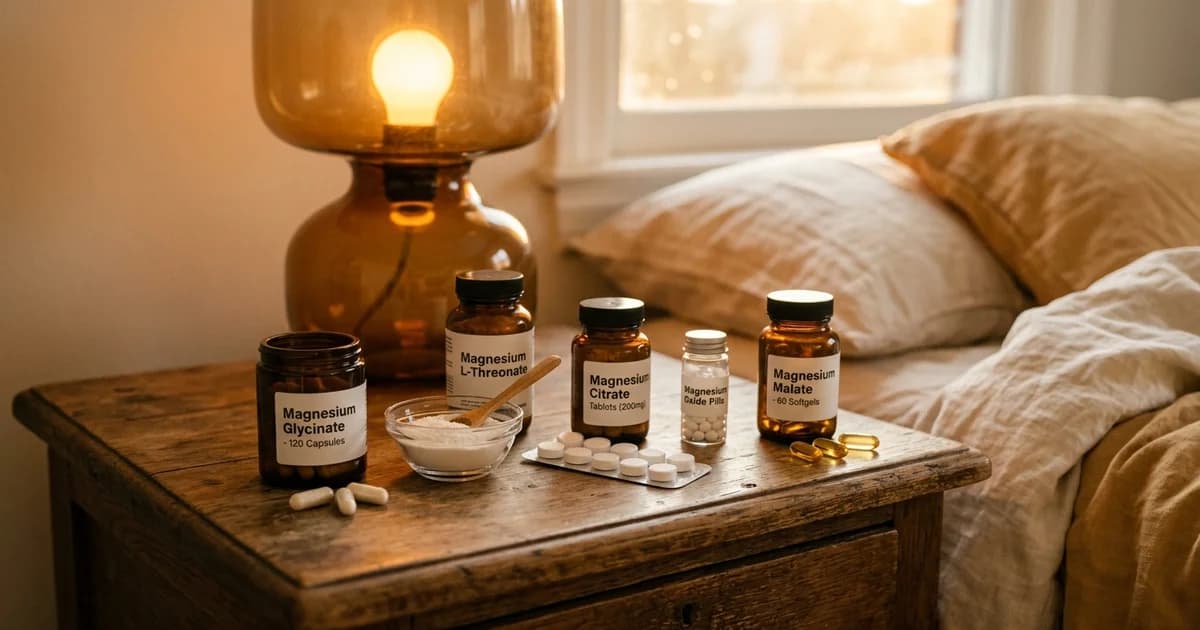
What Is the Best Magnesium to Take for Sleep? A Form-by-Form Breakdown
Nearly half of Americans consume less magnesium than their body actually needs. If you're wondering what is the best magnesium to take for sleep, that gap between intake and requirement is the first thing worth understanding. Magnesium isn't one molecule with one job. It comes in over a dozen supplemental forms, each bound to a different compound, each absorbed differently, and each doing slightly different things once it hits your bloodstream.
The wrong form won't hurt you. But it also won't help you sleep. Here's how to pick the right one.
Key Takeaways
- Magnesium glycinate (bisglycinate) and magnesium L-threonate are the top answers to what is the best magnesium to take for sleep, with the strongest clinical backing.
- Magnesium oxide, the cheapest and most common form on shelves, has poor bioavailability and is mostly useful as a laxative.
- Magnesium works on sleep through GABA receptor activity and NMDA receptor regulation, both of which reduce neural excitability at night.
- Dosing matters: 200 to 400 mg of elemental magnesium, taken 30 to 60 minutes before bed, is the range most clinicians recommend.
Why Magnesium Affects Sleep in the First Place
Magnesium isn't a sedative. It doesn't knock you out the way melatonin or antihistamines do.
Instead, it operates on two receptor systems in the brain. It binds to GABA-A receptors, amplifying the activity of GABA, your brain's primary inhibitory neurotransmitter. Think of GABA as the signal that tells your neurons to quiet down. Magnesium makes that signal louder. At the same time, magnesium acts as an antagonist at NMDA receptors, which are excitatory. By dampening NMDA activity and boosting GABAergic tone, magnesium creates the neurochemical conditions that make it easier to fall asleep and stay asleep. A 2025 review published in PMC describes this as a "dual-pronged modulation of neural excitability."
This dual mechanism is exactly why the question of what is the best magnesium to take for sleep matters so much: different forms reach the brain in different amounts. According to data cited by Pharmacy Times, roughly half the U.S. population falls short of the recommended daily magnesium intake. If your levels are low, supplementing can restore normal GABA signaling. If your levels are already adequate, the effect will be smaller.
What Is the Best Magnesium to Take for Sleep? Ranking the Top Forms
Not all magnesium supplements belong in your nightstand drawer. To determine the best magnesium type for sleep, here's how the most common forms compare, ranked by their relevance to sleep.
1. Magnesium Glycinate (Bisglycinate)
Magnesium glycinate for sleep is magnesium bound to glycine, an amino acid that has its own calming properties. The combination gives you two sleep-supporting compounds in one capsule, and it's the most frequent answer to what is the best magnesium to take for sleep.
A 2025 randomized, placebo-controlled trial enrolled 155 adults with self-reported poor sleep and gave them 250 mg of magnesium bisglycinate daily. The magnesium group showed a greater reduction in insomnia severity scores compared to placebo by week four. The effect was modest but statistically meaningful.
Why it works well for sleep: High bioavailability, gentle on the stomach, and the glycine component independently supports relaxation. If you're picking one form and want the simplest answer to what is the best magnesium to take for sleep, this is it.
Typical dose: 200 to 400 mg of elemental magnesium, taken before bed.
2. Magnesium L-Threonate
This is the form that gets the most attention in neuroscience circles, and for good reason. Magnesium L-threonate is the only form shown in research to cross the blood-brain barrier and measurably increase magnesium concentrations in the brain. That property alone makes it a strong contender for the best magnesium type for sleep.
A 2024 randomized controlled trial published in Sleep Medicine: X studied 80 adults aged 35 to 55 with sleep problems. The group taking magnesium L-threonate showed better sleep quality scores and, specifically, improved alertness and coordination upon waking compared to placebo.
Why it works well for sleep: Direct brain bioavailability sets it apart. It also has emerging evidence for supporting memory and cognition, which makes it a strong pick if you care about both sleep and daytime mental performance. For anyone asking what is the best magnesium to take for sleep and cognitive function together, threonate deserves serious consideration.
Typical dose: Most studies use around 1,500 to 2,000 mg of magnesium L-threonate (which delivers roughly 140 to 180 mg of elemental magnesium).
3. Magnesium Taurate
Magnesium taurate pairs the mineral with taurine, another amino acid with calming, neuroprotective properties. One research team noted that magnesium taurate (specifically the acetyl taurate form) was rapidly absorbed and achieved the highest brain tissue concentration compared to several other forms tested.
Why it's worth considering: If anxiety or racing thoughts keep you awake, the taurine component may offer additional calming effects. The clinical evidence for sleep specifically is thinner than glycinate or threonate, but the mechanism is promising. It's a reasonable best magnesium type for sleep if anxiety is your primary barrier.
Typical dose: 200 to 400 mg before bed.
4. Magnesium Citrate
Magnesium citrate absorbs well and is widely available. It's a reasonable option if glycinate and threonate aren't accessible, though it's rarely the top recommendation for what is the best magnesium to take for sleep.
The catch: citrate has a well-documented laxative effect. Nebraska Medicine notes that magnesium citrate is easy to absorb but can cause diarrhea. If you have a sensitive GI tract, taking it before bed could mean a middle-of-the-night bathroom trip, which defeats the purpose.
Best for: People who also deal with occasional constipation and want a two-for-one effect.
Typical dose: 250 to 500 mg before bed.
5. Magnesium Oxide
This is the form you'll find in most drugstore magnesium tablets. It's cheap, and it packs a high amount of elemental magnesium per pill.
The problem is absorption. Healthline describes magnesium oxide as "poorly absorbed" and primarily useful for heartburn or constipation rather than systemic benefits. Very little of what you swallow actually makes it into your bloodstream, let alone your brain. If you're seriously researching magnesium oxide and sleep, oxide should be at the bottom of your list.
Best for: Acid reflux, constipation. Not sleep.
Quick Comparison: Best Magnesium Type for Sleep
| Form | Bioavailability | Sleep Evidence | GI Side Effects | Best For |
|---|---|---|---|---|
| Glycinate | High | Strong (RCT data) | Minimal | General sleep support |
| L-Threonate | High (crosses BBB) | Strong (RCT data) | Minimal | Sleep + cognitive function |
| Taurate | High | Moderate (emerging) | Minimal | Sleep + anxiety |
| Citrate | Moderate-High | Limited | Laxative effect | Sleep + constipation |
| Oxide | Low | Weak | Laxative effect | Heartburn, constipation |
How to Actually Take Magnesium for Sleep
Knowing what is the best magnesium to take for sleep is half the equation. The other half is execution.
Timing: Take it 30 to 60 minutes before bed. Magnesium doesn't work instantly. Give it time to absorb and begin interacting with GABA receptors.
Dose: Mayo Clinic Press recommends 250 to 500 mg in a single dose at bedtime. Start at the lower end and increase if needed. More is not always better here; excess magnesium just gets excreted (or causes GI distress).
Consistency: Magnesium isn't a one-night fix. Most of the clinical trials showing positive results ran for four to eight weeks. Give it at least a month of nightly use before deciding whether it's working.
Food pairing: Taking magnesium with a small amount of food can improve absorption and reduce any stomach discomfort.
What Magnesium Won't Fix
Even after you've figured out what is the best magnesium to take for sleep, magnesium supports the neurochemistry of sleep. It does not override bad sleep habits.
If you're scrolling your phone until midnight, sleeping in a warm room, or drinking caffeine at 4 PM, no supplement will save you. Magnesium works best as one layer in a broader sleep hygiene protocol: consistent bedtime, cool and dark room, limited screen exposure, and a wind-down routine.
It's also not a replacement for clinical treatment. If you suspect you have a sleep disorder like sleep apnea or chronic insomnia, talk to a doctor. Magnesium is a mineral, not a medical intervention.
Sleep Better at Night, Perform Better During the Day
The relationship between sleep quality and cognitive performance the next day is well established. Research from Penn State found that time spent awake after falling asleep predicted poorer processing speed the following day, regardless of total sleep duration. In other words, it's not just how long you sleep. It's how well.
Getting your nighttime routine dialed, including choosing what is the best magnesium to take for sleep, is one side of the equation. The other side is what you do with the waking hours you've optimized.
Roon was built for that second half. It's a zero-nicotine sublingual pouch with caffeine (80 mg), L-theanine, theacrine, and methylliberine, designed for 6 to 8 hours of sustained focus without jitters, crashes, or tolerance buildup. Good sleep fuels the brain. Roon helps you use it.
Optimize your nights. Then optimize your days.