What Animal Has the Shortest Attention Span?
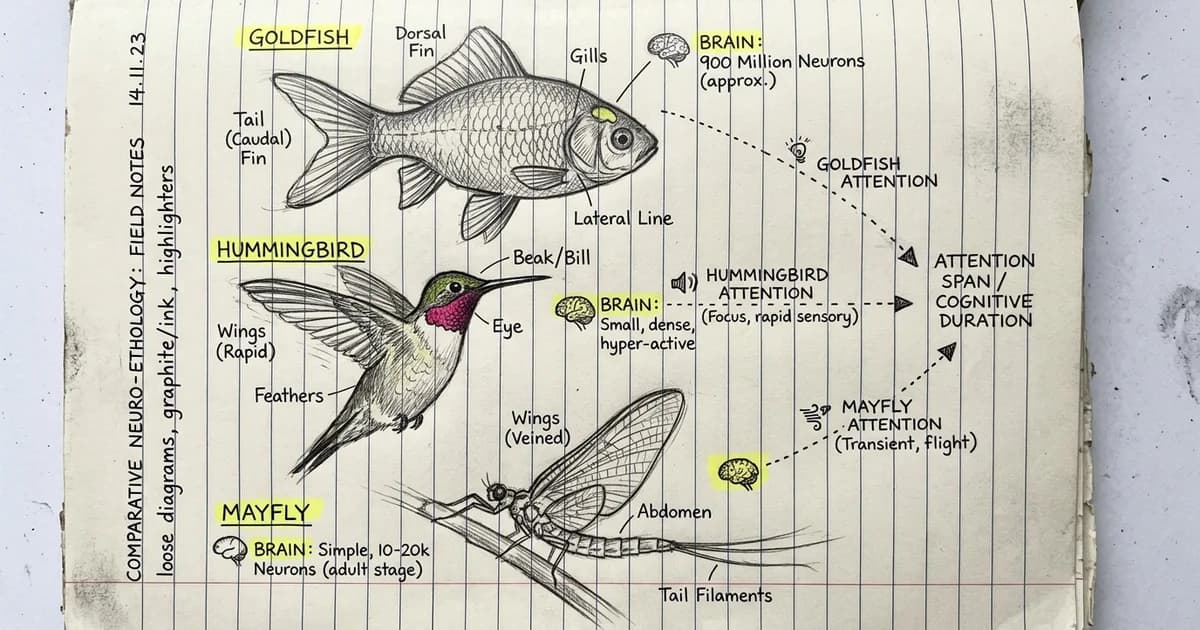
What Animal Has the Shortest Attention Span? (It's Not the Goldfish)
You've heard the factoid a hundred times: goldfish have a three-second memory. Humans, supposedly, aren't much better. If you've ever searched what animal has the shortest attention span, you probably landed on the same viral stat. A widely cited 2015 Microsoft Canada report claimed our attention span had dropped to eight seconds, one second less than a goldfish's nine. The stat showed up in TED talks, boardroom presentations, and LinkedIn posts from people who definitely didn't read the original paper. But what animal has the shortest attention span in reality? The answer is more interesting than the meme, and it says a lot about how your own brain handles focus.
Key Takeaways:
- Fruit flies are the strongest candidate when asking what animal has the shortest attention span, with focus measured in fractions of a second.
- The famous "goldfish have a 3-second memory" claim is a myth. Goldfish can remember things for months.
- The 8-second human attention span statistic from Microsoft's 2015 report has been widely criticized by researchers as misleading.
- Understanding what attention span means matters here: it isn't a single number. It's shaped by neurotransmitters like dopamine, adenosine, and GABA, all of which you can influence.
What Animal Has the Shortest Attention Span? The Real Answer
The fruit fly (Drosophila melanogaster) holds the strongest claim. According to Reference.com, fruit flies have one of the shortest attention spans in the animal kingdom. Their focus operates on a timescale of fractions of a second to a few seconds at most, driven by a brain containing roughly 100,000 neurons (compared to your 86 billion). So what animal has the shortest attention span by the numbers? The fruit fly wins by a wide margin.
Scientists actually prefer it this way. Fruit flies are one of the most common model organisms for studying attention and learning, including focus-related disorders like ADHD and autism. Their tiny brains are simple enough to map, yet complex enough to exhibit real attentional behavior: they orient toward stimuli, filter distractions, and shift focus based on salience.
Other insects compete for the title of animal with short attention span. Gnats are known for extremely short attention spans, easily distracted by light and movement, which makes them difficult to study in lab settings. Mosquitoes and other small flying insects also operate on similarly brief attentional timescales.
But here's what makes the fruit fly answer genuinely useful: the neurochemistry driving its attention (or lack of it) overlaps with yours more than you'd expect.
The Goldfish Myth: Why Everything You Heard Is Wrong
The idea that goldfish have a three-second memory (or attention span) is one of the most persistent pieces of misinformation in pop science. Many people assume the goldfish is what animal has the worst attention span, but that assumption is flat-out wrong. It's the kind of "fact" that sounds true because it feels true. Goldfish look vacant. They swim in circles. Case closed.
Except it isn't.
Research has shown that goldfish can remember certain things for as long as five months. One well-known experiment placed food near a Lego block in a tank for several weeks, then removed the block. The goldfish continued swimming to the spot where the block had been, days later. That's not a three-second memory. That's spatial learning.
A 2003 study from the University of Plymouth demonstrated goldfish attention spans extending well beyond the mythical few seconds, with the fish responding to trained cues over a period of months.
So if someone tells you that you have the attention span of a goldfish, take it as a compliment. The goldfish is doing better than its reputation suggests. It's certainly not what animal has the shortest attention span.
The Microsoft "8 Seconds" Claim: Where It Came From and Why It's Flawed
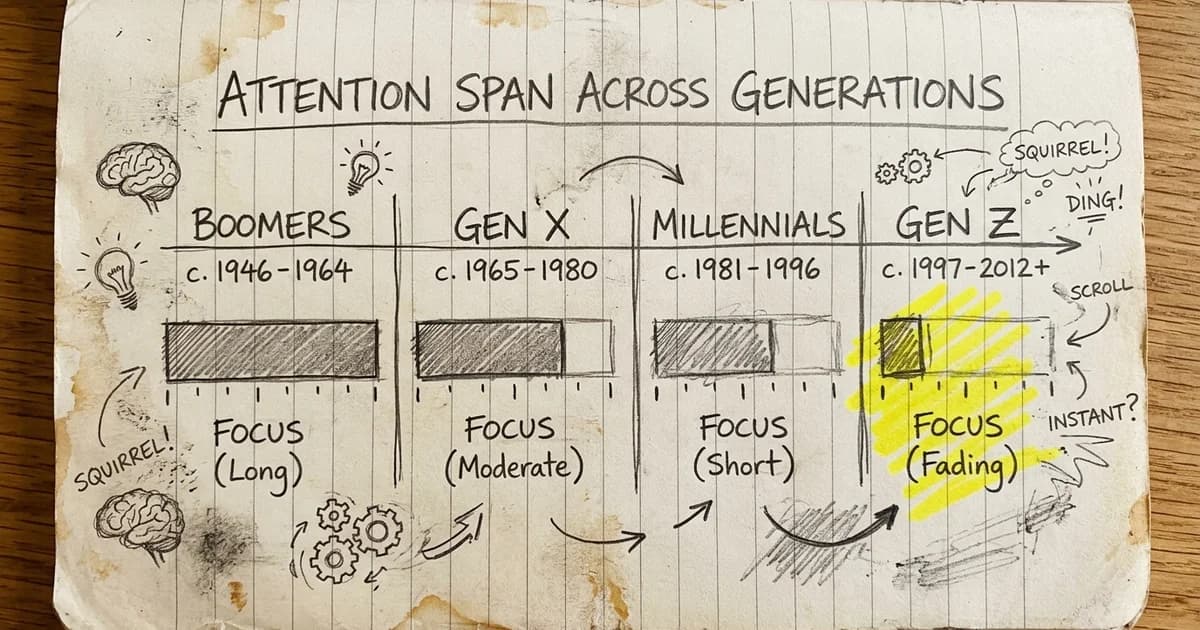
The other half of this story involves humans. In 2015, Microsoft Canada published a report claiming that the average human attention span had fallen from 12 seconds in 2000 to just 8 seconds in 2013. The comparison to goldfish (9 seconds) made for an irresistible headline, fueling even more curiosity about what animal has the shortest attention span.
TIME Magazine ran with it. So did the New York Times, USA Today, the Guardian, and hundreds of other outlets.
The problem? The methodology doesn't hold up.
As Psynamic's detailed breakdown explains, the "8 seconds" figure came from a report that itself cited a source called Statistic Brain, which provided no clear methodology for its claims. The goldfish figure of 9 seconds? No one has been able to trace it to an actual peer-reviewed study.
Researchers at the University of Chicago have pushed back on the entire framing. As noted in a Wall Street Journal analysis, the features of human attention are too complex to reduce to a single number of seconds. Professor Edward Vogel, who has measured attention in college students for over 20 years, found that attentional capacity has remained remarkably stable over time.
Generation and attention research points to the same conclusion: your attention span hasn't collapsed. But the demands on your attention have exploded.
Animals with a Short Attention Span: A Closer Look
If you're curious about what animal has the worst attention span beyond the fruit fly, the list is longer than you'd think. Anyone asking what animal has a short attention span will find plenty of candidates. And the reasons behind each one tell you something about how attention actually works in the brain.
| Animal | Estimated Attention Behavior | Why |
|---|---|---|
| Fruit Fly | Fractions of a second | Tiny brain, rapid stimulus-response cycles |
| Gnat | Seconds | Easily distracted by light and movement |
| Hamster | A few seconds per task | High metabolism, nocturnal foraging instincts |
| Mouse | Very short, task-dependent | Social, exploratory, boredom-prone |
| Squirrel | Seconds to minutes | Constant foraging, predator vigilance |
| Goldfish | Minutes (not seconds) | Myth overstates the problem; real memory lasts months |
Sources: A-Z Animals, Pet Reader
Notice the pattern. Every animal with a short attention span tends to share a few traits: small body size, high metabolic rate, and an environment full of predators. Their brains aren't broken. They're optimized for rapid scanning rather than sustained focus. The squirrel focus and foraging tradeoff is real: a squirrel that stares at one acorn for ten minutes is a squirrel that gets eaten. How do you compare? Try the attention span test, which times seconds on task before you switch.
This is the part most articles about what animal has the shortest attention span miss. Attention isn't a flaw to be fixed. It's a resource to be allocated. And every species allocates it differently based on what keeps them alive.
So when someone asks what animal has the shortest attention span, the honest answer is: it depends on what you count as attention. If you mean raw sustained focus on a single stimulus, the fruit fly wins (or loses, depending on your perspective). If you mean distractibility in a natural environment, gnats and mosquitoes give the fruit fly serious competition. Either way, every animal with short attention span behavior is responding to real evolutionary pressure, not a character flaw.
What Actually Controls Attention (In Any Brain)
Whether you're a fruit fly or a human, attention comes down to neurochemistry. Knowing what animal has the shortest attention span is interesting, but understanding why is far more useful. Three systems do most of the heavy lifting:
Dopamine: The Priority Signal
Dopamine doesn't make you feel good. It makes you feel like something matters. When dopamine fires in your prefrontal cortex, it tells your brain: "Pay attention to this. Ignore everything else." Low dopamine activity is linked to distractibility, poor working memory, and difficulty sustaining focus on tasks that aren't immediately rewarding.
Fruit flies have dopaminergic neurons too. When researchers manipulate dopamine signaling in Drosophila, their already-brief attention spans change measurably. The chemistry is conserved across hundreds of millions of years of evolution.
Adenosine: The Fog Machine
Adenosine builds up in your brain the longer you stay awake. It binds to receptors that slow neural firing, creating the sensation of mental fatigue, what most people call brain fog. Caffeine works by blocking adenosine receptors, temporarily clearing that fog. But caffeine alone tends to produce a spike-and-crash pattern, especially at high doses.
GABA: The Noise Filter
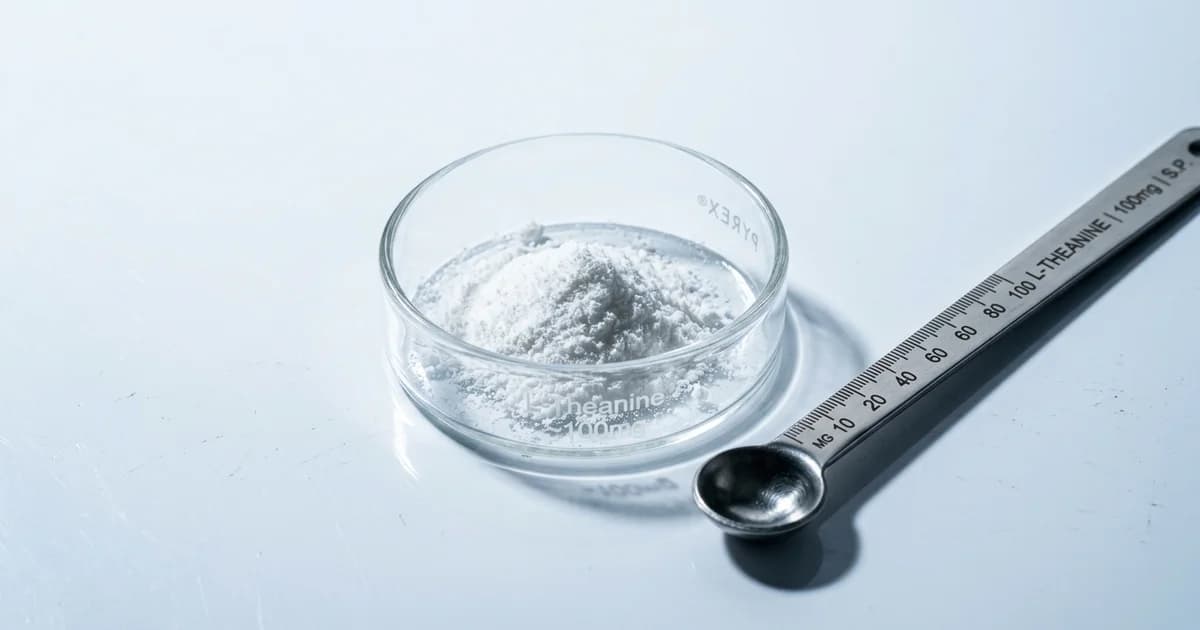
GABA (gamma-aminobutyric acid) is your brain's primary inhibitory neurotransmitter. It quiets background neural activity so the signal you're trying to focus on can come through clearly. Too little GABA, and everything competes for your attention at once. L-Theanine, an amino acid found naturally in tea, promotes GABA activity, which is one reason tea produces a calmer, more focused kind of alertness than coffee alone.
Why "What Animal Has the Shortest Attention Span?" Is the Wrong Question
Searching for what animal has the shortest attention span is a fun starting point. But the more useful question is: what determines your attentional capacity on any given day?
The answer isn't willpower. It's chemistry.
Your ability to focus for 30 minutes or four hours depends on the balance between dopamine (which sets priorities), adenosine (which creates fog), and GABA (which filters noise). Disrupt any one of those three, and you'll feel scattered, foggy, or overstimulated, regardless of how disciplined you think you are.
This is why sleep deprivation destroys focus (adenosine overload). It's why scrolling social media makes deep work harder (dopamine dysregulation). And it's why a noisy environment feels mentally exhausting even if you're not doing anything (GABA depletion).
The animals with the shortest attention spans aren't choosing to be distracted. Their neurochemistry is tuned for rapid switching. Yours doesn't have to be. Now that you know what animal has the shortest attention span, the better question is what you can do about your own focus.
Cut Through the Fog
If your focus feels more fruit fly than human lately, the issue probably isn't your character. It's your chemistry. You don't need to become another animal with short attention span statistics; you need to support the neurochemistry you already have.
Roon is a zero-nicotine sublingual pouch built around four active compounds that target exactly the pathways described above: Caffeine (80mg, enough to block adenosine and sharpen alertness), L-Theanine (to promote GABA activity and alpha-wave output, improving attention-switching accuracy alongside caffeine), Theacrine, and Methylliberine (both of which support dopamine signaling without the tolerance buildup you get from stimulants). The result is 6 to 8 hours of clean, sustained focus.
No crash. No jitters. No becoming a goldfish by 2 PM.