Best Supplements for Brain Fog: What Actually Works
Roon Team
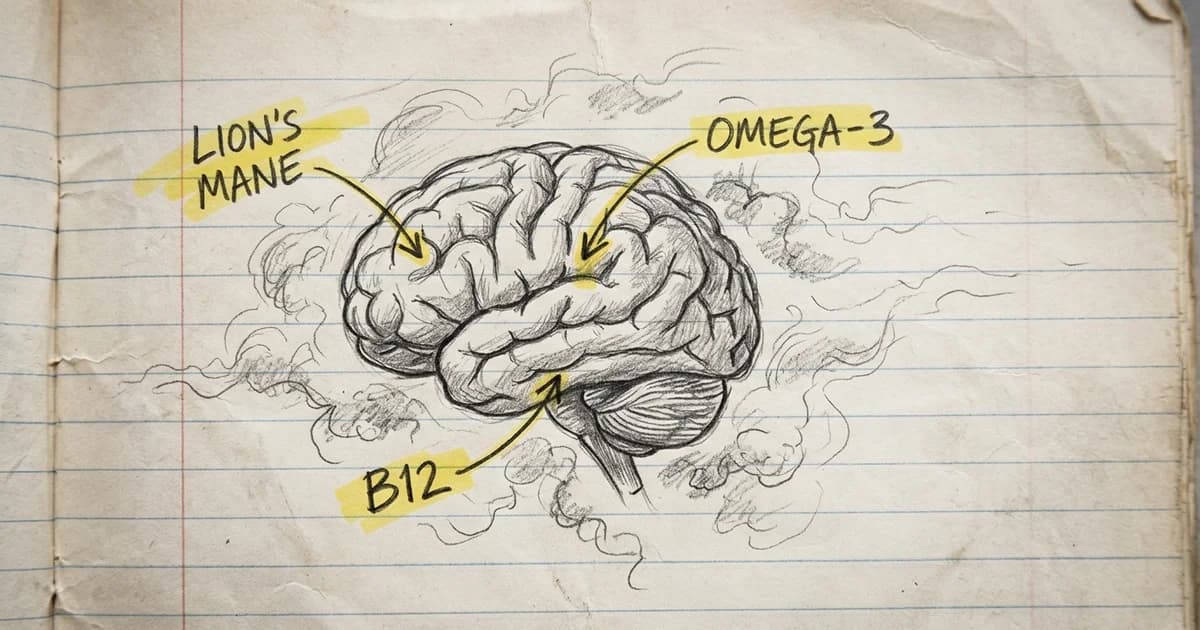
Best Supplements for Brain Fog: What Actually Works (and What Doesn't)
Short answer: The brain fog supplements with the strongest evidence target a cause rather than a symptom. Correct any shortfall in vitamin B12, vitamin D, or magnesium first, then add a focus stack built on caffeine plus L-theanine, the best-studied combination for attention. For B12 in particular, the NIH Office of Dietary Supplements notes that deficiency can cause neurological symptoms and that vegetarians, adults over 50, and people taking metformin are at higher risk. If you want that focus stack in one dose, Roon is a zero-nicotine sublingual pouch with 80 mg caffeine, 60 mg L-theanine, 25 mg methylliberine (Dynamine), and 5 mg theacrine (TeaCrine).
You forgot the word. It was right there, on the tip of your tongue, ten seconds ago. Now it's gone. You reread the same paragraph for the third time. Your brain feels like it's running through wet cement. If you've been searching for a brain fog supplement that actually does something, you're not alone. And you're right to be skeptical, because most of them are garbage.
Self-reported cognitive disability among adults aged 18 to 39 has nearly doubled over the past decade, climbing from 5.3% to 7.4%. More than a quarter of the general population reports experiencing brain fog. This isn't a niche complaint. It's a widespread cognitive issue with real, identifiable causes.
The good news: some brain fog supplement options have solid evidence behind them. The bad news: the supplement industry makes it very hard to tell which ones those are.
Key Takeaways:
- Brain fog is often driven by specific vitamin deficiencies, particularly B12, vitamin D, and magnesium.
- The most effective brain fog supplement targets the root cause, not just the symptom.
- L-theanine combined with caffeine is one of the best-studied combinations for improving focus and attention.
- Women in perimenopause and menopause face unique brain fog triggers tied to hormonal shifts.
What Is Brain Fog, and Why a Brain Fog Supplement Can Help
Brain fog isn't a medical diagnosis. It's a cluster of symptoms: poor concentration, forgetfulness, mental fatigue, and a general feeling that your thinking is slower than it should be. The causes range from sleep deprivation and stress to nutrient deficiencies, hormonal changes, and chronic inflammation.
That last point matters. Because if your brain fog stems from a brain fog vitamin deficiency, no amount of willpower or "productivity hacking" will fix it. Your brain is literally missing the raw materials it needs to function.
The right brain fog supplement doesn't mask the problem. It fills the gap.
The Brain Fog Vitamins That Actually Matter
Vitamin B12
B12 is the one most people have heard of, and for good reason. It's essential for myelin production (the insulation around your nerve fibers) and neurotransmitter synthesis. When levels drop, cognitive impairment follows.
A 2025 report from UC San Francisco found that even B12 levels considered "normal" may not be enough to prevent neurological decline. Participants with lower B12 showed slower visual processing speeds and higher volumes of brain lesions on MRI.
Who's at risk? Vegetarians, vegans, adults over 50, and anyone taking metformin. If you fall into any of these groups and you're experiencing brain fog, get your B12 levels checked before you spend money on nootropics.
Vitamin D
The link between brain fog and vitamin D is well established. Cross-sectional studies consistently show that vitamin D levels are lower in people with cognitive impairment compared to healthy adults.
One study reported on Healthline found that participants who supplemented with 2,000 IU per day of vitamin D for one year performed better on learning and memory tests compared to those taking 600 IU. That's a meaningful dose-dependent effect.
Vitamin D receptors exist throughout the brain, particularly in areas responsible for memory and executive function. Roughly 42% of American adults are vitamin D deficient. If you spend most of your day indoors, your odds are worse.
Magnesium
Magnesium is involved in over 300 enzymatic reactions in the body, including many that directly affect brain function. Research shows that magnesium plays a direct role in learning and memory, and deficiency rates in humans are high enough to impair cognitive performance at a population level.
Not all forms are equal. Magnesium L-threonate is the form most studied for brain health because it crosses the blood-brain barrier more effectively than other forms. If you're taking magnesium oxide for brain fog, you're mostly helping your digestion.
B-Complex Vitamins
Don't stop at B12. Research shows that B-vitamin deficiencies, especially B12, B6, and folate, are linked to cognitive decline, and supplementation with a B-complex is more effective than taking a single B vitamin alone. These vitamins work as a team. B6 supports neurotransmitter production. Folate helps regulate homocysteine, high levels of which are associated with brain atrophy.
Beyond Vitamins: The Best Brain Fog Supplement Options That Aren't Multivitamins
Fixing deficiencies is step one. But what if your levels are fine and you still feel like your brain is buffering? That's where targeted nootropic compounds come in.
L-Theanine + Caffeine
This is the brain fog supplement combination with the strongest evidence base for acute cognitive performance. A study published in Nutritional Neuroscience found that 97 mg of L-theanine combined with 40 mg of caffeine helped participants focus attention during a demanding cognitive task.
L-theanine, an amino acid found in green tea, promotes alpha brain wave activity. That's the same brain state associated with calm, focused attention. Caffeine, obviously, increases alertness. Together, they produce focus without the jittery, anxious edge that caffeine alone can cause.
A 2025 systematic review on L-theanine and cognitive performance described the results as "promising," with positive effects on attention and reaction time across multiple trials.
The key detail most people miss: the ratio matters. Too much caffeine relative to L-theanine and you just get wired. The research consistently uses doses in the range of 100 mg L-theanine to 40-50 mg caffeine.
Theacrine
Theacrine is a purine alkaloid structurally similar to caffeine but with a few distinct advantages. A 2025 study on tactical athletes found that a caffeine-theacrine combination improved attention and inhibitory control, with the combination showing higher total accuracy on cognitive tasks than caffeine alone.
What makes theacrine interesting as a brain fog supplement ingredient is that it doesn't appear to build tolerance the way caffeine does. Theacrine also had a positive effect on objective cognitive performance indicators, with a time-course that extends longer than caffeine's.
Omega-3 Fatty Acids (DHA)
Your brain is roughly 60% fat, and DHA (a type of omega-3) is the most abundant fatty acid in it. If your diet is low in fatty fish, you're likely not getting enough. Scientific evidence suggests that omega-3 fatty acids support cognitive function, and they show up in nearly every evidence-based brain fog supplement list.
Omega-3s aren't a quick fix. They work over weeks and months by supporting cell membrane integrity and reducing neuroinflammation. Think of them as long-term maintenance for your brain's hardware.
Brain Fog Supplements for Women: What's Different
Women experience brain fog at higher rates than men, and the reasons are largely hormonal. Brain fog is more common among women, attributed in part to fluctuations in estrogen levels during perimenopause and menopause.
Estrogen plays a direct role in neurotransmitter regulation, cerebral blood flow, and glucose metabolism in the brain. When estrogen drops, cognitive symptoms follow. This is why a brain fog supplement for women often needs to address hormonal factors alongside nutritional ones.
The best-studied brain fog supplement options for menopause-related cognitive issues include:
| Supplement | Mechanism | Evidence Level |
|---|---|---|
| Omega-3s | Reduce neuroinflammation, support cell membranes | Strong |
| Magnesium | Supports neurotransmitter function, reduces stress hormones | Strong |
| Vitamin B12 | Supports myelin and neurotransmitter synthesis | Strong |
| Ashwagandha | May reduce FSH, an adaptogen that influences hormone levels during menopause | Moderate |
| L-Theanine | Promotes calm focus via alpha wave activity | Strong (general), Moderate (menopause-specific) |
The takeaway: if you're a woman in your 40s or 50s dealing with brain fog, start with the foundational vitamins (B12, D, magnesium) and consider adding an adaptogen like ashwagandha. But don't ignore the basics in favor of trendy herbs.
What to Avoid: Brain Fog Supplement Products That Waste Your Money
A few quick filters to save you from bad purchases:
- Proprietary blends that hide doses. If a label says "Focus Matrix 500mg" but doesn't tell you how much of each ingredient is in it, walk away. You can't evaluate what you can't measure.
- Mega-dose single vitamins without testing. Taking 10,000 IU of vitamin D daily without knowing your current levels is reckless. Get bloodwork first.
- Anything promising instant results. Fixing a nutritional deficiency takes weeks. Compounds like L-theanine and caffeine work acutely, but they improve focus, not IQ. Be realistic.
- Ginkgo biloba. It's been studied extensively and the results are consistently underwhelming. As WebMD notes, the evidence for ginkgo as a brain booster has not held up.
A Smarter Brain Fog Supplement Stack: Combining Ingredients for Maximum Effect
The best approach to clearing brain fog is two-layered:
Layer 1: Fix the foundation. Test for and correct deficiencies in B12, vitamin D, and magnesium. This solves the problem for more people than you'd expect.
Layer 2: Add targeted nootropics. Once your baseline nutrition is solid, compounds like L-theanine, caffeine, and theacrine can sharpen focus and sustain attention for hours without the crash or tolerance buildup that comes with stimulants alone.
The research points to a consistent pattern: combinations outperform single ingredients. L-theanine smooths out caffeine's rough edges. Theacrine extends the duration. Methylliberine, a related purine alkaloid, works with caffeine to improve self-reported mood and sustained feelings of energy and concentration.
This is the principle behind well-designed brain fog supplement stacks. You're not looking for one hero ingredient. You're building a system where each compound covers the other's weaknesses.
To make the focus layer concrete, here is how the four most-studied focus compounds compare at common research doses against the amount in a single Roon pouch. Caffeine on its own increases alertness and speeds reaction time, and a systematic review of caffeine and L-theanine found the pair to be a safe and effective cognitive enhancer that sharpens attention beyond what either does alone.
| Ingredient | Role in focus | Common research dose | Amount in one Roon pouch |
|---|---|---|---|
| Caffeine | Alertness, reaction time | 40-200 mg | 80 mg |
| L-theanine | Calm, focused attention | 100-250 mg | 60 mg |
| Methylliberine (Dynamine) | Energy and mood | 25-100 mg | 25 mg |
| Theacrine (TeaCrine) | Sustained focus, slow tolerance | 50-300 mg | 5 mg |
| Nicotine | (found in nicotine pouches) | n/a | 0 mg |
Frequently Asked Questions
What is the best supplement for brain fog?
The best supplement depends on what is causing your brain fog, so there is no universal answer. The strongest approach is two layers: first correct any shortfall in vitamin B12, vitamin D, or magnesium, then add a focus stack of caffeine plus L-theanine for acute attention. Magnesium alone is a cofactor in more than 300 enzyme systems, including those for nerve function, so a shortfall can show up as fog.
Which vitamins are best for brain fog?
Vitamin B12, vitamin D, and magnesium have the most consistent links to clear thinking. The NIH Office of Dietary Supplements reports that B12 deficiency can cause neurological symptoms and that vegetarians, adults over 50, and people taking metformin are at higher risk. Before buying anything, get your B12, vitamin D, and magnesium levels checked, then supplement only what is actually low.
Do caffeine and L-theanine work for brain fog?
Yes, for the focus side of brain fog. A systematic review of caffeine and L-theanine concluded the pair is a safe and effective cognitive enhancer, with the combination sharpening sustained attention more reliably than either compound alone. L-theanine smooths the jittery edge of caffeine while keeping you alert. This addresses focus and attention, not an underlying nutrient deficiency, which still needs separate testing and correction.
How long do brain fog supplements take to work?
It depends on the type. Caffeine and L-theanine act acutely, usually within 30 to 60 minutes, and a sublingual format is faster still. Correcting a nutrient deficiency is slower: rebuilding B12, vitamin D, or magnesium stores takes weeks of consistent intake, and omega-3s work over weeks to months. If a product promises instant, permanent results, treat that as a warning sign rather than a feature.
Can low magnesium cause brain fog?
Low magnesium can contribute to brain fog. Magnesium is a cofactor in more than 300 enzyme systems that regulate nerve and muscle function, blood glucose, and blood pressure, and adults need roughly 310 to 420 mg per day depending on age and sex. Many people fall short of that. Forms that cross into the brain, such as magnesium L-threonate, are the ones studied most for cognition.
Is Roon a good supplement for brain fog?
Roon targets the focus layer, not the nutrient layer. It is a zero-nicotine sublingual pouch with 80 mg caffeine, 60 mg L-theanine, 25 mg methylliberine (Dynamine), and 5 mg theacrine (TeaCrine), built for sustained attention without the jitters or crash of caffeine alone. It is not a substitute for fixing a B12, vitamin D, or magnesium deficiency; if your fog is nutritional, bloodwork and the right vitamin come first.
Clear the Fog Without the Crash
If you've made it this far, you know that brain fog isn't something you just push through. It has causes, and those causes have solutions.
For the nutritional side, get your bloodwork done. Correct what's low. That alone may be enough.
For the performance side, the combination of caffeine, L-theanine, theacrine, and methylliberine is one of the most well-supported stacks in the nootropic space. This brain fog supplement formulation is exactly what's inside Roon, a zero-nicotine sublingual pouch designed for sustained mental clarity. Eighty milligrams of caffeine paired with L-theanine, theacrine, and methylliberine, delivering 6 to 8 hours of clean focus without jitters, crashes, or tolerance buildup.
No pill to swallow. No waiting 45 minutes for it to kick in. Just a pouch under your lip and a brain that works the way it should.
By Roon Team