Supplements for Brain Support: What Actually Works
Supplements for Brain Support: What Actually Works (And What's Just Expensive Urine)
Supplements for brain support represent a market worth over $2.3 billion and growing fast. Most of that money is wasted on products with zero clinical backing. Some of it isn't.
This is a guide to telling the difference. We'll break down which supplements for brain support have real evidence behind them, which ones are overhyped, and how the best ones actually work together.
Key Takeaways:
- Only a handful of supplements for brain support have strong clinical evidence behind them
- The combination of ingredients matters more than any single compound
- Caffeine alone is a blunt tool; paired with L-Theanine, it becomes precise
- Newer compounds like theacrine and methylliberine extend focus duration without building tolerance
Most Supplements for Brain Support Don't Work. Here's Why.
Walk into any supplement store and you'll find dozens of bottles promising sharper memory, faster thinking, and laser focus. The labels look scientific. The claims sound reasonable. The problem? Most supplements for brain support rely on ingredients tested only in petri dishes or rodent models, not in living, thinking humans.
A compound that protects neurons in a lab doesn't necessarily do anything useful when you swallow it as a capsule. It has to survive digestion, cross the blood-brain barrier, and reach the right receptors at the right concentration. That's a high bar, and most ingredients fail it.
Then there's the dosing problem. Many supplements for brain support include the right ingredients at the wrong amounts. You'll see a label listing ten different compounds, each dosed at a fraction of what the research actually used. It looks impressive. It does nothing.
So what does work? Finding nootropic best picks is harder than the supplement industry wants you to believe, and the short list of effective options is smaller than most expect.
The Ingredients With Real Evidence
Caffeine: The Baseline
You already know caffeine works. It blocks adenosine receptors, reducing the signal that tells your brain you're tired. The result: improved alertness, faster reaction time, and better short-term recall.
But caffeine alone has problems. At higher doses (above 200mg), it triggers anxiety, jitters, and a hard crash when it wears off. Your body also builds tolerance quickly, meaning you need more and more to get the same effect.
The real question for anyone evaluating supplements for brain support isn't whether caffeine works. It's whether you can get the benefits without the downsides.
L-Theanine: Caffeine's Missing Half
L-Theanine is an amino acid found naturally in tea leaves. On its own, it promotes alpha brain wave activity, the same pattern seen during calm, focused attention. Useful, but not dramatic.
Paired with caffeine, though, something interesting happens. A study published on PubMed found that the combination of 50mg caffeine and 100mg L-Theanine improved both speed and accuracy on attention-switching tasks, while also reducing susceptibility to distraction. A separate study confirmed that moderate levels of L-Theanine and caffeine together improved accuracy during task switching and self-reported alertness.
A systematic review published in Cureus looking at the combined cognitive effects of caffeine and L-Theanine found improvements in the total cognition composite and in Go/NoGo task performance, a standard measure of executive function.
The takeaway: L-Theanine doesn't replace caffeine. It refines it. You get the alertness without the edge. The focus without the tunnel vision. This pairing is the foundation of the best supplements for brain support on the market.
Theacrine: The Long Game
Theacrine is structurally similar to caffeine but behaves differently in the body. It activates dopamine receptors and blocks adenosine, like caffeine does, but with a longer half-life and a smoother onset.
The most interesting property of theacrine is its apparent resistance to tolerance. Where caffeine loses effectiveness over days and weeks of consistent use, theacrine appears to maintain its effects. A study published in Scientific Reports found that theacrine may improve next-morning cognitive performance without disrupting nighttime sleep, a problem that plagues caffeine users.
A double-blind, placebo-controlled trial published in the Journal of the International Society of Sports Nutrition tested a combination of caffeine, methylliberine, and theacrine in tactical personnel. The results showed similar benefits on reaction time during vigilance tasks compared to caffeine alone, with the added suggestion that co-ingestion of these compounds could improve cognitive performance over a longer duration.
For anyone who relies on caffeine daily and has noticed it working less over time, theacrine is an ingredient worth looking for in supplements for brain support.
Methylliberine: The Accelerator
Methylliberine (sold under the brand name Dynamine) is the newest member of the methylxanthine family. It acts fast, reaching peak effect quicker than caffeine, and appears to amplify the effects of the other compounds in a stack.
A randomized crossover study published in Cureus tested a combination of caffeine, theacrine, and methylliberine in competitive gamers. The combination increased cognitive performance and improved reaction time without negatively affecting mood. That last part matters. Many stimulants improve speed at the cost of making you feel wired or irritable. This stack didn't.
Methylliberine's role in supplements for brain support isn't to be the star. It's to make the other ingredients kick in faster and work together more effectively.
The Supporting Cast: Health Supplements for Brain Function
Omega-3 Fatty Acids (DHA)
Your brain is roughly 60% fat, and DHA is the most abundant omega-3 in brain tissue. A systematic review published in PMC found that intense supplementation with omega-3 fatty acids improved mental performance and increased hemoglobin oxygen saturation in the brain, suggesting better cerebral blood flow.
A dose-response meta-analysis published in Scientific Reports examined the relationship between omega-3 dosage and cognitive outcomes in adults, confirming a measurable link between supplementation and cognitive function.
The catch: omega-3s are a long-term play among health supplements for brain maintenance. You won't feel sharper after one fish oil capsule. But consistent supplementation over weeks and months supports the structural integrity of your neurons. Think of it as maintenance, not performance.
Creatine
Most people associate creatine with muscle. But your brain uses it too, as a rapid energy buffer for neurons during demanding cognitive tasks.
A 2024 study published in Scientific Reports found that a single dose of creatine improved cognitive performance during sleep deprivation. The researchers noted that creatine's effects on cerebral high-energy phosphates were essentially the inverse of sleep deprivation's effects, making it a strong candidate for protecting cognitive function under stress.
A systematic review and meta-analysis published in Frontiers in Nutrition concluded that creatine supplementation may benefit cognitive function in adults, particularly in memory, attention, and information processing speed.
Creatine won't give you a noticeable "kick" like caffeine. But if you're sleep-deprived, stressed, or vegetarian (and therefore likely low in dietary creatine), it's one of the most well-supported supplements for your brain available today.
Bacopa Monnieri
Bacopa is an Ayurvedic herb that has been used for centuries as a cognitive tonic. Modern research partially validates the tradition. A randomized, double-blind trial published in PMC found that Bacopa participants had enhanced delayed word recall memory scores relative to placebo.
A review from the Alzheimer's Drug Discovery Foundation noted that most studies found small but measurable improvements in one or two types of memory assessments with bacopa treatment.
The downside: bacopa takes 8 to 12 weeks of consistent dosing before effects become noticeable. It also causes digestive discomfort in some people. Among health supplements for brain health, bacopa is legitimate for long-term memory support, but it's not what you reach for when you need to perform right now.
Why Stacking Matters More Than Any Single Ingredient
Here's where most people get supplements for brain support wrong. They buy one ingredient at a time, in isolation, and wonder why they don't feel anything.
The research consistently points in the same direction: the best focus supplement ingredients are ones that outperform solo compounds when combined. Caffeine plus L-Theanine beats caffeine alone. Adding theacrine extends the duration and reduces tolerance. Methylliberine speeds up the onset. The best supplements for brain support account for all of these interactions.
| Ingredient | Primary Effect | Onset | Duration | Tolerance Risk |
|---|---|---|---|---|
| Caffeine | Alertness, reaction time | 15-30 min | 3-5 hours | High |
| L-Theanine | Calm focus, reduced jitters | 30-45 min | 3-5 hours | None |
| Theacrine | Sustained energy, motivation | 30-60 min | 4-6 hours | Low |
| Methylliberine | Fast onset, mood support | 10-15 min | 1-3 hours | Low |
Each compound addresses a different limitation of the others. Caffeine provides the raw signal. L-Theanine smooths it out. Theacrine extends the window. Methylliberine gets you there faster. That's why well-designed supplements for your brain combine these ingredients rather than isolating them.
The challenge is getting the ratios right. Too much caffeine relative to L-Theanine, and you're jittery. Too little methylliberine, and you lose the fast onset. This is why pre-formulated supplements for brain support, when designed correctly, outperform DIY approaches for most people.
The Nootropic Stack, Simplified
If you've read this far, you understand two things: the supplements for brain support that actually work for cognitive performance are well-documented, and the way they interact matters as much as the ingredients themselves.
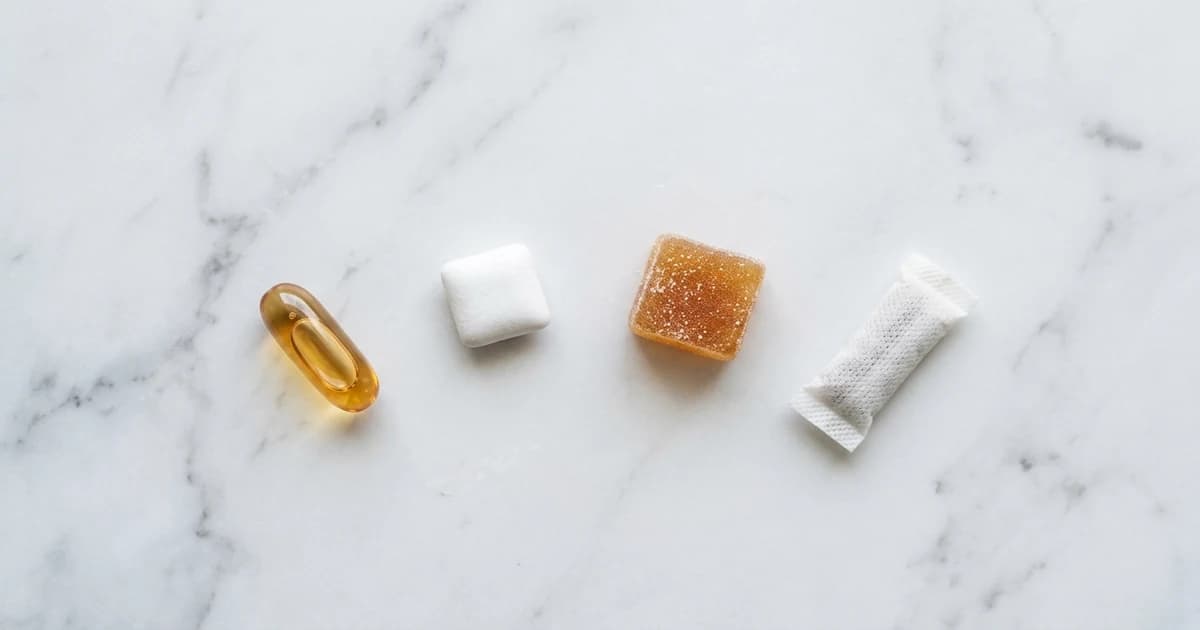
Roon was built around exactly this principle. Roon's nootropic pouches combine caffeine (80mg), L-Theanine, theacrine, and methylliberine in a single sublingual pouch. No pills to swallow, no powder to mix, no guessing at ratios. The sublingual delivery means the active compounds absorb through the tissue under your tongue, bypassing the digestive system for faster, more consistent effects.
Zero nicotine. 6 to 8 hours of sustained focus. No crash on the back end.
If you're done experimenting with supplements for your brain one bottle at a time, Roon is the stack, already built.