Supplements for Brain Injury Recovery: What Actually Works
Supplements for Brain Injury Recovery: What Actually Works (and What Doesn't)
Your brain just took a hit. If you're searching for supplements for brain injury recovery, you're not alone. Maybe it was a concussion on the field, a car accident, or a fall that rattled you harder than expected. The doctor cleared you, handed you a pamphlet, and told you to rest. But you want to do more. You start Googling supplements for brain injury recovery, and suddenly you're drowning in a sea of conflicting advice, miracle claims, and overpriced pill stacks.
Here's the reality: some supplements for brain injury have genuine, peer-reviewed evidence behind them. Most don't. And the difference between the two categories matters more than any influencer's recommendation.
This guide breaks down the supplements for brain injury recovery with real science behind them, the ones that are promising but unproven, and the ones you should skip entirely.
Key Takeaways
- Omega-3 fatty acids (DHA/EPA) have the strongest preclinical evidence among supplements for brain injury recovery, supporting the brain after impact.
- Creatine reduced cortical brain damage by up to 50% in animal models and shows early promise in human trials.
- Magnesium levels drop by roughly 50% in the brain after concussion, making supplementation a logical target.
- No single supplement replaces medical treatment. Brain injury supplements are supporting tools, not standalone therapies.
Why the Brain Needs Nutritional Support After Injury
Traumatic brain injury triggers a cascade of secondary damage that continues long after the initial impact. Oxidative stress, neuroinflammation, disrupted energy metabolism, and excitotoxicity (where neurons are damaged by excessive stimulation) all compound the original injury over hours and days. This is exactly why supplements for brain injury recovery have become such an active area of research.
The brain consumes roughly 20% of your body's total energy despite being only 2% of your body weight. After injury, that energy demand spikes while the brain's ability to produce ATP (its primary fuel) drops.
A 2024 review published in Nutritional Neuroscience examined the current evidence on supplements for traumatic brain injury and found that several compounds show genuine potential for reducing secondary damage and supporting recovery. TBI affects an estimated 69 million people worldwide each year, making effective nutritional interventions a serious area of research.
The Best Supplements for Brain Injury Recovery: Strongest Evidence
Omega-3 Fatty Acids (DHA and EPA)
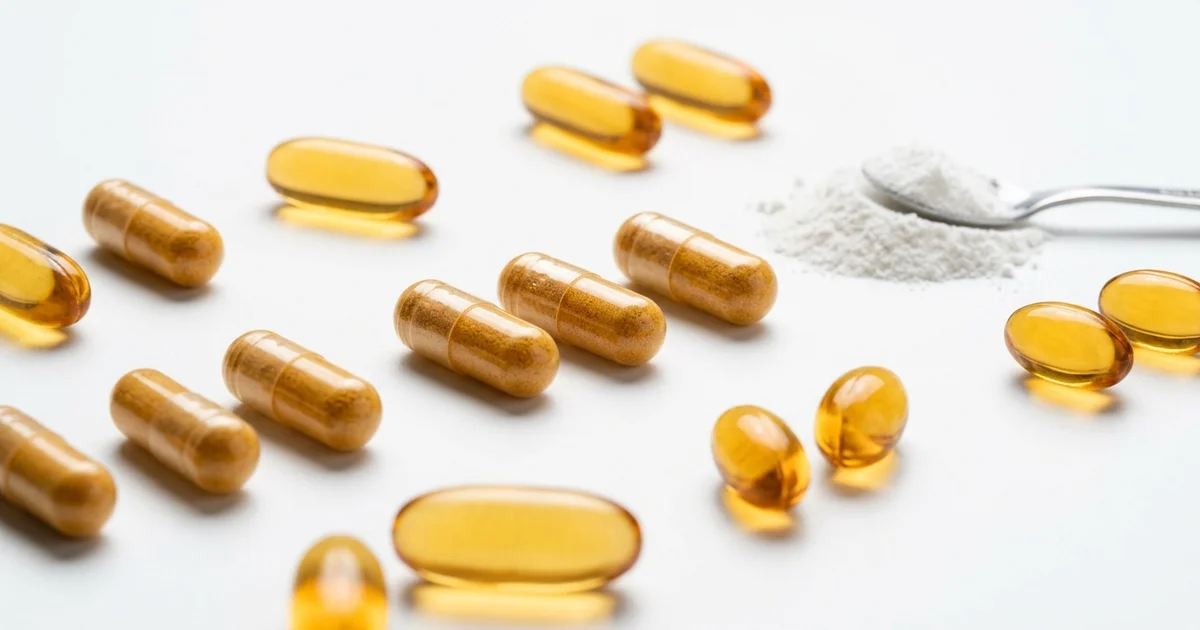
If there's one supplement that shows up consistently in brain injury research, it's omega-3 fatty acids, specifically DHA (docosahexaenoic acid). Among all supplements for brain injury recovery, omega-3s have the deepest body of preclinical support.
DHA makes up a large percentage of the brain's structural fat. After injury, the brain needs raw materials to repair damaged cell membranes, and DHA is one of the primary building blocks. A review published in Nutrients found that omega-3 supplementation helps reduce oxidative stress and neuroinflammation following TBI in preclinical models.
Preclinical research from the Journal of Neurosurgery documented reductions in neurological deficits, brain lesion size, and oxidative damage when omega-3s were administered after experimental brain injury. A PMC-published study also found that prolonged omega-3 treatment after TBI enhanced long-term tissue restoration and cognitive recovery.
The catch? A 2025 military study found that 2.3 grams per day of EPA and DHA for 24 weeks did not improve cognition in service members with mild TBI. The disconnect between strong preclinical results and mixed clinical outcomes suggests that timing, dosage, and injury severity all play a role in how well these supplements for brain injury perform.
The preclinical evidence is strong. Clinical evidence is still catching up, but the direction is clear: DHA and EPA target multiple mechanisms of secondary brain damage simultaneously. A typical research dose ranges from 2 to 4 grams of combined EPA/DHA daily. Look for supplements that list the actual DHA and EPA content, not just "fish oil." A 1,000mg fish oil capsule might contain as little as 300mg of actual omega-3s.
Creatine
Creatine isn't just for the gym. Your brain uses creatine to maintain its energy supply, and after injury, that supply gets disrupted badly. That's why creatine ranks among the most promising supplements for brain injury recovery.
A study published in PubMed found that creatine supplementation reduced cortical brain damage by as much as 36% in mice and 50% in rats. The protection appeared to be linked to creatine's ability to maintain mitochondrial energy production.
According to a 2025 information paper from the Department of Defense, creatine supplementation led to greater improvements in memory compared to placebo. The paper also notes that prolonged post-concussion symptoms may be connected to depleted brain energy stores, which provides a biological rationale for using supplements for traumatic brain injury that restore cellular energy.
A review in PMC confirmed that creatine supplementation shows both neuroprotective effects in animal models (protecting mitochondrial function, providing antioxidant effects, and increasing ATP) and promising results in clinical cohorts, including improved recovery and reduced headache, dizziness, and fatigue.
There's even an active clinical trial investigating creatine monohydrate specifically for mild traumatic brain injury.
Creatine is cheap, well-studied for safety, and has a growing body of evidence as one of the top brain injury supplements available. It's also one of the most researched supplements in existence, with decades of safety data from sports nutrition. Standard dosing is 3 to 5 grams of creatine monohydrate daily. No loading phase needed.
Magnesium
After a concussion, magnesium levels in the brain drop by approximately 50% and stay depleted for about 5 days before slowly returning to normal. That matters because magnesium plays a direct role in blocking excitotoxicity, the process where overstimulated neurons essentially burn themselves out.
According to Concussion Spot Education, magnesium deficiency following TBI may worsen excitotoxicity, so supplementation can help limit further damage and support cognitive recovery. This makes magnesium one of the more straightforward supplements for brain injury recovery to recommend.
Magnesium also supports ATP production, which (as covered above) is exactly what an injured brain needs more of.
Given the documented post-injury depletion, magnesium supplementation after brain injury is one of the more logical choices among supplements for brain injury. The reasoning is simple: injury depletes it, the brain needs it, and replacing it is low-risk.
Magnesium L-threonate is often preferred for brain-related applications because it crosses the blood-brain barrier more effectively than other forms like magnesium oxide or citrate. If you're supplementing specifically for cognitive reasons, the form matters.
Supplements for Brain Injury With Promising (But Earlier-Stage) Evidence
Vitamin D
Vitamin D deficiency appears to set the stage for worse outcomes after brain injury. A review in Frontiers in Nutrition found that vitamin D deficiency primes patients for poorer recovery post-TBI, leading to unregulated inflammatory and immune responses, reduced neuroprotection, and increased risk of cell death.
Research from Frontiers in Nutrition also found that a combination of omega-3 fatty acids and vitamin D could reduce neuroinflammation biomarkers and promote brain tissue repair after mild TBI. This combination approach reflects a growing trend in supplements for brain injury recovery: stacking compounds that target different mechanisms.
The takeaway isn't that vitamin D is a brain injury treatment. It's that being deficient in vitamin D when an injury occurs makes everything worse. Get your levels tested. If you're low (and a large percentage of the population is), supplement accordingly.
Curcumin
Curcumin, the active compound in turmeric, has two properties that make it interesting among supplements for brain injury recovery: it's a strong anti-inflammatory, and it crosses the blood-brain barrier.
The 2024 Nutritional Neuroscience review noted that curcumin reduces oxidative stress and increases antioxidant activity in TBI models. Clear Chiropractic also highlights curcumin's unique ability to cross the blood-brain barrier, which makes it more directly useful than many other anti-inflammatory compounds.
The limitation? Curcumin has notoriously poor bioavailability. If you supplement with it, look for formulations that include piperine (black pepper extract) or use liposomal delivery to improve absorption.
B Vitamins
The Nutritional Neuroscience review found that B vitamins, especially B2, B3, and B6, show neuroprotective properties by reducing lesion volume, oxidative stress, and neuronal damage after TBI. A PMC review also identified vitamin B3 (nicotinamide) as having potent neuroprotective effects through its ability to support energy production and inhibit inflammatory pathways.
B vitamins are water-soluble, inexpensive, and carry very low risk. As supplements for brain injury recovery, they're a reasonable addition to any protocol.
Brain Injury Supplements: What to Skip
Not everything marketed for brain health has evidence behind it. Even within the category of supplements for brain injury, a few types deserve skepticism:
- Proprietary blends with undisclosed dosages. If a product won't tell you how much of each ingredient it contains, you can't evaluate whether the doses match what research actually used.
- Single-ingredient "miracle" formulas. Brain injury recovery is complex. No single compound addresses every mechanism of secondary damage.
- Anything making direct treatment claims. Supplements for traumatic brain injury that claim to "cure" or "treat" brain injuries are violating FDA regulations, which should tell you something about their credibility.
- High-dose single vitamins without testing. Taking megadoses of fat-soluble vitamins like A, D, or E without knowing your baseline levels can create new problems while you're trying to solve existing ones.
A Practical Supplement Stack for Brain Injury Recovery
| Supplement | Suggested Daily Dose | Strength of Evidence |
|---|---|---|
| Omega-3 (DHA/EPA) | 2–4 g combined | Strong (preclinical); Mixed (clinical) |
| Creatine Monohydrate | 3–5 g | Strong (preclinical); Growing (clinical) |
| Magnesium (L-Threonate) | 1–2 g | Moderate |
| Vitamin D3 | 2,000–5,000 IU | Moderate (deficiency correction) |
| Curcumin (w/ piperine) | 500–1,000 mg | Moderate (preclinical) |
| B-Complex (B2, B3, B6) | Standard B-complex dose | Moderate |
A note on timing: Talk to your doctor before starting any supplements for brain injury recovery, especially right after an injury. Some of these compounds may interact with medications or may not be appropriate depending on injury severity.
The Bigger Picture: Building a Daily Cognitive Support Routine
Recovery from brain injury is a long process, and choosing the right supplements for brain injury recovery is just one piece of the puzzle. Even after the acute phase passes, your brain benefits from consistent nutritional support for cognitive performance.
That's the thinking behind Roon, a zero-nicotine sublingual pouch built around four compounds that support sustained focus: Caffeine (80mg), L-Theanine, Theacrine, and Methylliberine. It's not a brain injury treatment. It's what a well-designed daily nootropic stack looks like when someone has already done the work of matching ingredients, optimizing doses, and putting it in a format that actually fits your life.
The nootropic stack, simplified. Try Roon here.