Quit Vaping Ad: What the Campaigns Get Right, What They Miss, and What Actually Works
Roon Team
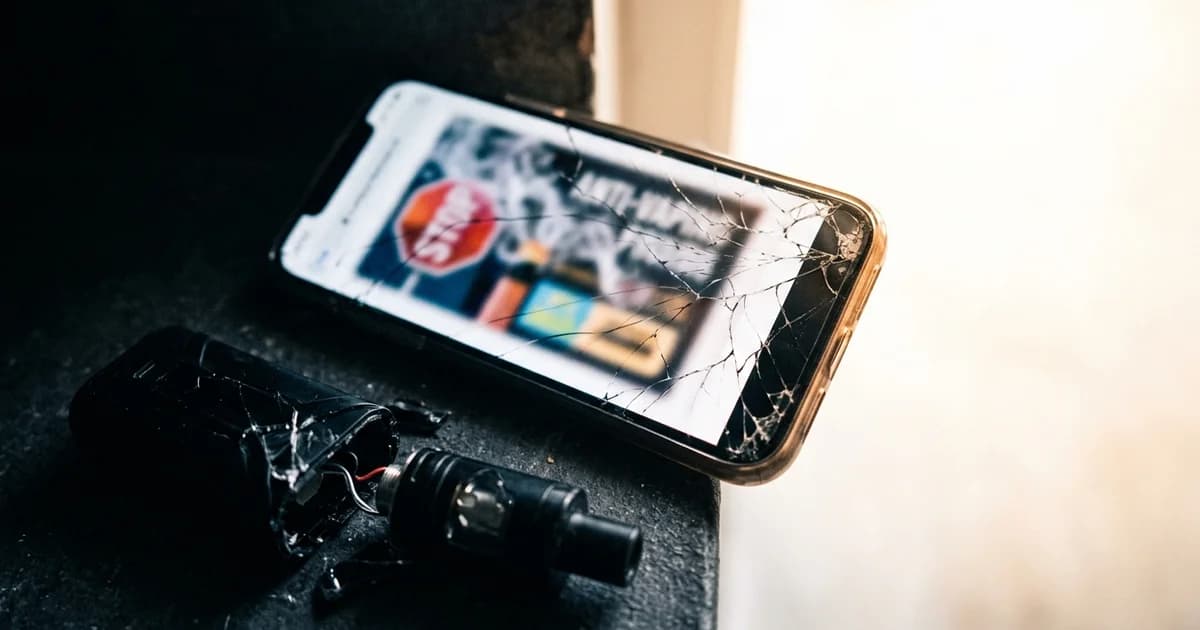
Quit Vaping Ad: What the Campaigns Get Right, What They Miss, and What Actually Works
You've seen the ads. A teen's lungs morph into something out of a horror film. A young woman stares into the camera while text scrolls about nicotine hijacking her brain. Every quit vaping ad delivers the same message: vaping is bad, and you should stop.
But here's the thing about every quit vaping ad you've encountered over the past few years. They're excellent at scaring you. They're far less effective at telling you what to do after you decide to quit. And that gap between motivation and action is where most people get stuck.
The U.S. government, state health departments, and nonprofits have poured hundreds of millions into quit vaping ad campaigns since 2018. Some of them have worked. Many haven't. Understanding the difference matters if you're actually trying to quit, not just thinking about it.
Key Takeaways:
- Federal and state quit vaping ad campaigns have prevented hundreds of thousands of youth from starting, but quitting rates among current vapers remain stubbornly low.
- Daily vaping among youth who already use e-cigarettes has nearly doubled since 2020, and over half of daily vapers who try to quit fail.
- The most effective campaigns combine emotional messaging with concrete behavioral tools, not just fear.
- Addressing the habit (the oral ritual, the hand-to-mouth motion) is just as important as addressing the chemical (nicotine).
The Big Three: Quit Vaping Ad Campaigns You Should Know About
FDA's "The Real Cost"
The longest-running and most well-funded quit vaping ad campaign in the U.S. is the FDA's "The Real Cost." Launched in 2014 for cigarettes and expanded to e-cigarettes in 2018, it targets teens aged 12 to 17 through social media, streaming platforms like Spotify and Pandora, and digital content hubs.
This quit vaping ad series uses visceral imagery, a strategy also common in quit vaping poster tactics. Worms crawling out of vape devices. Parasites representing addiction. The creative strategy is simple: make vaping look as gross as possible so teens never start.
And by the numbers, it works for prevention. A study released by the FDA found that the campaign prevented an estimated 444,252 youth from starting to use e-cigarettes between 2023 and 2024. That's a real number with a real impact.
But prevention and cessation are two different problems. A quit vaping ad that scares someone away from their first puff is not the same as one that helps a daily user break a two-year habit.
Truth Initiative's "Outsmart Nicotine"
Truth Initiative, the nonprofit behind the iconic "truth" anti-smoking campaign, launched "Outsmart Nicotine" in December 2024. This quit vaping ad targets 18- to 24-year-olds, and it takes a noticeably different approach from the FDA's scare tactics.
Instead of horror imagery, Outsmart Nicotine uses what Truth Initiative calls "relatable storytelling" and "science-backed quitting tools." The campaign connects users to the EX Program, a free digital quit platform that has helped millions of people quit tobacco and nicotine products since 2008.
The tone is uplifting rather than terrifying. The launch ad, "You Got This," features optimistic messaging designed to celebrate small victories on the path to quitting. It's a deliberate pivot away from the fear-based model, and it reflects a growing body of evidence that shame and scare tactics can actually backfire with young adults who are already addicted.
Massachusetts' "This Ad Won't Make You Quit Vaping"
Perhaps the most self-aware quit vaping ad name in public health history. In late 2025, Massachusetts launched "This Ad Won't Make You Quit Vaping", targeting 18- to 24-year-olds who vape or use nicotine pouches.
The campaign's premise is honest: a quit vaping ad alone won't make you stop. But it can connect you with free, evidence-based resources and support. The messaging uses empathy instead of judgment, acknowledging that quitting is hard and that needing help isn't a weakness.
This approach stands out because it treats young adults like adults. It doesn't lecture. It doesn't moralize. It simply says: here's where to get help when you're ready.
Why a Quit Vaping Ad Alone Isn't Enough
The numbers paint a complicated picture. Overall youth vaping rates have declined. According to the FDA and CDC's 2024 National Youth Tobacco Survey, current e-cigarette use dropped from 2.13 million youth (7.7%) in 2023 to 1.63 million (5.9%) in 2024.
Good news on the surface. But look deeper.
Among youth who do vape, the problem is getting worse, not better. A study from USC's Keck School of Medicine found that between 2020 and 2024, the share of current users who vaped every day nearly doubled, rising from 15.4% to 28.8%. Over the same period, the share of daily vapers who tried to quit but couldn't rose from 28.2% to 53%.
Read that last number again. More than half of daily young vapers who attempted to quit failed.
This is the core limitation of every quit vaping ad campaign, and for anyone still weighing whether to quit vaping, awareness is not the bottleneck. Almost everyone who vapes knows it's not great for them. The problem is that knowing and doing are separated by a neurochemical moat called nicotine dependence, reinforced by deeply ingrained behavioral habits.
The Two-Headed Problem: Chemistry and Ritual
Nicotine addiction operates on two tracks simultaneously, and most quit vaping ad messaging only addresses one of them.
Track 1: The Chemical Hook
Nicotine binds to acetylcholine receptors in your brain, triggering dopamine release. Your brain adapts by downregulating those receptors, which means you need more nicotine to feel the same effect. When you stop, you experience withdrawal: irritability, anxiety, difficulty concentrating, and intense cravings.
This is the part every quit vaping ad talks about. And it's real. Nicotine is one of the most addictive substances humans regularly consume.
Track 2: The Behavioral Loop
This is the part the ads mostly ignore. Research on oral fixation and vaping cessation shows that many vapers aren't just addicted to nicotine. They're addicted to the ritual: the hand-to-mouth motion, the sensation of something on the lips, the act of reaching for a device during a stressful moment or a break between tasks.
One participant in a qualitative study published in BMC Public Health put it plainly: the addiction isn't really the nicotine at a certain point. It's the need to hold something and use your mouth.
This behavioral component explains why nicotine patches, which deliver nicotine without any oral ritual, have relatively high failure rates for vapers. The chemistry is addressed. The habit is not.
It also explains why many people who quit vaping end up replacing it with something else: snacking, chewing gum compulsively, fidgeting. The brain craves the ritual even after the nicotine receptors have recalibrated.
What Actually Helps People Quit
No quit vaping ad can do the hard work for you, but the most effective tools for quitting vaping combine chemical support with behavioral replacement. Here's what the evidence points to:
1. Nicotine Replacement Therapy (NRT) with an Oral Component
Nicotine gum and lozenges tend to outperform patches for vapers specifically because they address the oral fixation component. They give your mouth something to do. The FDA's SmokeFree initiative and multiple state programs now recommend oral NRT as a first-line tool for vape cessation.
2. Behavioral Support Programs
Digital quit programs like Truth Initiative's EX Program provide structured support: daily text messages, community forums, and cognitive behavioral strategies for managing cravings. The combination of professional guidance and peer support addresses the psychological dimension that a 30-second quit vaping ad simply can't.
3. Gradual Nicotine Reduction
Cold turkey works for some people. For most, it doesn't. Stepping down nicotine concentration over weeks or months allows your receptors to gradually upregulate without the shock of sudden withdrawal. This approach requires discipline, but the relapse rates are lower.
4. Ritual Replacement
This is the piece most people overlook, and the piece no quit vaping ad bothers to explain. If vaping filled a specific role in your daily routine (morning focus, post-meal relaxation, work break stimulation), you need to fill that slot with something else. Not nothing. Something.
The replacement doesn't need to contain nicotine. It needs to satisfy the behavioral pattern: the act of reaching for something, putting it in your mouth, and getting a sensory or cognitive effect.
The Gap Between Quitting Nicotine and Losing the Habit
Here's where most quit vaping ad campaigns fall short. They frame the goal as "quit nicotine." Full stop. And yes, eliminating nicotine dependence is the primary health objective.
But for many people, the pouch or the vape wasn't just a nicotine delivery system. It was a focus tool. A stress valve. A ritual that structured their day.
When you remove it without replacing it, you don't just lose the nicotine. You lose the ritual. And that absence creates a vacuum that willpower alone rarely fills for long, which is exactly why the USC data shows more than half of quit attempts failing.
The best approach to quitting vaping isn't just subtraction, it's substitution.
Same Ritual, Zero Nicotine, Actual Cognitive Benefits
This is where Roon fits into the picture. Not as a quit-vaping product (we're not making that claim), but as something that fills the behavioral gap that every quit vaping ad conveniently ignores.
Roon is a zero-nicotine sublingual pouch built around a stack of four active ingredients: Caffeine (80 mg), L-Theanine (60 mg), Methylliberine (25 mg), and Theacrine (5 mg). The caffeine and L-theanine combination is well-studied. Research published in Nutritional Neuroscience found that 97 mg of L-theanine combined with 40 mg of caffeine helped subjects focus attention during demanding cognitive tasks. Roon delivers 80 mg of caffeine, comparable to a cup of coffee, but L-theanine smooths the ride while theacrine and methylliberine extend it.
Theacrine and Methylliberine extend the duration of that effect without the tolerance buildup you get from caffeine alone. The result is 6 to 8 hours of sustained focus, no jitters, no crash.
But the real relevance here is the format. It's a pouch. You place it under your lip. It gives you a sensory experience and a cognitive effect. If you're someone who used nicotine pouches or vapes as a focus tool, Roon gives you the same ritual and a genuine performance benefit, without the nicotine dependency.
A quit vaping ad can scare you into wanting to quit. The programs can support you through withdrawal. But something has to fill the space that's left. Roon was built for that space.