Lucy Gum Review: A Nicotine Gum Alternative Worth Trying?
Roon Team
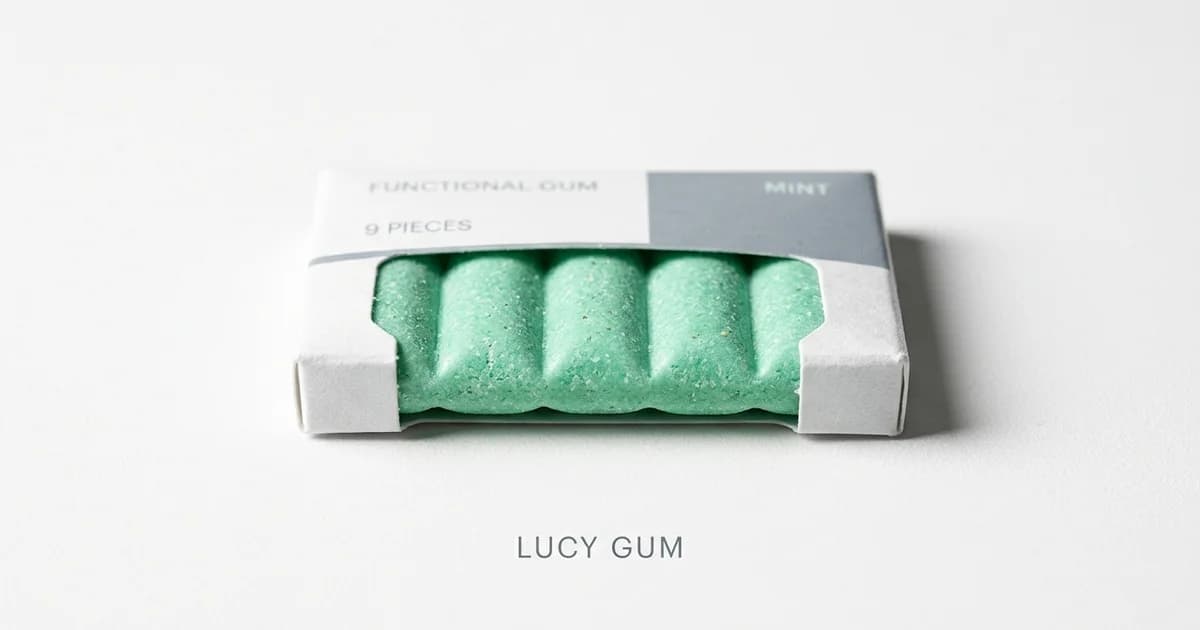
Lucy Gum Review: A Nicotine Gum Alternative Worth Trying?
Lucy has carved out a loyal following in the nicotine gum market, and for good reason. This lucy gum review breaks down exactly what you're getting: ingredients, flavors, strengths, pricing, and the trade-offs most reviewers gloss over. If you're weighing your options for oral nicotine products, or wondering whether nicotine itself is the right call for cognitive performance, read this lucy gum review before you buy.
Key Takeaways
- Lucy nicotine gum comes in three strengths (2mg, 4mg, 6mg) and seven flavors, using pharmaceutical-grade nicotine.
- The gum uses a "chew-and-park" method for buccal absorption, not continuous chewing.
- Pricing runs around $3.99 per 10-piece can, or roughly $0.40 per piece.
- Lucy gum doesn't ship to all states. California, Colorado, Massachusetts, and several others are excluded for the standard gum line.
- If you want focus without nicotine dependence, there are zero-nicotine alternatives built specifically for cognitive performance.
What Is Lucy Gum?
Lucy is a tobacco-free nicotine brand based in Las Vegas. The company produces flavored nicotine gums, lozenges, and Lucy pouches, positioning itself as a cleaner alternative to traditional chewing tobacco and cigarettes. Any thorough lucy gum review should start with what's actually inside the product.
Lucy Gum contains 2, 4, or 6 mg of pharmaceutical-grade nicotine per piece. Lucy does not say on its product pages whether that nicotine is synthetic or tobacco-derived. The ingredient list includes gum base, sodium carbonate, calcium carbonate, sodium bicarbonate, acacia, carnauba wax, talc, food-grade sweeteners (xylitol, maltitol, sorbitol, acesulfame potassium, sucralose, and saccharin), food-grade flavors, and food-grade colors.
Lucy nicotine gum is gluten-free, sugar-free, soy-free, and aspartame-free. It also contains menthol across all flavors.
Lucy Gum Flavors: The Full Lineup
One of Lucy's strongest selling points is variety. Lucy nicotine gums are available across seven distinct flavors: Berry Citrus, Mango, Cinnamon, Wintergreen, Espresso, Mint, and Pomegranate. The range of lucy gum flavors is broader than most competitors offer.
Not all lucy gum flavors are available at every strength. Here's how the lineup breaks down:
| Flavor | 2mg | 4mg | 6mg |
|---|---|---|---|
| Mint | ✅ | ✅ | ✅ |
| Berry Citrus | ✅ | ✅ | ✅ |
| Mango | ✅ | ✅ | ✅ |
| Wintergreen | ❌ | ✅ | ❌ |
| Cinnamon | ❌ | ✅ | ❌ |
| Pomegranate | ❌ | ✅ | ❌ |
| Espresso | ✅ | ✅ | ✅ |
The Wintergreen, Cinnamon, and Pomegranate lucy gum flavors are part of Lucy's "Chew+Park" line, which the company designed with a simplified ingredient list. The Chew+Park line does not contain unnecessary ingredients such as edible ink, hypromellose, magnesium oxide, polysorbate 80, or xylitol, and it's vegan, gluten-free, sugar-free, and aspartame-free.
Flavor longevity is decent but not exceptional. The chew-park cycle typically lasts 30 minutes per gum piece before the flavor intensity starts reducing. That's standard for lucy nicotine gum, though it falls short of what you'd expect from regular chewing gum.
How Lucy Gum Works
Lucy gum isn't designed to be chewed like Trident. You chew it briefly until you feel a tingling or peppery sensation, then park it between your gum and cheek. This lets nicotine absorb through the buccal mucosa (the lining of your mouth) rather than through your digestive system. Understanding this mechanism is essential to any honest lucy gum review.
If you're experiencing indigestion, stomach upset, heartburn, hiccups, or any other discomfort, it is most likely because you're chewing too many times and swallowing the nicotine instead of absorbing it through your mouth. This is the most common mistake new lucy gum users make.
Lucy recommends the following strength guidelines:
- 2mg: For infrequent nicotine users or those stepping down
- 4mg: For moderate, everyday nicotine routines
- 6mg: For heavier users who need a stronger dose
Lucy Gum Pricing and Availability
Each can contains 10 pieces of lucy nicotine gum, priced from $3.99 per can, equating to roughly $0.39 per piece. Bulk ordering through retailers like Prilla or Nicokick can bring the per-piece cost down further.
For reference, traditional Nicorette gum typically costs more per piece, especially at pharmacy retail pricing. Lucy gum's price point is competitive.
One major catch: Lucy gum doesn't ship everywhere. The standard gum line does not ship to Alaska, Arkansas, California, Colorado, D.C., Massachusetts, Maryland, Maine, Utah, or Vermont. That's a substantial portion of the U.S. population locked out. Lucy does offer an NRT (Nicotine Replacement Therapy) gum that ships to all 50 states, but it's a separate product.
Lucy Gum Review: The Pros
Flavor quality is genuinely good. Lucy gum flavors taste more like actual gum than the medicinal bitterness you get from pharmacy-brand nicotine gum. The Pomegranate and Berry Citrus options stand out for people who want something beyond the usual mint.
Three strength options give flexibility. Most pharmacy nicotine gums come in 2mg and 4mg. Lucy nicotine gum adds a 6mg option, which gives heavier nicotine users a viable starting point without needing to double up on pieces.
Cleaner ingredient profile than legacy brands. The Chew+Park line in particular strips out several additives that older nicotine gum brands still use. No tobacco. No aspartame.
Discreet and portable. The cans are small enough for a pocket. No vapor, no smell, no visible pouch under your lip. That portability is a consistent highlight across every lucy gum review online.
Lucy Gum Review: The Drawbacks
It's still nicotine. This is the elephant in the room for anyone considering lucy gum for cognitive performance rather than smoking cessation. Nicotine is addictive. Nicotine withdrawal is associated with deficits in neurocognitive function including sustained attention, working memory, and response inhibition, according to research published on PMC. That means any cognitive benefit you get while using nicotine comes with a corresponding cognitive penalty when you stop. For readers weighing that trade-off, there are nicotine-free alternatives worth trying.
Tolerance builds. Your body adapts to nicotine over time. The same dose that sharpened your focus on day one will feel like baseline by month three. This is a well-documented pharmacological reality, not a minor inconvenience. No lucy gum review would be complete without flagging this issue.
Side effects are real. Common side effects include mild irritation in the mouth or throat, hiccups, nausea, or jaw discomfort from chewing. These tend to be more pronounced at higher strengths and when users chew too aggressively instead of parking the gum.
Shipping restrictions limit access. If you live in California, Colorado, or any of the other restricted states, you simply can't order lucy gum online. That's a dealbreaker for a lot of potential customers.
10 pieces per can is small. At $3.99 for 10 pieces, the per-piece cost is reasonable. But if you're using 5-6 pieces a day, you're burning through a can in two days. Costs add up quickly for regular lucy nicotine gum users.
Lucy Gum vs. Nicorette: Quick Comparison
| Feature | Lucy Gum | Nicorette |
|---|---|---|
| Nicotine Type | Pharmaceutical-grade (source not stated) | Tobacco-derived |
| Strengths | 2mg, 4mg, 6mg | 2mg, 4mg |
| Flavors | 7 | 4-5 |
| Pieces Per Pack | 10 | 20-100+ |
| Price Per Piece | ~$0.39 | ~$0.30-0.50 |
| Sugar-Free | Yes | Yes |
| FDA-Approved for Cessation | No | Yes |
| Available Nationwide | No (state restrictions) | Yes |
Lucy gum wins on flavor variety and strength options. Nicorette wins on nationwide availability and FDA approval for smoking cessation. If you're using nicotine gum specifically to quit smoking, Nicorette's clinical backing matters. If you're an existing nicotine user looking for a better-tasting, tobacco-free option, this lucy gum review confirms that Lucy has the edge.
What's Missing: The Gaps in Nicotine-Based Cognitive Products
Here's where the honest assessment gets uncomfortable for every nicotine gum on the market, Lucy included.
If your goal is sustained cognitive performance, lucy nicotine gum and products like it have three structural problems that no amount of flavor innovation can fix:
1. Dependence is baked into the mechanism. Nicotine works by binding to acetylcholine receptors in your brain. Over time, your brain upregulates those receptors, demanding more nicotine to achieve the same effect. You don't just build tolerance. You build a deficit that only nicotine can fill. That's not a performance tool. That's a treadmill.
2. The duration is short. A single piece of lucy gum delivers its nicotine over roughly 30 minutes of chew-and-park cycling. After that, levels drop. For a four-hour work block, you're looking at multiple pieces, multiple interruptions, and a sawtooth pattern of stimulation and decline.
3. There's no complementary stack. Lucy gum contains one active compound: nicotine. There's nothing in the formula to smooth out the stimulation curve, reduce jitteriness, or extend the duration of effect. It's a single-ingredient product dressed up in good flavors.
These aren't criticisms unique to Lucy. They apply to Nicorette, Rogue, and every other nicotine gum among the top oral nicotine brands. The format itself has limits. If you are weighing the two formats, it helps to see how nicotine and nicotine-free pouches compare side by side.
A Different Approach: Cognitive Performance Without Nicotine
If what you actually want is focus, not a nicotine habit, the question changes entirely. Instead of asking "which nicotine gum tastes best?" you should be asking "what delivers sustained cognitive performance without dependence?"
That's the problem Roon was designed to solve.
Roon is a zero-nicotine sublingual pouch built around four compounds that work together: Caffeine (80mg), L-Theanine (60mg), Methylliberine (25mg), and Theacrine (5mg). Each one addresses a specific gap in the nicotine gum model.
The caffeine dose is comparable to a cup of coffee, but L-Theanine pairs with it to promote calm focus without the jittery edge that caffeine alone can produce. A study published in Nutritional Neuroscience found that 97mg of L-Theanine combined with 40mg of caffeine helped participants focus attention during demanding cognitive tasks.
Theacrine and Methylliberine are the ingredients that separate Roon from a simple caffeine pouch. Research published on PubMed found that a combination of caffeine, theacrine, and methylliberine improved cognitive performance and reaction time in participants without increasing anxiety or headaches. And unlike caffeine or nicotine, theacrine does not appear to be associated with tolerance, meaning the effect on day 90 is similar to the effect on day one.
The result is 6-8 hours of sustained focus from a single pouch. No chew-and-park cycling. No tolerance treadmill. No withdrawal penalty when you skip a day. That single-serving format is the approach behind Roon's focus pouch.
This lucy gum review makes one thing clear: Lucy makes a solid nicotine gum. If you're an adult nicotine user looking for a tobacco-free option with good lucy gum flavors, it delivers. But if your goal is cognitive performance without the baggage of nicotine dependence, you're solving the wrong problem with the wrong product. Roon was built for exactly that gap.