Pre-Workout Tolerance: How to Reset It
Roon Team
Pre-Workout Tolerance: How to Reset It and Break the Stimulant Cycle for Good
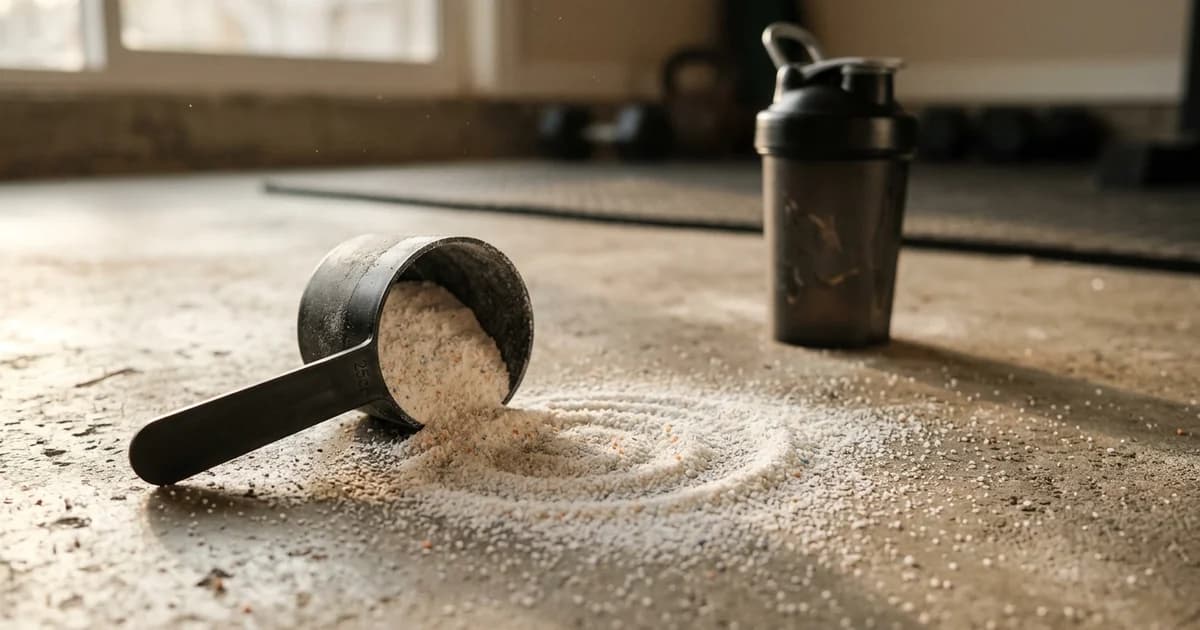
Your pre-workout stopped working. You used to feel it in 15 minutes: sharper focus, stronger contractions, the kind of energy that made you want to add weight to the bar. Now you take the same scoop and feel nothing. So you start eyeing a second scoop. This is the pre-workout tolerance trap, and doubling down is the worst way out; nootropics for energy offer a smarter path.
The problem isn't willpower. It's receptor biology. The fix depends on which nootropic ingredients work for tolerance resistance and which ones don't.
Key Takeaways:
- Caffeine tolerance develops in as few as 15 days of daily use, driven by adenosine receptor upregulation.
- Not every pre-workout ingredient builds tolerance. Beta-alanine, citrulline, L-theanine, theacrine, and methylliberine do not.
- A full caffeine reset takes 7 to 14 days of complete abstinence.
- Compounds like theacrine and methylliberine offer stimulant-like effects without the tolerance spiral, which is why they're showing up in newer formulations.
Which Pre-Workout Ingredients Actually Build Tolerance?
Before you change anything, you need to know what's causing the problem. Here's a breakdown of common pre-workout compounds and their tolerance profiles:
| Ingredient | Mechanism | Builds Tolerance? | Time to Tolerance | Time to Reset | Fix |
|---|---|---|---|---|---|
| Caffeine (150-400 mg typical) | Adenosine receptor antagonist | Yes | ~15 days of daily use | 7-14 days off | Full deload or dose cycling |
| Beta-Alanine (2-5 g typical) | Saturates muscle carnosine stores | No (saturation, not tolerance) | N/A | ~6-16 weeks washout | Continue daily; no cycling needed |
| L-Citrulline (6-8 g typical) | Nitric oxide precursor | No | N/A | N/A | No cycling needed |
| L-Theanine (100-200 mg typical) | GABA/glutamate modulation | No | N/A | N/A | No cycling needed |
| Theacrine / TeaCrine™ (50-300 mg studied) | Adenosine + dopamine modulation | No (8-week data) | N/A | N/A | No cycling needed |
| Methylliberine / Dynamine™ (100-200 mg studied) | Adenosine antagonist, rapid onset | No (short-term data) | N/A | N/A | No cycling needed |
The pattern is clear. Caffeine is doing most of the damage. The other compounds in your pre-workout are either working through non-tolerating pathways or, in the case of beta-alanine, building up a reservoir in muscle tissue rather than hitting a receptor ceiling.
The Science of Caffeine Tolerance (and Why Your Pre-Workout Stops Working)
Caffeine works by blocking adenosine receptors in your brain. Adenosine is the molecule that accumulates during waking hours and makes you feel tired. Block it, and you feel alert, focused, and ready to train.
The problem: your brain adapts. With daily caffeine intake, your body upregulates adenosine receptors, growing more of them to compensate for the blockade. Within roughly two weeks of consistent use, you need more caffeine to achieve the same effect. This is classic pharmacological tolerance.
A 2019 study in PLOS ONE tracked 11 active participants taking 3 mg/kg/day of caffeine for 20 consecutive days. Caffeine increased peak cycling power by approximately 4.0% for the first 15 days, but the ergogenic effect then diminished. By day 20, the performance advantage had faded compared to placebo. That's exactly what happens with your pre-workout: two weeks of feeling electric, then diminishing returns.
Research on caffeine withdrawal shows that tolerance is accompanied by real physiological dependence: withdrawal symptoms peak around 20 to 51 hours after your last dose, and full receptor normalization takes 7 to 14 days of complete caffeine abstinence.
How to Reset Pre-Workout Tolerance: 4 Proven Strategies
Here are four approaches, ranked from most aggressive to most sustainable.
Strategy 1: The Full Deload (10-14 Days Off All Caffeine)
Zero caffeine for 10 to 14 days. No pre-workout, no coffee, no energy drinks, no caffeinated tea. Expect headaches, irritability, and fatigue for the first 2 to 3 days. By day 5 or 6, most people report feeling surprisingly normal.
Best for anyone whose pre-workout has completely stopped working. If you're taking 300+ mg of caffeine daily and feeling nothing, this is the most reliable path back to baseline. When you reintroduce caffeine after a full deload, the ergogenic effect returns at full strength.
Strategy 2: The Half-Dose Taper (2 Weeks at 50%)
Cut your pre-workout dose in half for two weeks, then return to normal. This won't fully reset your adenosine receptors, but it partially restores sensitivity while keeping withdrawal symptoms manageable. Best for in-season athletes or anyone who gets debilitating caffeine withdrawal headaches.
Strategy 3: The 5:2 Cycle (5 Days On, 2 Days Off)
Use your pre-workout on training days only (typically 4 to 5 per week) and take at least 2 consecutive days completely caffeine-free. This won't reverse existing tolerance, but it slows the rate of receptor upregulation enough to extend the useful life of your current dose.
Train Monday through Friday with pre-workout, go caffeine-free Saturday and Sunday. You'll still build some tolerance, but the two-day breaks prevent it from reaching the ceiling as quickly.
Strategy 4: The Compound Swap (Tolerance-Resistant Stimulant Stack)
This is the structural fix: instead of cycling the same high-caffeine formula, switch to nootropics pre-workout formulas built around compounds that don't trigger the same receptor adaptation.
Theacrine (TeaCrine™) is the most studied option. A 2016 study in the Journal of the International Society of Sports Nutrition followed participants taking up to 300 mg/day of TeaCrine for 8 consecutive weeks. The result: no evidence of habituation or tachyphylaxis (the technical term for rapid tolerance development). Participants maintained the same subjective energy and focus scores from week one through week eight.
Methylliberine (Dynamine™) is structurally related to both caffeine and theacrine but acts faster, with effects kicking in within minutes. Safety research published in Nutrients confirmed that methylliberine, both alone and combined with TeaCrine, showed no signs of tolerance development in healthy young adults. The likely reason: where caffeine purely blocks adenosine, theacrine and methylliberine modulate both adenosine and dopaminergic pathways without triggering the same compensatory upregulation.
Why Doubling Your Scoop Is a Bad Idea
The instinct to just add more is understandable. It's also dangerous.
Most pre-workouts contain 200 to 400 mg of caffeine per serving. Two scoops of a 300 mg formula puts you at 600 mg in a single dose. The Cleveland Clinic notes that caffeine overdose symptoms, including rapid heartbeat, nausea, seizures, and in rare cases cardiac arrest, can occur at high doses, with the estimated lethal dose around 150 to 200 mg per kilogram of body weight.
You probably won't die from two scoops. But 600 mg of caffeine in one sitting commonly causes heart palpitations, severe anxiety, GI distress, and sleep disruption that lasts for hours. Research by Roehrs and Roth documented caffeine's clear sleep-disruptive effects even at moderate doses.
The real irony: doubling your dose accelerates tolerance. You'll need three scoops within a month. The spiral has no good ending.
Do You Even Need Pre-Workout Every Session?
No. And the research supports this.
The PLOS ONE caffeine tolerance study showed that caffeine-naive or tolerance-cycled users got a consistent ~4% boost in peak power output. Daily users saw that advantage erode. The implication: strategic, intermittent use of caffeine-based pre-workouts delivers better results than daily use.
Save your pre-workout for heavy compound days, competition prep, or training blocks where you need peak output. On lighter days, train without it. Your receptors will thank you.
Traditional Pre-Workout vs. Tolerance-Resistant Stack: A Side-by-Side Comparison
| Feature | Traditional High-Stim Pre-Workout | Roon (Tolerance-Resistant Stack) |
|---|---|---|
| Primary Stimulant | Caffeine (200-400 mg) | Caffeine (80 mg) + Methylliberine (25 mg) + Theacrine (5 mg) |
| L-Theanine | Rarely included | 60 mg (smooths caffeine response) |
| Format | Powder (mixed drink) | Sublingual pouch (faster absorption) |
| Time to Tolerance | ~15 days daily use | No tolerance observed in 8-week studies |
| Crash Profile | Common at high doses | Minimal (lower caffeine + theanine buffer) |
| Typical Price/Serving | $1.00-$1.50 | ~$1.00, ~$0.61 subscribed |
| Best For | Max acute stimulation | Sustained daily use without diminishing returns |
The trade-off is honest: traditional pre-workouts deliver a bigger immediate caffeine hit, while a pre-workout without crash or jitters requires a different formula approach. If you want to feel wired for a single session, 300 mg will do more in the moment than 80 mg. But if you're using something daily and need it to keep working, the math changes.
How Popular Pre-Workouts Stack Up on Tolerance Risk
| Product | Caffeine/Serving | Other Stimulants | Format | Price/Serving | Best For |
|---|---|---|---|---|---|
| C4 Original | 200 mg | None | Powder | ~$1.00 | Budget-friendly entry point |
| Ghost Legend V4 | 300 mg | None (added nootropics) | Powder | ~$1.50 | Flavor variety and brand experience |
| Gorilla Mode | 400 mg | None | Powder | ~$1.50 | Maximum single-dose stimulation |
| Roon | 80 mg | Methylliberine 25 mg, Theacrine 5 mg | Sublingual pouch | ~$1.00, ~$0.61 subscribed | Daily use without building tolerance |
C4 Original sits at the moderate end with 200 mg of caffeine plus beta-alanine and creatine nitrate. Ghost Legend V4 bumps caffeine to 300 mg and adds L-tyrosine and betaine. Gorilla Mode goes all-in at 400 mg of caffeine with one of the most fully dosed formulas on the market. All three are good products. All three will build caffeine tolerance within two to three weeks of daily use.
Roon's nootropic pouches take a different approach: with 80 mg of caffeine paired with 25 mg of methylliberine (Dynamine) and 5 mg of theacrine (TeaCrine), plus 60 mg of L-theanine, they're designed around the tolerance problem rather than ignoring it. The research on theacrine showing no habituation over 8 weeks is the core of the formula's logic. The caffeine and L-theanine combination has also been shown to improve both speed and accuracy on attention-switching tasks, delivering focus without the jittery edge.
Work With Your Biology, Not Against It
Pre-workout tolerance isn't a mystery. It's adenosine receptor adaptation on a predictable timeline. You can fight it with bigger doses (bad idea), cycle off periodically (effective but inconvenient), or build your stack around compounds that sidestep the problem entirely.
If you're tired of the two-week honeymoon followed by months of diminishing returns, it might be worth rethinking what "pre-workout" means. Not more caffeine. A smarter stimulant architecture.
The compounds that sidestep the problem entirely are well-documented. The research on theacrine and methylliberine shows no habituation over eight weeks. The caffeine-and-theanine combination improves attention-switching without the jittery edge. The architecture exists. The question is whether your current stack uses it.
Related from Roon
- Best Pre-Workout Reviews 2026: 8 Brands Ranked by Crash, Jitters, and Focus
- Creatine vs Pre-Workout vs Nootropics: Which Stack Actually Wins for Focus and Lifts
- Energy Drink Alternatives: 8 Cleaner Options for Sustained Focus (2026)
Frequently Asked Questions
How long does it take for pre-workout tolerance to reset?
For caffeine-based pre-workouts, a full tolerance reset takes 7 to 14 days of complete caffeine abstinence. Withdrawal symptoms peak at 20 to 51 hours and subside within a few days. A partial reset through dose reduction takes 2 to 4 weeks. Non-caffeine ingredients like beta-alanine and citrulline don't build tolerance and don't need cycling.
Can I switch pre-workouts to avoid tolerance?
Only if the new product uses different stimulant compounds. Switching from one 300 mg caffeine pre-workout to another 300 mg caffeine pre-workout won't reset anything, because the tolerance is to caffeine itself, not to a specific brand. Switching to a formula built around theacrine or methylliberine can help, since these compounds don't appear to trigger the same receptor adaptation.
Is it safe to take pre-workout every day?
Moderate-dose caffeine (up to 400 mg/day for most adults) is generally considered safe by the FDA. The issue isn't safety but effectiveness: daily use accelerates tolerance, meaning you'll stop feeling the benefit within two to three weeks. Products built around tolerance-resistant compounds may maintain effectiveness with daily use.
Why did my pre-workout stop working?
The most likely cause is caffeine tolerance from adenosine receptor upregulation. Your brain has grown additional adenosine receptors to compensate for daily caffeine blockade. The same dose of caffeine now blocks a smaller percentage of total receptors, reducing the stimulant effect. A 2019 study confirmed this: caffeine's ergogenic boost faded after 15 days of daily use.
Does theacrine really not build tolerance?
The best available evidence says no. A 2016 study in JISSN tracked daily TeaCrine use at doses up to 300 mg for 8 weeks and found no habituation or reduced effectiveness. That's a meaningful departure from caffeine, which shows measurable tolerance within 15 days. Longer-term studies beyond 8 weeks are still needed, but the data is encouraging.
Should I deload from pre-workout?
Yes, if your pre-workout is caffeine-based and you use it daily. A 10 to 14 day deload every 6 to 8 weeks will keep your caffeine sensitivity high and ensure you're actually getting a performance benefit from each dose. Alternatively, a 5:2 schedule (5 days on, 2 days off) can slow tolerance buildup without requiring a full reset.
Is doubling my pre-workout scoop dangerous?
It can be. Two scoops of a typical pre-workout can deliver 400 to 800 mg of caffeine in a single dose. At these levels, side effects like heart palpitations, severe anxiety, nausea, and sleep disruption become common. Case reports have documented serious cardiac events from concentrated caffeine misuse. If your current dose isn't working, a tolerance reset is safer than dose escalation.
What's the difference between caffeine tolerance and beta-alanine tolerance?
Completely different mechanisms. Caffeine tolerance is receptor-based: your brain adapts and the effect weakens. Beta-alanine works by saturating muscle carnosine stores over 4 to 10 weeks. It doesn't "stop working" because carnosine stays elevated as long as you keep supplementing. Loading takes about 4 weeks at 4 to 6 grams per day.
Built for the Tolerance Problem, Not Around It
Everything in this article points to the same structural issue: caffeine-only formulas have a two-week expiration date on their effectiveness, and the standard fixes (deloading, tapering, cycling) are workarounds, not solutions. Roon was designed as the structural fix. It combines 80mg of caffeine with 60mg of L-theanine, 25mg of methylliberine (Dynamine™), and 5mg of theacrine (TeaCrine™) in a sublingual pouch: a formula built specifically around the compounds that don't trigger adenosine receptor upregulation.
To be direct about what Roon is not: it is not a substitute for a high-stim pre-workout if your goal is the maximum acute caffeine hit before a heavy squat session. At 80mg of caffeine, it won't replicate the raw intensity of a 400mg formula. What it will do is work on day 60 the same way it worked on day one, without a deload calendar.
If you've been caught in the tolerance spiral and want a daily-use option that sidesteps the cycle entirely, Roon is worth a look.
Written by Roon Team