Nicotine Withdrawal Fever
Roon Team
Nicotine Withdrawal Fever: Why Quitting Makes You Feel Like You Have the Flu
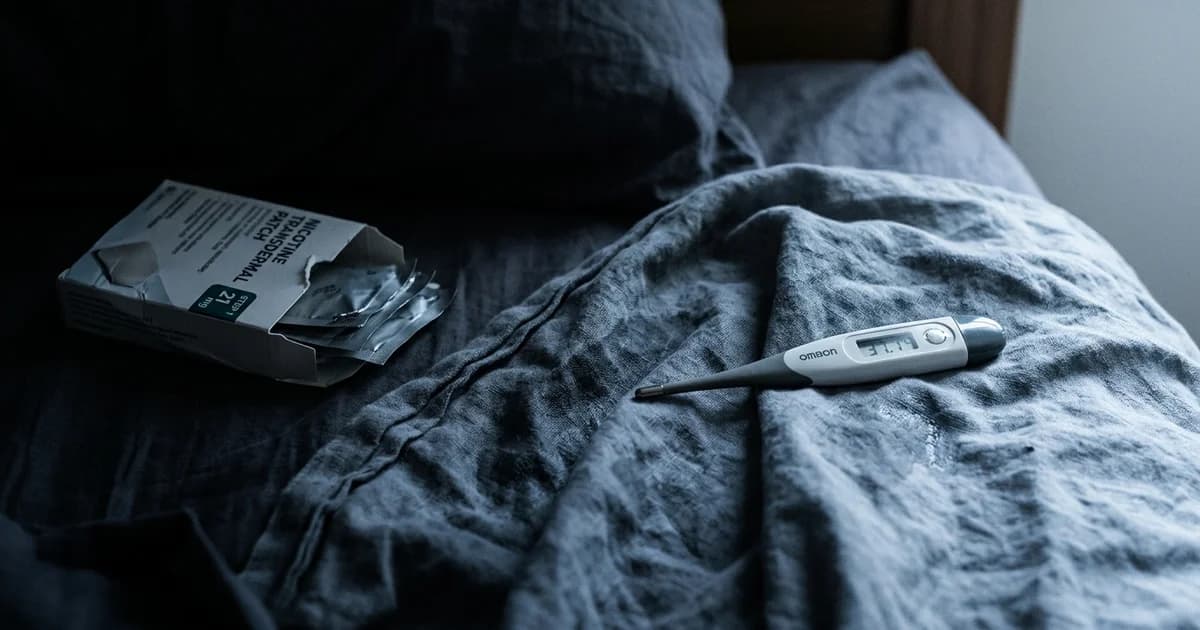
You quit nicotine two days ago. Now you're sweating through your sheets, your body aches, and you're running a low-grade nicotine withdrawal fever. Your first thought: you're getting sick. Your second thought: maybe you should just have one more pouch.
You're not sick. What you're experiencing is nicotine withdrawal fever, a real physiological response that catches most people off guard. It's your body recalibrating after months or years of chemical dependency, and nicotine withdrawal fever is one of the top reasons people relapse in the first week.
Here's what's actually happening inside your body, how long it lasts, and what you can do about it.
Key Takeaways
- Nicotine withdrawal fever is real. Low-grade fever, chills, and body aches are common symptoms during the first few days after quitting.
- It peaks around days 2-3 and typically fades within one to two weeks.
- Your immune system is rebounding. Nicotine suppresses immune function. When you remove it, your body's inflammatory response surges.
- Nicotine withdrawal fever is temporary and not dangerous. But a fever above 101.3°F (38.5°C) or symptoms lasting beyond two weeks warrant a call to your doctor.
What Is Nicotine Withdrawal Fever?
Nicotine withdrawal fever is a subset of what's colloquially called the nicotine withdrawal flu (or "quitter's flu"). It refers to the low-grade fever, chills, sweating, and general malaise that show up within 24 to 72 hours of your last dose of nicotine.
According to Cleveland Clinic, withdrawal symptoms peak on the second or third day of being nicotine-free and gradually fade over three to four weeks. The nicotine withdrawal fever component tends to resolve faster, usually within the first week, but the timeline varies depending on how long and how heavily you used nicotine.
This isn't a fringe experience. Flushing Hospital Medical Center reports that 80-90% of people who smoke have a nicotine addiction and may experience some form of withdrawal after quitting. The nicotine withdrawal flu symptoms are among the most physically uncomfortable parts of that process.
Why Does Quitting Nicotine Cause a Fever?
The short answer: nicotine has been quietly suppressing your immune system, and now your immune system is waking back up. Understanding why nicotine withdrawal fever happens can help you push through it.
Nicotine's Immunosuppressive Effect
Nicotine isn't just addictive. It's an active immunomodulator. A review published in PMC found that nicotine modulates the immune system by stimulating the alpha-7 nicotinic acetylcholine receptor, creating an anti-inflammatory state in the body. It inhibits both innate and adaptive immunity, reduces the secretion of pro-inflammatory cytokines like IL-6 and TNF-alpha, and alters the function of key immune cells.
In plain terms: nicotine tells your immune system to quiet down. When you remove it, your immune system doesn't just return to normal. It rebounds, and that rebound is the root cause of nicotine withdrawal fever.
The Cytokine Surge
Research presented at the Society for Research on Nicotine and Tobacco, reported by ScienceDaily, found that nicotine withdrawal triggers elevated levels of cytokines, specifically interleukin-1 beta (IL-1b) and interleukin-6 (IL-6). These are the same inflammatory molecules your body produces when you're fighting an infection.
That's why nicotine withdrawal fever feels like the flu. Your body is mounting an inflammatory response, not against a virus, but against the sudden absence of a chemical it had adapted to. The fever, the aches, the fatigue: they're all downstream effects of this cytokine surge, and they explain why so many people describe the nicotine withdrawal flu as one of the worst parts of quitting.
Thermoregulation Disruption
Nicotine also interferes with how your body manages temperature. According to Welly, smoking causes a rise in core body temperature through increased metabolism and heart rate while constricting peripheral blood vessels. When you quit, your thermoregulatory system has to find a new equilibrium. During that adjustment period, your body may overshoot or undershoot, producing the fever-and-chills pattern that defines nicotine withdrawal fever for so many quitters.
The Full Symptom Picture: Nicotine Withdrawal Flu
Nicotine withdrawal fever doesn't show up alone. It's part of a broader constellation of symptoms that make up the nicotine withdrawal flu. Here's what you might experience simultaneously:
| Symptom | Why It Happens | Typical Duration |
|---|---|---|
| Low-grade fever | Immune rebound, cytokine surge | 3-7 days |
| Chills and sweating | Thermoregulation disruption | 3-7 days |
| Body aches | Elevated IL-6 and inflammatory markers | 5-10 days |
| Headaches | Changes in blood circulation | 1-2 weeks |
| Fatigue | Nervous system recalibration | 2-4 weeks |
| Coughing | Lung cilia regeneration | 2-4 weeks |
| Irritability and brain fog | Dopamine receptor downregulation | 2-4 weeks |
| Insomnia | Disrupted neurotransmitter balance | 1-3 weeks |
The physical symptoms, including nicotine withdrawal fever, tend to peak early and resolve first. The cognitive and emotional symptoms linger longer. WebMD notes that days 3 through 5 are typically the worst, as that's when nicotine has fully cleared your system.
The Withdrawal Timeline: What to Expect Day by Day
Understanding the timeline of nicotine withdrawal fever helps. When you know that day three is the summit, you can prepare for it instead of being blindsided.
Hours 4-24: Cravings begin. You might feel restless, anxious, or irritable. According to a PubMed review, the aversive withdrawal syndrome manifests within 4 to 24 hours of cessation.
Days 1-3: This is the peak. Nicotine withdrawal fever, chills, nicotine withdrawal headaches, and body aches hit hardest. Sleep gets disrupted. Concentration tanks. Your body is in full recalibration mode.
Days 4-7: Physical symptoms begin to ease. The nicotine withdrawal fever typically breaks. Cravings are still strong but slightly less frequent.
Weeks 2-4: Most physical symptoms have faded. Cravings become more psychological than physical. Energy starts returning.
Beyond Week 4: The acute phase is over. Some people experience occasional cravings for months, but the nicotine withdrawal fever and other flu-like symptoms are long gone.
How to Manage Nicotine Withdrawal Fever
You can't skip withdrawal, but you can make nicotine withdrawal fever less miserable. Here's what actually helps, based on clinical guidance from Cleveland Clinic and Smokefree.gov.
Stay Hydrated
This one sounds basic because it is. Water helps your body flush residual nicotine and its metabolites. It also helps regulate body temperature and reduces the severity of headaches. Aim for at least eight glasses a day, more if nicotine withdrawal fever has you sweating.
Move Your Body
Light exercise, even a 20-minute walk, helps stabilize your mood, improve circulation, and reduce the intensity of withdrawal symptoms. You don't need to run a marathon. Consistent, low-impact movement is enough to take the edge off nicotine withdrawal fever.
Manage the Fever Directly
Over-the-counter options like acetaminophen or ibuprofen can bring down a low-grade fever and relieve body aches. A cool compress on your forehead works too. Don't bundle up in heavy blankets if you have chills paired with a fever; that can drive your temperature higher.
Prioritize Sleep
Withdrawal disrupts sleep, and poor sleep makes every other symptom worse, including nicotine withdrawal fever. Keep your room cool, avoid screens before bed, and stick to a consistent sleep schedule even if you're tossing and turning.
Keep Your Hands and Mouth Busy
A huge part of nicotine addiction is behavioral. The hand-to-mouth ritual, the oral fixation, the five-minute break from your desk. Finding a replacement for that physical habit reduces the psychological load of quitting.
When to See a Doctor
Nicotine withdrawal fever is uncomfortable but not dangerous. The CDC confirms that nicotine withdrawal can't hurt you, unless you give in and start using again.
That said, there are red flags worth watching:
- Fever above 101.3°F (38.5°C): Nicotine withdrawal fever is typically low-grade. A higher fever could indicate an actual infection.
- Symptoms lasting beyond two weeks: The acute physical symptoms of withdrawal should be fading by then. Persistent fever suggests something else is going on.
- Difficulty breathing or chest pain: These are not typical withdrawal symptoms and need immediate medical attention.
- Severe depression or thoughts of self-harm: Nicotine withdrawal can intensify mood disorders. The National Suicide Prevention Lifeline is available at 988.
The quit attempt is worth protecting. If something feels off beyond normal nicotine withdrawal fever, call your doctor. Getting checked out is not a sign of weakness. It's how you stay on track.
Why Most People Fail (and What You Can Do Differently)
Here's the uncomfortable truth: CDC data from 2022 shows that while 53.3% of adults who smoked tried to quit in the past year, only 8.8% succeeded. That's a brutal success rate, and the first week of withdrawal is where most attempts collapse.
The nicotine withdrawal flu is a big reason why. When nicotine withdrawal fever makes your body feel like it's fighting an infection, your brain starts rationalizing. "Just one more to feel normal." That's not weakness. That's your neurochemistry doing exactly what nicotine trained it to do.
The people who succeed tend to have two things in common: they expected the discomfort of nicotine withdrawal fever, and they had a replacement ritual that satisfied the behavioral component of the addiction without reintroducing nicotine.
A Better Ritual, Without the Dependency
If you're quitting nicotine pouches specifically, you already know the hardest part isn't just the chemical withdrawal or the nicotine withdrawal fever. It's the gap in your routine. The moment between meetings where you'd tuck a pouch in. The afternoon focus boost. The ritual itself.
Roon was built for exactly this transition. It's a zero-nicotine sublingual pouch with 80mg of caffeine, L-Theanine, Theacrine, and Methylliberine, designed to deliver 6-8 hours of clean, sustained focus without jitters, crashes, or tolerance buildup.
Same ritual. Zero nicotine. Actual cognitive benefits.
You don't have to white-knuckle your way through nicotine withdrawal fever and the behavioral void that quitting creates. You just need to fill it with something that works for you instead of against you.