Nicotine Replacement Therapy Guidelines
Nicotine Replacement Therapy Guidelines: A Practical Guide to Actually Quitting
Most people who try to quit nicotine fail on the first attempt. Following established nicotine replacement therapy guidelines can change those odds. Quitting cold turkey has an abysmal track record: fewer than 5% of people who rely on willpower alone stay quit long-term.
NRT works differently. Nicotine replacement therapy guidelines recommend replacing the nicotine you're dependent on with a controlled, cleaner delivery system while you untangle the behavioral side of the habit. The goal: reduce withdrawal symptoms enough that you can actually focus on breaking the routines that keep pulling you back.
This guide covers the five FDA-approved forms of NRT, how to dose them, how to combine them, and what to do when the chemical dependency is gone but the habit still isn't.
Key Takeaways:
- NRT increases your chances of quitting by roughly 50-70% compared to placebo
- Nicotine replacement therapy guidelines support combining two forms of NRT (patch + gum or lozenge) over using one alone
- Most NRT programs run 8-12 weeks, with a gradual taper
- The behavioral habit, especially the oral fixation, often outlasts the chemical addiction
What Nicotine Replacement Therapy Guidelines Recommend
Nicotine replacement therapy delivers measured doses of nicotine without the tar, carbon monoxide, and thousands of other chemicals found in cigarettes or tobacco products. According to the American Cancer Society, NRT comes in five forms: patches, gum, lozenges, inhalers, and nasal sprays. Each delivers nicotine differently, and nicotine replacement therapy guidelines suggest matching the form to your habits and preferences.
The logic is straightforward. Nicotine withdrawal causes irritability, anxiety, difficulty concentrating, insomnia, and increased appetite. These symptoms peak within the first one to two weeks of quitting. NRT blunts those symptoms by keeping a low, steady level of nicotine in your system while you work on the behavioral patterns that reinforce the addiction.
A Cochrane systematic review found that NRT increases the rate of quitting by 50 to 70%, regardless of the clinical setting. That effect holds whether you're getting intensive counseling or just picking up patches at the pharmacy, which is why nicotine replacement therapy guidelines consistently endorse NRT as a first-line treatment.
The Five FDA-Approved Forms of NRT
Not all NRT products work the same way. Some deliver nicotine slowly over hours. Others hit fast to curb acute cravings. Understanding the difference matters, because nicotine replacement therapy guidelines emphasize that the best results come from matching the product to your specific pattern of use.
Nicotine Patches
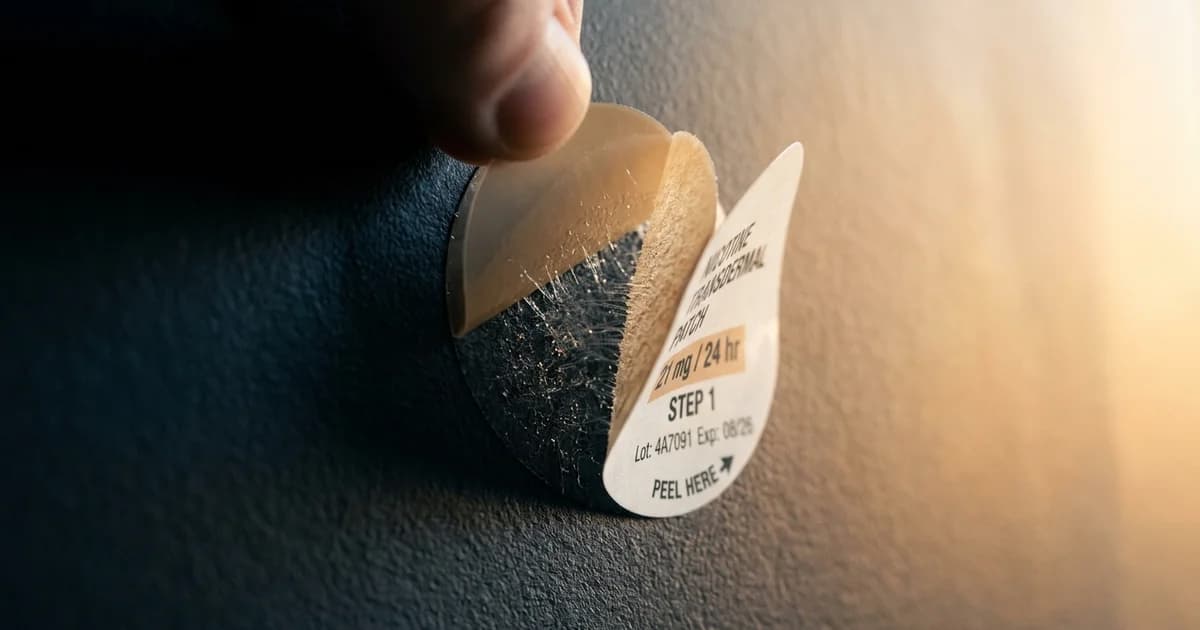
Patches are the "set it and forget it" option. You apply one each morning, and it releases a steady dose of nicotine through your skin over 16 or 24 hours. According to the CDC, you should rotate the placement site and avoid using the same spot more than once per week.
Typical dosing schedule:
| Weeks | Dose (24-hour patch) |
|---|---|
| Weeks 1-6 | 21 mg |
| Weeks 7-8 | 14 mg |
| Weeks 9-10 | 7 mg |
Heavy smokers (more than 25 cigarettes per day) usually start at 21 mg. Lighter smokers may begin at 14 mg. The key, per nicotine replacement therapy guidelines, is matching your starting dose to your current nicotine intake.
Nicotine Gum
Nicotine gum requires a specific technique that most people get wrong at first. According to StatPearls (NCBI), you should chew slowly until you feel a tingling sensation, then park the gum between your cheek and gums until the tingling fades. Repeat. This "chew and park" method controls the rate of nicotine absorption.
Gum comes in 2 mg and 4 mg strengths. If you smoke within 30 minutes of waking up, nicotine replacement therapy guidelines recommend starting with 4 mg. Everyone else can start with 2 mg. The maximum is 24 pieces per day, though most people use 9-12.
Nicotine Lozenges
Lozenges dissolve slowly in the mouth over 20-30 minutes. Same dosing logic as gum: 4 mg if you reach for nicotine within 30 minutes of waking, 2 mg otherwise. Don't chew or swallow them. Let them dissolve.
Nicotine Inhaler (Prescription)
The inhaler mimics the hand-to-mouth motion of smoking, which makes it useful for people whose habit is heavily tied to that physical ritual. It requires a prescription. The American Cancer Society recommends 6-16 cartridges per day, tapering over roughly 6 months.
Nicotine Nasal Spray (Prescription)
The fastest-acting NRT option. Nicotine reaches the brain within minutes, making it effective for intense, sudden cravings. It also has the highest rate of side effects, including nasal irritation, sneezing, and watery eyes, especially in the first week.
Nicotine Replacement Therapy Guidelines for Combination Use
Here's where the evidence gets interesting. Using a single NRT product is good. Using two together is better.
A review published by the NIHR found that combination NRT, specifically a patch plus a fast-acting form like gum, lozenges, or spray, increases the rate of successfully quitting by about 25% compared to using a single form alone. The Pharmaceutical Journal reported the range at 15% to 36%, based on a Cochrane review.
The strategy outlined in nicotine replacement therapy guidelines is simple:
- Apply a patch each morning for a steady baseline of nicotine throughout the day
- Use gum or lozenges as needed when breakthrough cravings hit
- Taper both over the course of your quit program
The American Academy of Pediatrics recommends this combination approach even for adolescent patients, noting that pairing a long-acting form with a shorter-acting form allows for a steady nicotine level while still managing acute cravings.
The CDC's combination therapy guide notes an added benefit: when using a patch as your base, you may need a lower dose of gum or lozenges than you would if using them alone.
How Long Should You Use NRT According to Nicotine Replacement Therapy Guidelines?
Most standard NRT programs last 8-12 weeks. But "standard" and "effective" aren't always the same thing.
The VA's smoking cessation guidelines note that tapering may be extended past 6 months, especially for patients with high nicotine dependence or difficulty reducing their NRT dose. A 2024 review published in PMC found that combining pharmacological methods with behavioral support yielded a success rate of approximately 24% at one year, compared to lower rates for behavioral intervention alone.
Twenty-four percent might not sound impressive. But consider that the baseline quit rate without any intervention hovers around 3-5%. NRT combined with counseling roughly quintuples your odds, which is exactly why nicotine replacement therapy guidelines stress the value of pairing medication with behavioral support.
A general tapering timeline:
| Phase | Duration | Action |
|---|---|---|
| Full dose | Weeks 1-6 | Use your prescribed NRT strength consistently |
| Step down | Weeks 7-9 | Reduce to a medium dose |
| Final taper | Weeks 10-12 | Move to the lowest available dose |
| Discontinue | Week 12+ | Stop NRT use (extend if needed) |
The most common mistake is stopping too early. Nicotine replacement therapy guidelines are clear on this point: if you're still experiencing strong cravings at week 8, don't force yourself off NRT. Talk to your doctor about extending the timeline.
Common Side Effects and How to Manage Them
Every form of NRT comes with potential side effects. Most are mild and decrease within the first week or two. Nicotine replacement therapy guidelines address each product's side effect profile so you know what to expect.
Patches: Skin irritation, vivid dreams (especially with 24-hour patches), and redness at the application site. Rotating placement helps. If vivid dreams bother you, switch to a 16-hour patch and remove it before bed.
Gum: Jaw soreness, hiccups, and stomach discomfort. These usually result from chewing too fast or swallowing nicotine-laced saliva. The "chew and park" method reduces all three.
Lozenges: Hiccups, heartburn, and nausea. Avoid eating or drinking for 15 minutes before use.
Inhaler: Mouth and throat irritation, coughing. These tend to diminish after the first few days.
Nasal Spray: Nasal irritation, runny nose, sneezing, watery eyes. The most common complaints in the first week.
One critical rule across all forms, and one that every set of nicotine replacement therapy guidelines reinforces: do not smoke or use nicotine pouches while on NRT. According to the MedlinePlus medical encyclopedia, combining NRT with active nicotine use can cause nicotine to build up to toxic levels.
The Part Most Nicotine Replacement Therapy Guidelines Skip: The Behavioral Habit
Here's the uncomfortable truth about NRT. It addresses the chemical dependency. It does very little for the behavioral one.
A 2024 survey by Action on Smoking and Health (ASH), cited by DarePouch, found that 47% of vapers identified the habit and hand-to-mouth action as a bigger barrier to quitting than nicotine withdrawal itself. The same principle applies to pouch users. The ritual of tucking something under your lip, the oral fixation, the sensory feedback: these patterns are deeply embedded in your daily routine.
Standard nicotine replacement therapy guidelines address the pharmacological withdrawal. But once you taper off the patch, gum, or lozenge, you're left with a behavioral loop that still fires every time you finish a meal, sit down at your desk, or feel stressed. This is where most people relapse. Not because the nicotine cravings return, but because the habit pattern was never replaced.
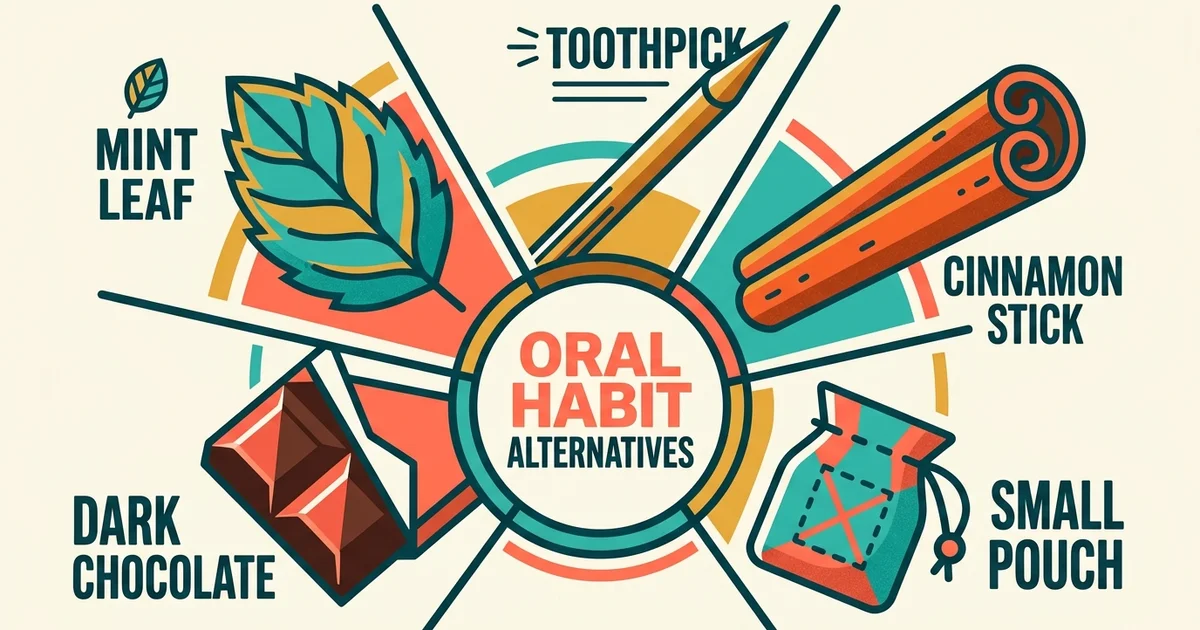
Nicotine-free alternatives that maintain the physical ritual can serve as a practical bridge during this phase. They give your brain the sensory input it expects without reintroducing the substance you just spent weeks eliminating.
After NRT: Replacing the Ritual Without the Nicotine
If you've followed nicotine replacement therapy guidelines and successfully tapered off NRT, the last step is the one nobody talks about enough: what do you do with the habit that's still wired into your day?
This is where Roon fits. It's a zero-nicotine sublingual pouch built with a stack of Caffeine (80mg), L-Theanine, Theacrine, and Methylliberine, designed to support sustained focus for 6-8 hours without jitters or a crash. No nicotine. No tolerance buildup. Caffeine is the main stimulant.
For someone who has completed the full course of nicotine replacement therapy guidelines, Roon preserves the familiar pouch ritual, the tuck, the oral presence, the sensory cue, while delivering actual cognitive performance benefits instead of another form of nicotine. Same ritual, zero nicotine, actual cognitive benefits.
It's not a nicotine replacement. It's what comes after.