Hypnosis To Quit Vaping: What the Science Actually Says

Hypnosis To Quit Vaping: What the Science Actually Says
You've tried willpower. You've tried tapering down. Maybe you've even tried swapping flavors like that would somehow trick your brain into not wanting nicotine. And now you're Googling hypnosis to quit vaping, which means you're either genuinely curious or genuinely desperate. Both are valid.
Hypnotherapy for nicotine cessation has been around for decades, mostly studied in cigarette smokers. The pitch is appealing: a few sessions, some deep relaxation, and your subconscious mind simply stops craving nicotine. But does hypnosis to quit vaping actually work? And if so, how well?
Here's what the research says, what it costs, and what it won't tell you.
Key Takeaways:
- Hypnotherapy has shown mixed results in clinical research, with some studies reporting quit rates comparable to cognitive behavioral therapy (CBT) and others showing no clear advantage over doing nothing.
- About 1 in 4 people can't be hypnotized at all, which limits the approach from the start.
- Most clinical evidence on quit vaping hypnosis is based on cigarette smokers, not vapers. The two habits share neurology but differ in behavior.
- Costs range from $100 to $500+ per session, and most insurance plans don't cover it.
How Hypnosis To Quit Vaping Actually Works
Hypnotherapy isn't what movies taught you. Nobody swings a pocket watch. Nobody clucks like a chicken (unless that's your thing).
In a clinical setting, a trained hypnotherapist guides you into a state of focused relaxation, sometimes called a "trance," though that word oversells it. You're conscious the entire time. You're just more suggestible. This is the foundation of how hypnosis to quit vaping functions in practice.
Once you're in that state, the therapist introduces new associations. Vaping might be linked to an unpleasant taste or sensation. Or the idea of being nicotine-free gets anchored to feelings of control and clarity. The goal is to reprogram the automatic thought patterns that make you reach for your vape without thinking about it.
Most practitioners offering hypnosis to quit vaping use one of two approaches:
- Suggestion-based hypnosis: Direct commands planted during the trance state. "You will not crave nicotine." Simple, but the effects can be shallow.
- Cognitive hypnotherapy: A blend of hypnosis with CBT techniques that targets the why behind the habit. This tends to produce more durable results because it addresses the emotional triggers, not just the behavior.
Sessions typically last 60 to 90 minutes. Some therapists promise results in a single session. Others recommend three to six.
What the Research Says About Quit Vaping Hypnosis
Here's where it gets complicated. The honest answer is that the evidence for hypnosis to quit vaping is mixed, and most of it wasn't even studying vapers.
The Cochrane Review
The most authoritative analysis comes from a Cochrane systematic review, last updated in 2019. After reviewing all available randomized controlled trials, the authors concluded there is "insufficient evidence" to confirm that hypnotherapy works better than other cessation methods or no treatment at all. They noted that if a benefit exists, it appears to be small.
That's not the same as saying hypnosis to quit vaping doesn't work. It means the studies that do exist are too inconsistent, too small, or too poorly designed to draw firm conclusions.
The 2024 Frontiers in Psychology Trial
A more recent randomized controlled trial published in Frontiers in Psychology compared hypnotherapy to CBT in 360 smokers. Both groups received six weekly 90-minute group sessions. The finding: continuous abstinence rates were comparable between the two methods. Hypnotherapy performed about as well as CBT, which is the current gold standard for behavioral cessation support.
That's a meaningful result for anyone considering quit vaping hypnosis. It suggests hypnotherapy belongs in the conversation, even if it isn't clearly superior to established approaches.
The Hypnosis vs. NRT Study
A randomized controlled trial indexed on PubMed found that hypnotherapy outperformed nicotine replacement therapy (NRT) for smoking cessation. The results showed hypnosis was roughly three times more effective than patches and gum alone. However, this was a single-center study, and the broader literature hasn't consistently replicated those numbers.
The Vaping-Specific Problem
Nearly all of this research was conducted on cigarette smokers. Vaping involves different behavioral patterns: higher frequency of use, easier concealment, no smoke breaks to structure the habit. A USC study published in 2024 found that among youth who vape daily, the share who tried to quit but couldn't rose from 28.2% to 53% between 2020 and 2024. The habit is getting stickier, and the cessation research, including research on hypnosis to quit vaping, hasn't kept pace.
Who Can (and Can't) Be Hypnotized?
This is the part most quit vaping hypnosis articles skip.
According to WebMD, about one in four people simply cannot be hypnotized. The intensity of the experience also varies widely from person to person. If you're someone who struggles to meditate, zones out during guided exercises, or just has a naturally skeptical disposition, hypnosis to quit vaping may not produce much effect.
Hypnotic suggestibility isn't a character flaw. It's a neurological trait, like being a morning person or having perfect pitch. Some brains respond to it. Some don't.
The people most likely to benefit from hypnosis to quit vaping tend to be:
- Highly motivated to quit (not just curious about quitting)
- Open to the process without being gullible about it
- Willing to combine hypnosis with other behavioral strategies
If you walk into a session expecting a magic fix and bring nothing else to the table, you're setting yourself up for disappointment.
What Hypnosis To Quit Vaping Costs (And Whether Insurance Covers It)
Hypnotherapy isn't cheap. According to Thervo, the average cost for smoking/vaping cessation ranges from $300 to $1,500 for a typical course of three to six sessions. Individual sessions generally run $100 to $250 each, depending on the practitioner's experience and location.
Some therapists charge premium rates for single-session quit vaping hypnosis programs. One practitioner reports a $500 fee for a two-hour session, claiming an 80-90% success rate. Those self-reported numbers should be taken with a grain of salt, since they rarely account for long-term follow-up or selection bias (people who seek out hypnosis to quit vaping are already highly motivated to quit).
Most health insurance plans do not cover hypnotherapy for cessation. A few may reimburse it if prescribed by a physician, but that's the exception.
| Method | Typical Cost | Evidence Quality |
|---|---|---|
| Hypnotherapy (3-6 sessions) | $300 - $1,500 | Mixed; some positive RCTs |
| CBT (6-8 sessions) | $600 - $2,000 | Strong; well-established |
| NRT (patches, gum, lozenges) | $100 - $300/month | Strong; 50-60% improvement in quit rates |
| Prescription meds (Chantix, etc.) | $300 - $500/month | Strong; highest quit rates |
| Apps and text programs | Free - $50/month | Moderate; growing evidence |
The Piece That Hypnosis To Quit Vaping Doesn't Address
Even the best hypnotherapy session can't solve the full problem, because nicotine addiction isn't just chemical. It's behavioral.
You vape when you're bored. You vape when you're stressed. You vape during transitions: getting in the car, finishing a meal, sitting down at your desk. The physical hand-to-mouth motion and the oral sensation become wired into your daily routine at a level that has nothing to do with nicotine itself.
According to the Truth Initiative, 62% of 18-24 year-old nicotine users want to quit within the next year. The desire is there. But desire alone doesn't address the behavioral loop: the trigger, the motion, the sensation, the brief reward. Hypnosis to quit vaping can help reframe your mental relationship with nicotine, but it doesn't give your hands and mouth something else to do.
This is why so many people who quit nicotine end up replacing it with something else. Gum. Snacking. Fidgeting. The body wants a substitute for the ritual, not just the chemical.
A Smarter Approach: Stack Your Methods
If you're considering hypnosis to quit vaping, the best evidence suggests combining it with other strategies rather than relying on it alone. No single method has a knockout success rate. But layering complementary approaches can cover each other's blind spots.
A practical quit stack might look like this:
- Behavioral support: CBT, counseling, or a structured quit program to address triggers and build coping strategies.
- Pharmacological support: NRT or prescription medication to manage withdrawal symptoms during the acute phase.
- Hypnotherapy: As a supplemental tool to reinforce motivation and reframe your relationship with nicotine. Quit vaping hypnosis works best as one piece of a larger plan.
- Habit replacement: Something that satisfies the oral and ritual component of the behavior without reintroducing nicotine.
That last point matters more than most people realize. The hand-to-mouth motion, the brief pause in your day, the sensory feedback of something on your lip or tongue: these are deeply ingrained patterns. Ignoring them is why white-knuckling through withdrawal so often fails, even after successful hypnosis to quit vaping sessions.
Beyond Hypnosis: Replacing the Ritual Without the Nicotine
Quitting vaping doesn't have to mean quitting everything about the experience. The problem was never the pouch or the pause. It was the nicotine dependency and the health consequences that come with it. Whether you pursue hypnosis to quit vaping or another method entirely, the ritual still needs an answer.
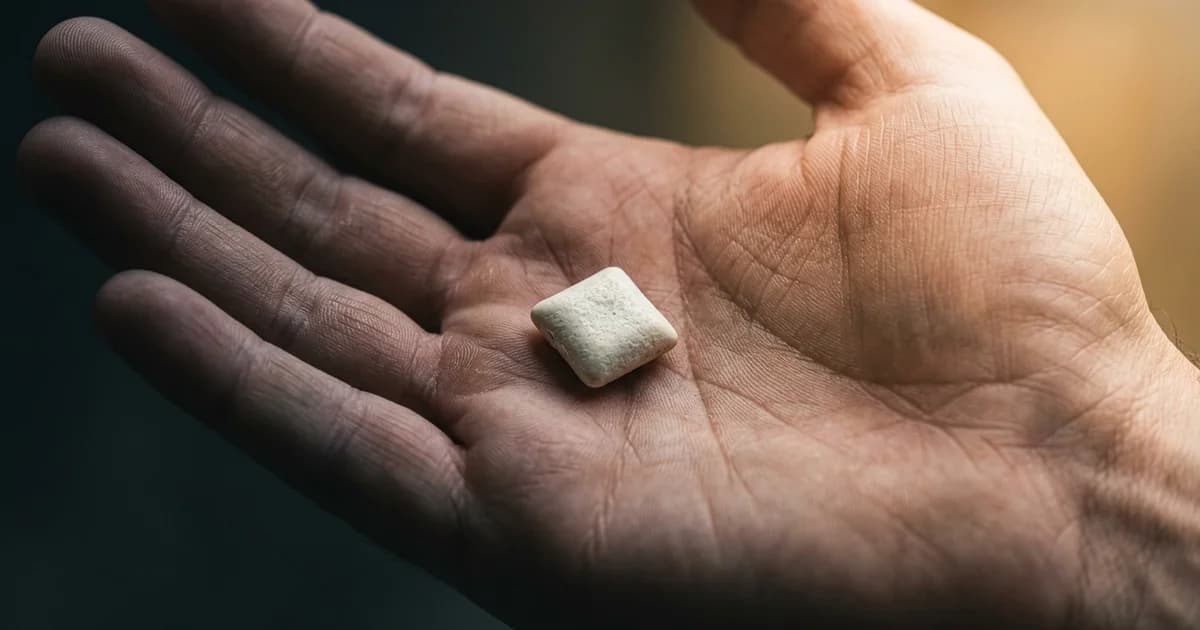
Roon was built for exactly this gap. It's a zero-nicotine sublingual pouch containing caffeine (80 mg), L-Theanine, Theacrine, and Methylliberine, a stack designed to support sustained focus for six to eight hours without jitters, crashes, or tolerance buildup. Same ritual. Same sensory feedback. Zero nicotine. And instead of borrowing focus from tomorrow's energy, you're actually supporting cognitive performance with ingredients that have real clinical backing.
Whether you try hypnosis to quit vaping, CBT, NRT, or all three, the behavioral piece still needs an answer. Roon gives you one: same ritual, zero nicotine, actual cognitive benefits.