Mushroom Supplements for Anxiety: What Actually Works
Mushroom Supplements for Anxiety: What Actually Works
Mushroom supplements for anxiety work primarily through adaptogenic pathways, modulating your HPA axis and cortisol output over 4 to 12 weeks of consistent use. They do not act like benzodiazepines or SSRIs. The two species with the strongest clinical backing are lion's mane (Hericium erinaceus) and reishi (Ganoderma lucidum), both supported by double-blind, placebo-controlled trials showing reductions in subjective stress, anxiety scores, and serum cortisol. Cordyceps and chaga have preclinical promise but lack the human data to justify a primary recommendation.
Below is a quick comparison of the four most commonly marketed species, ranked by the strength of their human evidence for anxiety-related outcomes.
| Species | Primary Mechanism | Human Evidence for Anxiety | Typical Research Dose | Time to Effect |
|---|---|---|---|---|
| Lion's Mane (H. erinaceus) | NGF stimulation, hippocampal support | Moderate (RCTs in healthy adults, menopausal women) | 500–3,000 mg/day | 4–8 weeks |
| Reishi (G. lucidum) | Cortisol modulation, GABA support, sleep quality | Moderate (12-week RCT, blend studies) | 1,000–3,000 mg/day | 6–12 weeks |
| Cordyceps (C. militaris) | Anti-inflammatory, neurotransmitter restoration | Weak (mostly animal models) | 1,000–3,000 mg/day | Unknown in humans |
| Chaga (I. obliquus) | Antioxidant, anti-inflammatory | Very weak (preclinical only) | 500–2,000 mg/day | Unknown in humans |
That table should save you from scrolling through dozens of supplement brand pages. Now let's get into the actual science.
Key Takeaways:
- Lion's mane and reishi have the strongest clinical evidence among mushroom supplements for anxiety and stress-related outcomes.
- Most mushroom supplements work through adaptogenic pathways, modulating cortisol and supporting neurotransmitter balance over weeks, not hours.
- Dosing matters more than brand aesthetics. Look for fruiting body extracts with verified beta-glucan content of at least 20%.
- Mushroom supplements for anxiety are slow-burn tools. If you need calm focus now, the mechanism is different (more on that below).
How Mushroom Supplements for Anxiety Affect Your Stress Response
Functional mushrooms don't work like a benzodiazepine. They don't flip a switch. Most of the species studied as mushroom supplements for anxiety fall into the category of adaptogens, compounds that help your body regulate its response to stress rather than suppress symptoms directly.
The primary pathway here is the hypothalamic-pituitary-adrenal (HPA) axis, the system that controls cortisol release. When the HPA axis is chronically activated, you get elevated cortisol, disrupted sleep, brain fog, and that low-grade anxiety that never fully goes away. Globally, anxiety disorders affect roughly 301 million people, about 4% of the world's population, making them the most common class of mental illness.
Adaptogenic mushrooms appear to modulate this axis. They don't sedate you. They help your stress response behave more like a thermostat and less like a fire alarm stuck in the "on" position. A 2026 randomized, double-blind, placebo-controlled trial published in Brain and Behavior tested a five-mushroom blend (including reishi) in 50 participants over 12 weeks and found reductions in serum cortisol and ACTH, the upstream hormone that triggers cortisol release. That's direct evidence of HPA axis modulation.
The catch: this takes time. Most clinical trials showing benefits from mushroom supplements for anxiety run for 4 to 12 weeks. If someone tells you a mushroom supplement erased their anxiety on day one, that's placebo, not pharmacology.
The Mushroom Supplements for Anxiety With Real Evidence
Not all functional mushrooms are created equal. Here's a species-by-species breakdown based on what the published research actually supports.
Lion's Mane (Hericium erinaceus)
Lion's mane is the most studied functional mushroom for brain-related outcomes, and the anxiety data is promising. It's often the first species people encounter when researching mushroom supplements for anxiety.
A 2023 double-blind, placebo-controlled pilot study tested 1.8 g/day of lion's mane in 41 healthy young adults over 28 days. The researchers found a trend toward reduced subjective stress (p = 0.051) and improved speed of cognitive performance. A 2025 follow-up study published in Frontiers in Nutrition confirmed that while a single acute dose did not reduce stress, chronic 28-day supplementation showed stress-reduction trends, consistent with the earlier findings. Separate earlier research on menopausal women found that four weeks of lion's mane supplementation lowered depression and anxiety scores compared to placebo.
The proposed mechanism is nerve growth factor (NGF) stimulation. Lion's mane contains compounds called hericenones and erinacines that can induce NGF synthesis in nerve cells. NGF supports the survival and function of neurons, particularly in the hippocampus, a region directly involved in emotional regulation. A separate 8-week trial in overweight or obese participants found that lion's mane improved anxiety and depression measures while increasing circulating pro-BDNF levels, another neurotrophic factor tied to mood.
Think of it this way: lion's mane isn't calming you down in the moment. It's supporting the neural infrastructure that helps you handle stress better over time, which is why it ranks high among mushroom supplements for anxiety.
Typical research dose: 500 mg to 3,000 mg per day of fruiting body extract.
Reishi (Ganoderma lucidum)
Reishi is the oldest player in this space and one of the most popular mushroom supplements for anxiety. Traditional Chinese Medicine has used it for centuries as a calming tonic, and modern research is starting to validate some of those claims.
The strongest recent evidence comes from a 12-week randomized controlled trial published in Brain and Behavior (Hisamuddin et al., 2026). The study enrolled 50 participants and assessed them at baseline, 6 weeks, and 12 weeks using validated instruments including the State-Trait Anxiety Inventory (STAI-S), Hamilton Anxiety Scale (HAM-A), and Perceived Stress Scale (PSS). The mushroom blend, which included reishi, produced reductions in serum cortisol and ACTH alongside improvements in anxiety scores, physical fatigue, and sleep quality. Effects began emerging at the 6-week mark.
Reishi's active compounds, triterpenes and polysaccharides, appear to work on multiple fronts. They modulate cortisol, support GABA activity (your brain's primary inhibitory neurotransmitter), and may improve sleep quality. That last point matters because poor sleep and anxiety form a vicious feedback loop. Fix one, and the other often improves. This multi-pathway action is what makes reishi a standout among mushroom supplements for anxiety.
Reishi also carries a safety note worth knowing: it has documented interaction risks with anticoagulant and antiplatelet medications, potentially increasing bleeding risk. If you're on warfarin, aspirin, or similar drugs, talk to your doctor before adding reishi.
Typical research dose: 1,000 mg to 3,000 mg per day of extract (look for triterpene content on the label).
Cordyceps (Cordyceps militaris)
Cordyceps is better known for physical performance, but there's a stress angle worth considering if you're exploring mushroom supplements for anxiety.
A study published in the Journal of Ethnopharmacology found that water extract of Cordyceps militaris showed antidepressant-like effects in an animal model of chronic mild stress, restoring disrupted neurotransmission and reducing chronic inflammation. The human evidence for cordyceps and anxiety specifically is thinner than for lion's mane or reishi. It's a reasonable addition to a stack, but it shouldn't be your primary pick if anxiety reduction is the goal.
Typical research dose: 1,000 mg to 3,000 mg per day.
Chaga (Inonotus obliquus)
Chaga is loaded with antioxidants and has adaptogenic properties, but the anxiety-specific evidence is mostly preclinical. Animal studies show promise, but we don't yet have strong human trials isolating chaga's effects on anxiety or mood.
Its best-supported role is as an anti-inflammatory and immune modulator. Since chronic inflammation can worsen anxiety symptoms, there's a plausible indirect pathway. But "plausible indirect pathway" is a long way from "proven to reduce anxiety."
Its antioxidant profile is genuinely impressive. Chaga scores among the highest ORAC (oxygen radical absorbance capacity) values of any food. But antioxidant capacity and anxiolytic effect are two very different claims.
Bottom line: Interesting, but not enough human data to recommend it specifically as one of the mushroom supplements for anxiety.
What to Look for (and What to Avoid) in Mushroom Supplements for Anxiety
The supplement industry has a quality problem, and mushroom products are no exception. Here's a quick filter:
| Look For | Avoid |
|---|---|
| Fruiting body extract | Mycelium-on-grain products (diluted with starch) |
| Standardized beta-glucan content (≥20%) | No beta-glucan info on label |
| Third-party testing (COA available) | Proprietary blends with no dose disclosure |
| Species clearly identified by Latin name | Vague "mushroom blend" with no species breakdown |
| Extracted with hot water or dual extraction | Raw, unextracted mushroom powder |
The mycelium-on-grain issue deserves special attention. Many cheaper mushroom supplements for anxiety grow mycelium on rice or oat substrate and then grind the whole thing up, grain and all. Analyses published by ingredient supplier Select Ingredients show that mycelium-on-grain products typically yield only about 5% beta-glucans or less, compared to 30%+ in genuine fruiting body extracts. Some tested as low as 1–5% beta-glucan with 35–40% starch filler. If the label says "mycelium biomass" and lists rice flour as an ingredient, that's your red flag.
Extraction method also matters. The bioactive compounds in mushrooms, particularly beta-glucans and triterpenes, are locked behind chitin cell walls that your digestive system can't break down efficiently on its own. Hot water extraction pulls out the beta-glucans. Dual extraction (hot water plus alcohol) also captures the fat-soluble triterpenes. Raw, unextracted mushroom powder looks great on Instagram but delivers a fraction of the active compounds. Choosing properly extracted mushroom supplements for anxiety is the difference between getting real bioactives and paying for expensive starch.
Realistic Expectations: What Mushroom Supplements for Anxiety Can and Can't Do
Mushroom supplements for anxiety may support your body's stress response over time. That's a real and useful thing. But let's be honest about the limitations.
What they may do with consistent use:
- Help modulate cortisol and HPA axis function over 4 to 12 weeks
- Support neuroplasticity and nerve growth factor production (lion's mane)
- Improve sleep quality, which indirectly reduces anxiety (reishi)
- Provide adaptogenic support during periods of chronic stress
What they cannot do:
- Deliver immediate relief during an acute anxiety episode
- Replace therapy, medication, or lifestyle changes for clinical anxiety disorders
- Work in a single dose (this is a long game)
The 2026 Brain and Behavior trial reinforces this timeline. The randomized, double-blind, placebo-controlled trial on a mushroom blend found adaptogenic effects on stress, fatigue, and sleep, but these emerged gradually over the 12-week supplementation period, not overnight.
A note on medical context: If you're dealing with a diagnosed anxiety disorder, mushroom supplements may be a useful complement to your treatment plan. They are not a replacement for professional care. Talk to your doctor before adding any supplement to an existing regimen, especially if you're on medication that affects serotonin, blood pressure, or blood clotting. Reishi in particular has mild blood-thinning properties and can enhance the effects of anticoagulants like warfarin.
When You Need Calm Focus Now, Not in Six Weeks
Mushroom supplements for anxiety are a long-term play. You take them daily for weeks, and the benefits accumulate gradually. That's fine for baseline stress management.
But what about the 2 PM meeting where your brain is scattered? The deep work session where you need to be locked in but not wired? The afternoon where coffee would help your focus but wreck your sleep?
This is where the mechanism changes. Instead of slowly modulating your HPA axis the way mushroom supplements for anxiety do, you need something that works on a faster neurotransmitter level.
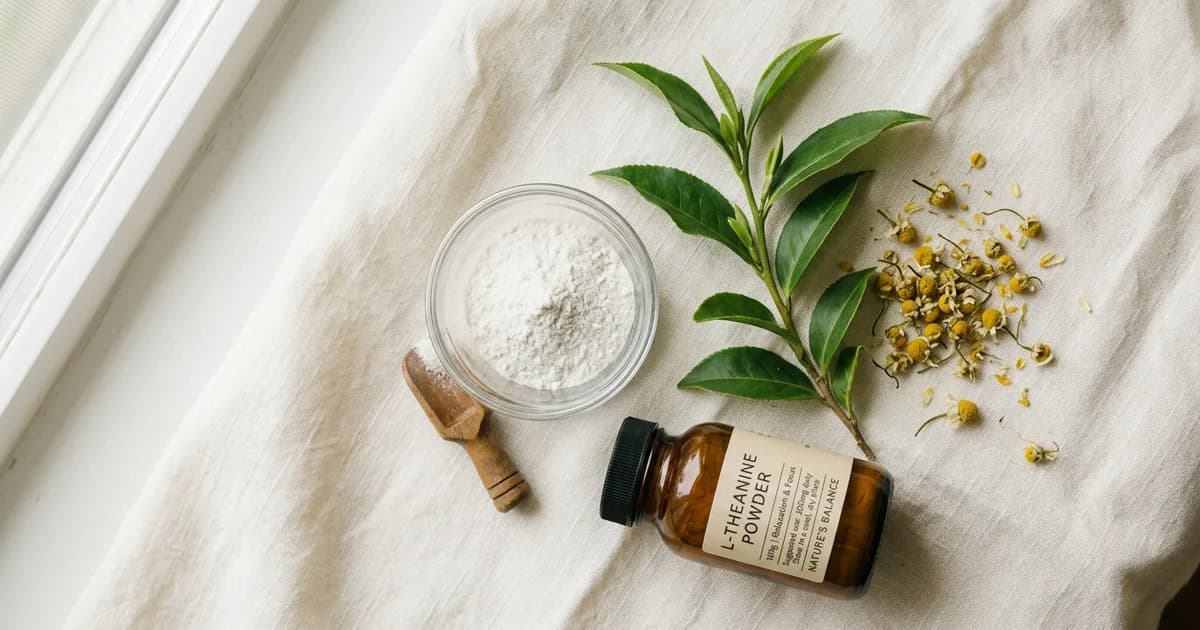
L-theanine does exactly this. It's an amino acid found naturally in tea that promotes alpha brain wave activity and enhances GABA, your brain's calming neurotransmitter. A 2019 systematic review found that 200–400 mg of pure L-theanine per day reduced stress and anxiety in people under acute stress conditions. A 2024 randomized, double-blind, placebo-controlled trial further confirmed that L-theanine supplementation was safe and effective during acute stress challenges in healthy adults over 28 days. The result is calm focus: your mind quiets down, but you stay sharp.
Frequently Asked Questions
What is the best mushroom supplement for anxiety?
Lion's mane and reishi have the most clinical support for anxiety-related outcomes. Lion's mane works primarily through nerve growth factor stimulation and hippocampal support, while reishi modulates cortisol and GABA pathways. A 2026 RCT in Brain and Behavior showed a reishi-containing blend reduced anxiety scores and serum cortisol over 12 weeks. Your best choice depends on whether your primary concern is cognitive stress resilience (lion's mane) or cortisol-driven tension and sleep disruption (reishi).
How long do mushroom supplements take to work for anxiety?
Most clinical trials showing measurable benefits run 4 to 12 weeks. The 2023 lion's mane pilot study observed stress-reduction trends at 28 days. The 2026 mushroom blend RCT found anxiety and cortisol improvements emerging at 6 weeks and strengthening through week 12. Single doses do not produce anxiolytic effects. Consistency matters more than any individual serving.
Can mushroom supplements replace anxiety medication?
No. Mushroom supplements are not a substitute for prescribed medications, therapy, or other professional treatments for diagnosed anxiety disorders. Research suggests they may complement a broader treatment plan, but they have not been shown to treat, cure, or prevent anxiety disorders. Always consult your doctor before combining supplements with existing medications.
Are mushroom supplements for anxiety safe?
For most healthy adults, the species discussed here (lion's mane, reishi, cordyceps, chaga) have favorable safety profiles at standard doses. Reishi carries a specific caution: it may enhance the effects of blood-thinning medications like warfarin and aspirin. People on immunosuppressants, antihypertensives, or diabetes medications should also consult a physician before starting any functional mushroom supplement.
What should I look for on a mushroom supplement label?
Look for fruiting body extract (not mycelium-on-grain), a standardized beta-glucan content of at least 20%, the species identified by Latin name, and a third-party certificate of analysis. Mycelium-on-grain products can contain as little as 1–5% beta-glucans with the rest being starch filler. Dual extraction (hot water plus alcohol) captures both water-soluble beta-glucans and fat-soluble triterpenes.
Do mushroom supplements for anxiety cause side effects?
Side effects are generally mild and uncommon at standard doses. Some people report digestive discomfort, particularly at higher doses or when starting supplementation. Reishi may cause dizziness, dry mouth, or mild GI upset in some users. If you experience any adverse effects, reduce the dose or discontinue use and talk to your healthcare provider.
Can I take mushroom supplements with caffeine or L-theanine?
Yes. Mushroom supplements and L-theanine operate on different timescales and mechanisms. Mushroom adaptogens modulate your HPA axis over weeks. L-theanine promotes alpha brain wave activity and GABA enhancement within 30 to 60 minutes. There are no known contraindications between standard functional mushroom supplements and caffeine or L-theanine at typical doses.
Is there a difference between mushroom powder and mushroom extract?
A large one. Raw mushroom powder contains bioactive compounds locked behind chitin cell walls that your body cannot efficiently break down. Extracted products (hot water or dual extraction) concentrate the beta-glucans and triterpenes into bioavailable forms. Supplier testing shows fruiting body extracts deliver 30%+ beta-glucans, while unextracted powders and mycelium-on-grain products often fall below 5%.
Where a Sublingual Pouch Fills the Gap Mushrooms Can't
Mushroom supplements for anxiety build stress resilience over weeks. That's their strength, and it's real. But they leave a gap: the moments where you need calm, sustained focus right now, not after a month of daily capsules.
Roon was designed for that gap. Each sublingual pouch delivers 80 mg caffeine, 60 mg L-theanine, 25 mg methylliberine (Dynamine), and 5 mg theacrine (TeaCrine). No nicotine. The L-theanine promotes GABA activity and alpha brain waves, smoothing out the caffeine so you get 6 to 8 hours of clean focus without jitters or a crash.
Roon is not a mushroom supplement. It's not an adaptogen, and it won't modulate your cortisol over time. Think of it as the acute-focus complement to a long-term adaptogenic stack. If you're already investing in mushroom supplements for baseline resilience and want something for the moments that demand immediate clarity, Roon is worth a look.
Written by Roon Team