Herbal Mocktail Recipes That Actually Do Something for Your Brain and Body
Herbal Mocktail Recipes That Actually Do Something for Your Brain and Body
You don't need vodka to make a drink worth sipping. The best herbal mocktail recipes skip the alcohol and load up on ingredients that have real, measurable effects on how you feel, think, and perform. We're talking adaptogens, nootropic herbs, anti-inflammatory roots, and botanicals backed by actual research.
This isn't a list of "fancy water with mint." These are functional herbal mocktail recipes built around herbs that scientists have studied for decades. And the timing couldn't be better: nearly 49% of Americans plan to drink less alcohol in 2025, with 65% of Gen Z saying they'll cut back this year. The sober-curious movement isn't a fad. It's a permanent shift in how people think about what they put in their glass.
Here's how to build herbal mocktail recipes that taste good and pull their weight.
Key Takeaways
- Herbs like rosemary, lavender, and hibiscus have studied cognitive and cardiovascular benefits that make them more than just garnish in herbal mocktail recipes.
- The best herbal mocktails combine flavor profiles with functional ingredients, giving you something a glass of wine never could.
- Building a base of herbal syrups, tinctures, and infusions lets you mix drinks in under two minutes.
- Pairing the right herbs matters. Some combinations amplify each other's effects.
Why Herbal Mocktail Recipes Are More Than a Trend
The non-alcoholic beverage market hit $925 million in off-premise sales with 22% year-over-year growth, according to NIQ. That's not niche. That's mainstream consumer behavior.
But here's what separates herbal mocktail recipes from a can of sparkling water with a "botanical" label: the herbs actually do things. Rosemary supports memory. Hibiscus lowers blood pressure in clinical settings. Lavender modulates stress responses. When you build a drink around these ingredients at meaningful concentrations, you're not just replacing alcohol. You're upgrading the entire concept of a "drink."
The shift is especially sharp among younger adults. According to a survey from NCSolutions, 39% of Gen Z plan to adopt a fully dry lifestyle in 2025. Not just Dry January. The whole year. That's a lot of people looking for herbal mocktail recipes that actually deliver.
The Functional Herbs Worth Building Drinks Around
Not every herb deserves a spot in your glass. These do, and the science backs them up. Knowing which herbs to reach for is the foundation of great herbal mocktail recipes.
Rosemary
Rosemary isn't just for roasting chicken. A randomized, placebo-controlled study found that a low dose of rosemary (750 mg) produced a statistically significant improvement in speed of memory compared to placebo. The key detail: higher doses actually hurt performance. More isn't better. A light rosemary infusion in a mocktail hits the sweet spot.
Hibiscus
Hibiscus tea has one of the strongest evidence bases of any herbal ingredient for cardiovascular support. A clinical trial reported in the Journal of Nutrition found that six weeks of hibiscus tea consumption lowered systolic blood pressure by 7.2 mmHg compared to placebo. It also tastes incredible: tart, floral, and deeply red. It's the backbone of at least three herbal mocktail recipes below.
Lavender
Lavender's calming reputation is earned. Research on university students published in Complementary Therapies in Clinical Practice found that rosemary and lavender had measurable effects on anxiety reduction and sleep quality. In herbal mocktail recipes, a little goes a long way. Too much and your drink tastes like soap. A tablespoon of lavender simple syrup per serving is the ceiling.
Ginger
Fresh ginger is anti-inflammatory, settles the stomach, and adds a sharp, warm bite that gives mocktails the "kick" people miss when they drop alcohol. It's also one of the easiest ingredients to work with in herbal mocktail recipes. Grate it, juice it, or simmer it into a syrup.
Mint
Peppermint supports digestion and adds a cooling contrast to sweet or tart ingredients. It's the utility player of herbal mocktail recipes. Muddle it, garnish with it, or steep it into a tea base.
5 Herbal Mocktail Recipes Worth Making
Each recipe below serves one. Scale as needed.
1. The Rosemary Focus Tonic
This one is clean, citrus-forward, and built around rosemary's cognitive support properties. Of all the herbal mocktail recipes here, this is the one to reach for during a work session.
| Ingredient | Amount |
|---|---|
| Fresh rosemary sprig | 1 large |
| Fresh lemon juice | 1 oz |
| Honey simple syrup | 0.75 oz |
| Sparkling water | 4 oz |
| Ice | To fill glass |
Method: Gently muddle the rosemary sprig in the bottom of a rocks glass to release the oils (don't shred it). Add lemon juice and honey syrup. Fill with ice, top with sparkling water, and stir once. Garnish with a second rosemary sprig.
Why it works: The lemon brightens the piney, savory rosemary. Honey rounds the edges. You get an aromatic, herbaceous drink that looks and tastes like something a good bar would charge $14 for.
2. The Hibiscus Blood Orange Cooler
Tart, fruity, and loaded with anthocyanins from the hibiscus. This is one of the most visually striking herbal mocktail recipes you can make at home.
| Ingredient | Amount |
|---|---|
| Brewed hibiscus tea (cooled) | 3 oz |
| Blood orange juice | 2 oz |
| Lime juice | 0.5 oz |
| Agave syrup | 0.5 oz |
| Sparkling water | 2 oz |
| Ice | To fill glass |
Method: Brew a strong hibiscus tea (two bags or two tablespoons of dried flowers per cup) and let it cool completely. Combine with blood orange juice, lime, and agave in a shaker with ice. Shake hard for ten seconds, strain into a tall glass over fresh ice, and top with sparkling water.
Why it works: The deep crimson color is striking. Blood orange adds sweetness without sugar overload, and the hibiscus brings that tart, cranberry-like punch.
3. The Lavender Calm Collins
A riff on the Tom Collins template, minus the gin, plus the calm. Among evening-focused herbal mocktail recipes, this one stands out.
| Ingredient | Amount |
|---|---|
| Lavender simple syrup | 0.75 oz |
| Fresh lemon juice | 1 oz |
| Tonic water | 4 oz |
| Dried lavender buds | Pinch (garnish) |
| Ice | To fill glass |
Method: Make lavender syrup by simmering equal parts sugar and water with two tablespoons of dried culinary lavender for five minutes, then straining. Combine syrup and lemon juice in a Collins glass, add ice, top with tonic water. Garnish with a few dried lavender buds.
Why it works: The bitterness of tonic water replaces the botanical complexity you'd normally get from gin. Lavender syrup adds floral sweetness without overwhelming the drink. Sip this one slowly.
4. The Ginger Turmeric Fire Starter
Warming, spicy, and built for the people who think herbal mocktail recipes are boring.
| Ingredient | Amount |
|---|---|
| Fresh ginger juice | 1 oz |
| Fresh turmeric juice (or 0.25 tsp powder) | 0.5 oz |
| Lemon juice | 1 oz |
| Maple syrup | 0.75 oz |
| Sparkling water | 3 oz |
| Pinch of black pepper | Tiny pinch |
| Ice | To fill glass |
Method: If you have a juicer, juice fresh ginger and turmeric root. If not, grate finely and press through a fine mesh strainer. Combine ginger juice, turmeric, lemon, and maple syrup in a glass. Stir well. Add ice, top with sparkling water, and add the black pepper (it increases turmeric absorption by up to 2,000%).
Why it works: This one has bite. The ginger hits first, the turmeric adds an earthy depth, and the black pepper does double duty as a flavor accent and a bioavailability booster. It's the mocktail equivalent of a double espresso.
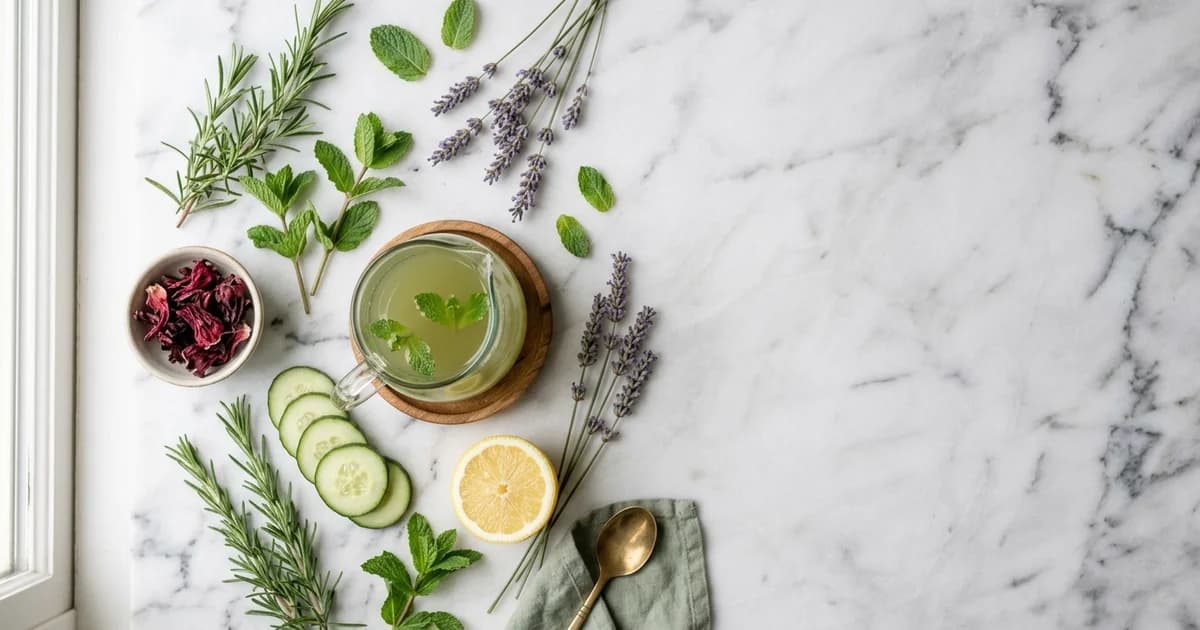
5. The Mint and Cucumber Reset
Cool, clean, and almost absurdly refreshing. This rounds out the herbal mocktail recipes with something light and hydrating.
| Ingredient | Amount |
|---|---|
| Fresh mint leaves | 8-10 |
| Cucumber slices | 4-5 thin rounds |
| Lime juice | 1 oz |
| Simple syrup | 0.5 oz |
| Sparkling water | 4 oz |
| Ice | To fill glass |
Method: Muddle mint and cucumber in the bottom of a tall glass. Add lime juice and simple syrup. Fill with ice, top with sparkling water, stir gently. Garnish with a cucumber ribbon and a mint sprig.
Why it works: This is the one to make when you want something that feels hydrating and light. The cucumber keeps it crisp, the mint keeps it cool, and the lime keeps it interesting.
How to Build Your Herbal Mocktail Pantry
You don't need a full bar setup to start making herbal mocktail recipes at home. You need five things.
- Two or three herbal syrups. Lavender, rosemary, and ginger cover most bases. They keep in the fridge for two to three weeks.
- Dried hibiscus flowers. Cheaper than tea bags, stronger flavor, and you can brew them to whatever concentration you want.
- Fresh citrus. Lemons and limes are non-negotiable. Pre-squeezed juice from a bottle tastes flat.
- Good sparkling water. This is your base. Topo Chico, Pellegrino, or anything with strong carbonation.
- A muddler and a fine mesh strainer. Total investment: about $12.
Batch your syrups on Sunday. You'll have mocktail-ready ingredients all week, and these herbal mocktail recipes will take under two minutes to assemble.
The Bigger Picture: What You Drink Is Part of How You Perform
The herbal mocktail recipes movement reflects something larger than a preference for non-alcoholic drinks. It reflects a shift in how people think about daily inputs. What you eat, what you drink, how you sleep, what you put in your body at 2 PM when the afternoon slump hits. All of it compounds.
The herbs in these herbal mocktail recipes support real physiological functions. Rosemary and memory. Hibiscus and blood pressure. Lavender and stress. But a drink is still just a drink. It's one input in a much larger system.
If you're already thinking this carefully about what goes in your glass, you're probably thinking about cognitive performance more broadly. That's where something like Roon fits in. It's a zero-nicotine sublingual pouch with caffeine, L-theanine, theacrine, and methylliberine, designed to deliver six to eight hours of clean, sustained focus without jitters or a crash. A study published in Cureus found that the combination of caffeine, theacrine, and methylliberine improved cognitive performance and reaction time without negatively affecting mood.
Make the herbal mocktail recipes for the ritual. Use Roon for the focus. Optimize your day.