Dry January Meaning: What It Is, Why It Works
Roon Team
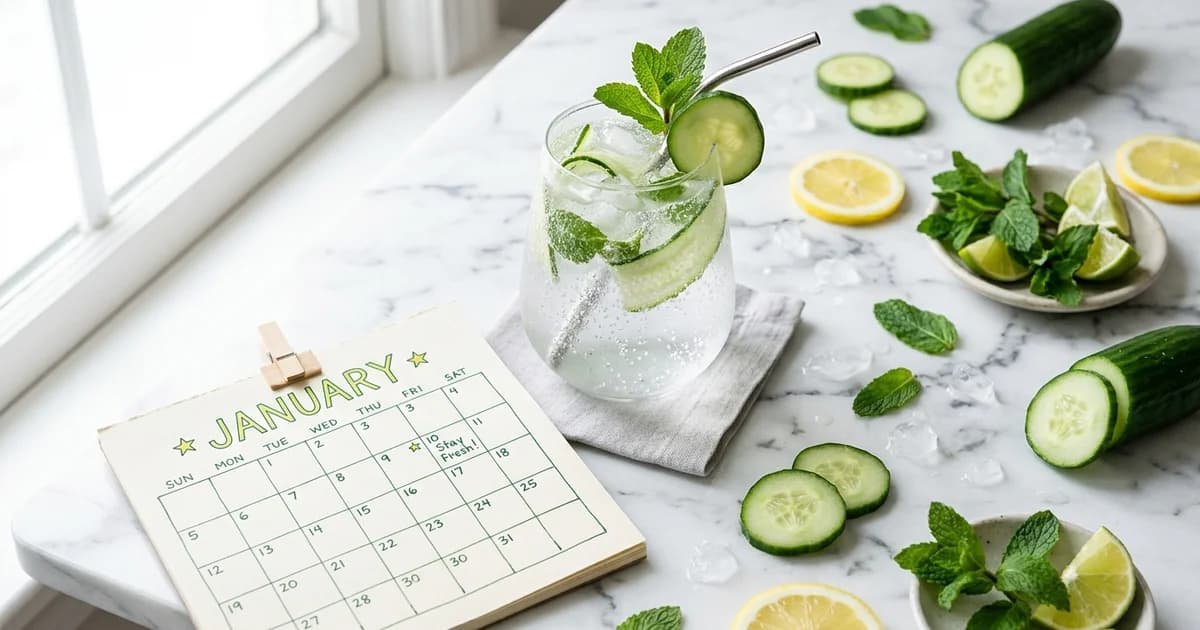
Dry January Meaning: What It Is, Why It Works, and How to Actually Finish It
The dry January meaning is simple: don't drink alcohol for 31 days. That's it. No complicated rules, no expensive programs, no accountability coaches. Just you and a calendar.
But the simplicity is deceptive. Understanding the dry January meaning goes beyond the surface-level challenge. What started as a niche UK charity campaign has turned into one of the largest annual health movements in the world, with 30% of Americans participating in 2025, a 36% jump from the year before. The question isn't really what Dry January is anymore. It's why so many people keep signing up, and what the science says about whether it actually does anything.
Key Takeaways:
- The dry January meaning refers to a month-long alcohol-free challenge originally launched by Alcohol Change UK in 2013.
- A 2025 Brown University review found that even one month without alcohol improved sleep, mood, blood pressure, and liver function.
- Participants can save anywhere from $50 to $300+ in a single month by cutting alcohol.
- You don't need to go fully dry to benefit. "Damp January" (just drinking less) still produces measurable results.
What Is Dry January? The Full Dry January Meaning Explained
So what is Dry January in practice? It's a public health campaign that challenges people to abstain from alcohol for the entire month of January. The concept was formalized in 2013 by Alcohol Change UK, a British charity formerly known as Alcohol Concern. Emily Robinson, who worked at the organization, stopped drinking in January 2011 while training for a half marathon, noticed real benefits, and helped build the campaign around that experience.
The roots of the dry January meaning go back further than that. According to TIME, Finland ran its own "Sober January" as far back as 1942 to support the war effort against the Soviet Union. The modern version, though, is less about wartime sacrifice and more about personal health. People sign up through the official Dry January app or just commit on their own.
Why do people care about the dry January meaning enough to participate? The reasons vary. Some want to reset after a heavy holiday season. Others are curious about the sober curious movement and use January as a low-stakes experiment. A growing number, especially younger adults, are rethinking their relationship with alcohol entirely. According to an NCSolutions survey, 49% of Americans planned to drink less in 2025, a 44% increase from 2023.
Dry January Health Benefits: What the Science Actually Shows
The most common objection to the dry January meaning is that one month can't possibly matter, but what the science shows disagrees.
A 2025 scoping review published by researchers at Brown University analyzed existing studies on the challenge and found consistent dry January health benefits. Participants who abstained for the full month reported improved sleep, better mood, weight loss, and healthier liver function and blood pressure. They also reported better concentration and more energy.
The biological changes are specific and measurable. According to the review, one month of abstinence led to improved insulin resistance, lower blood pressure, and better liver function markers. One study tracked moderate drinkers and found that sleep quality improved by 10% and concentration jumped 18%.
A University of Sussex study surveyed thousands of Dry January participants and reported that 71% slept better, 67% had more energy, 58% lost weight, and 54% noticed better skin. These dry January health benefits held up even six months after the challenge ended, with participants reporting an average of one extra alcohol-free day per week by August.
Here's the part that surprises most people: the Brown University review found that participants who didn't fully abstain still experienced dry January health benefits, including better mental health outcomes. You don't need a perfect score to win.
The Dry January Savings Challenge
The health case behind the dry January meaning is strong. The financial case is just as clear.
According to CNBC, skipping alcohol for a month can save anywhere from $50 for light drinkers to $300 or more for people who regularly go out. Yahoo Finance reports that Americans spend an average of $583 on alcohol per year, roughly $50 a month. But that figure doesn't account for the real costs: the Ubers home from bars, the inflated restaurant tabs, the Sunday morning DoorDash orders to cure a hangover.
The dry January savings challenge has become its own mini-movement. Some participants track their savings in a spreadsheet. Others deposit the money they would have spent on drinks into a separate account. It turns the dry January meaning into a tangible, visible win, which makes it easier to stick with.
| Drinker Type | Estimated Monthly Spend on Alcohol | Potential January Savings |
|---|---|---|
| Light (1-2 drinks/week) | $30-$60 | $30-$60 |
| Moderate (3-5 drinks/week) | $80-$200 | $80-$200 |
| Social/Heavy (6+ drinks/week) | $200-$500+ | $200-$500+ |
Even at the low end, that's a new pair of running shoes. At the high end, it's a weekend trip.
Tips for Dry January: How to Actually Make It to February
Knowing the dry January meaning and its benefits is one thing. Finishing the month is another. Data from Oar Health shows that one in three people who attempt Dry January don't hit their goal. Here are the best tips for dry January to help you avoid being one of them.
Tell People
Not for accountability theater. Because social pressure is the number one reason people break. If your friends know you're not drinking, they stop offering. If they don't know, every happy hour becomes a negotiation. This is one of the simplest tips for dry January, and one of the most effective.
Replace the Ritual, Not Just the Drink
Most drinking habits are attached to a context: the after-work beer, the Friday night glass of wine, the weekend brunch mimosa. Remove the alcohol but keep the ritual. Sparkling water with dinner. A mocktail at happy hour. Something in your hand that isn't tap water.
Plan for the Hard Days
The first week is usually easy. Motivation is high, the holidays are still fresh in memory. Weeks two and three are where most people quit. Among the most overlooked tips for dry January: have a plan for those days. A workout, a project, a reason to go to bed early.
Track Something
Whether it's money saved, hours of better sleep, or just a streak on a calendar app, make the progress visible. Abstract goals ("feel healthier") are easy to abandon. Concrete ones ("save $200 this month") stick. Tracking turns the dry January meaning from an idea into a measurable commitment.
Don't Aim for Perfection
Remember what the Brown University researchers found: even people who didn't fully abstain saw benefits. If you slip up on day 14, the worst thing you can do is declare the whole month a failure and go back to your old habits. A 28-out-of-31-day January is still a very good January.
Who's Doing Dry January in 2025?
The demographics have shifted. The dry January meaning resonates with far more people than it used to; this isn't just a wellness trend for affluent millennials anymore.
Oar Health's nationwide study found that millennials (ages 29-44) are the most likely group to attempt Dry January, with 51% reporting they've tried it. But participation is growing across all age groups and income levels. Morning Consult reported that low-income consumers are participating at higher rates than in previous years, a sign that the movement has gone fully mainstream.
Gen Z is pushing the trend even harder. According to NCSolutions data, 65% of Gen Z planned to drink less in 2025, and 39% committed to a fully dry lifestyle. That's not a January experiment. That's a generation rewriting its relationship with alcohol, and expanding the dry January meaning into something year-round.
Clean Focus for the Sober Curious
The dry January meaning often starts a bigger conversation about what you're putting in your body and why. Once you strip away the automatic habits, you start asking better questions. Not just "why was I drinking so much?" but "what do I actually want to feel like on a Tuesday afternoon?"
That's the same question that led to Roon. It's a zero-nicotine sublingual pouch built around four ingredients: Caffeine (80 mg), L-Theanine, Theacrine, and Methylliberine. The combination supports 6-8 hours of sustained focus without the jitters, the crash, or the tolerance buildup that comes with most stimulants. No alcohol. No nicotine. No compromise.
If the dry January meaning taught you that you perform better without a depressant in your system, Roon is the logical next step. Clean inputs, clear output. Try it here.