California Dry January
Roon Team
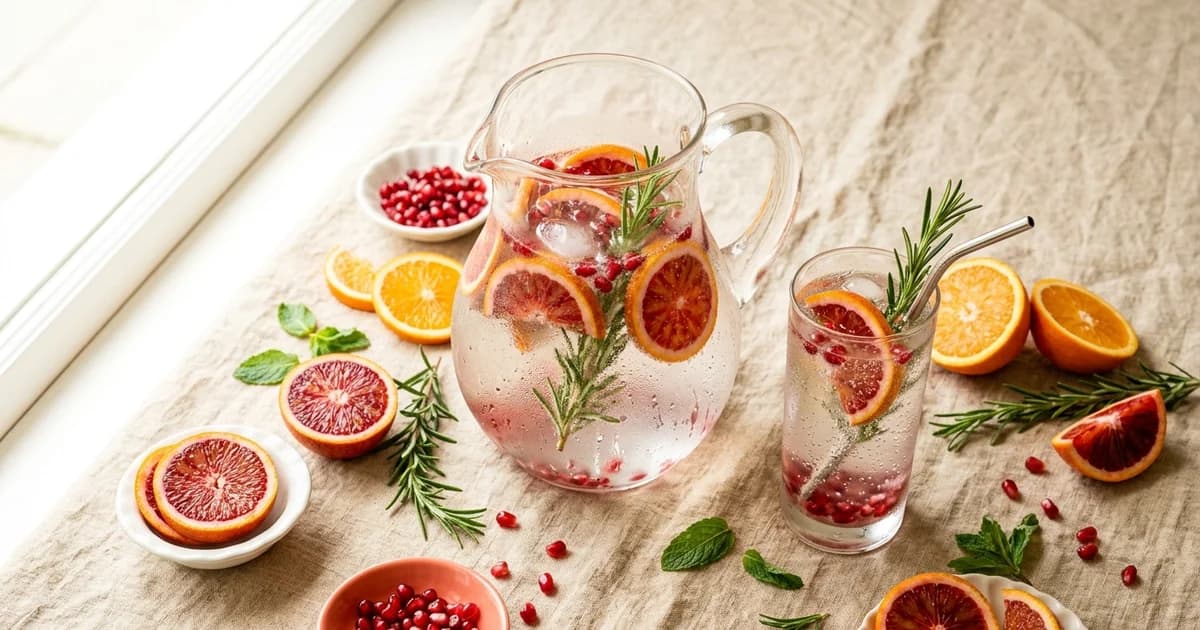
California Dry January: What the Golden State's Sobriety Shift Actually Looks Like
California Dry January is no longer just a resolution; it's a full-blown cultural movement. Thirty percent of Americans are doing Dry January in 2025. That's a 36% jump from last year, and California is ground zero for the movement's most visible shift. From zero-proof cocktail menus in Silver Lake to fully sober bars in San Francisco, the California Dry January phenomenon goes well beyond a one-month pledge. It's reshaping how the state socializes, works, and thinks about performance.
This isn't just a wellness fad recycled from last year's headlines. The U.S. Surgeon General, new cancer research, and a generation that barely drinks at all have converged to make January 2025 the most sober start to a year in nearly a century.
Here's what's actually happening, and why California Dry January matters if you live, work, or party in the Golden State.
Key Takeaways
- Dry January participation hit 30% of U.S. adults in 2025, with Gen Z leading the charge at 43%.
- The U.S. Surgeon General issued an advisory in January 2025 linking alcohol to at least seven types of cancer and calling for updated warning labels.
- California's sober bar and zero-proof scene is among the fastest-growing in the country, with dedicated alcohol-free venues in LA and SF.
- Research from Brown University confirms that even one month without alcohol improves sleep, mood, and long-term drinking habits.
Why California Dry January Hits Different in 2025
California has always been an early adopter. Oat milk, cold plunge tubs, breathwork studios. The state treats wellness trends like beta software: test it, scale it, export it to the rest of the country. So it makes sense that the sober curious movement found fertile ground here, and that California Dry January has become the most visible version of the national trend.
But 2025 added real weight to what used to be a lifestyle choice. On January 3rd, U.S. Surgeon General Dr. Vivek Murthy issued an advisory calling alcohol "a well-established, preventable cause of cancer responsible for about 100,000 cases of cancer and 20,000 cancer deaths annually in the United States." He recommended that warning labels on alcoholic beverages be updated to include cancer risk, similar to those on cigarettes.
That advisory landed the same week millions of people were already starting Dry January. The timing was not subtle, and for anyone observing California Dry January firsthand, the Surgeon General's announcement added scientific urgency to what was already a growing social norm.
Then came the data from Harvard's reporting showing that Dry January helped push U.S. drinking rates to a 96-year low. Not a typo. Americans haven't been drinking this little since Prohibition was still on the books.
The Science: What One Month Without Alcohol Actually Does
The skeptic's question is fair: does 30 days really matter?
Yes. A scoping review from Brown University's School of Public Health, published in the journal Alcohol and Alcoholism, found that even a short break from drinking produces measurable improvements in sleep quality, mood, and overall physical health. The benefits weren't limited to heavy drinkers. Moderate drinkers saw gains too. For anyone trying California Dry January, the science is clear: even a single month creates real, measurable change.
The same review found something more interesting for the long game: participants who completed Dry January showed decreased drinking frequency and lower alcohol consumption six months later. Even people who didn't make it through the full month reported better mental well-being a month after attempting it.
Here's what the research shows happens to your body during 30 days without alcohol:
| Timeline | What Changes |
|---|---|
| Days 1-7 | Sleep quality begins improving; hydration levels stabilize |
| Days 7-14 | Liver fat can decrease; skin clarity often improves |
| Days 14-21 | Blood pressure and blood sugar levels may normalize |
| Days 21-30 | Mood stabilizes; cognitive performance sharpens; weight loss is common |
A separate Stanford report also challenged the long-held belief that moderate drinking has health benefits. Researchers concluded that the idea is outdated and that even moderate consumption carries measurable risk, particularly for cancer.
The Surgeon General's Cancer Warning, Explained
This deserves its own section because most people still don't know about it.
In January 2025, the Surgeon General's advisory confirmed that drinking alcohol raises the risk of developing seven types of cancer: breast (in women), colorectal, esophageal, liver, mouth, throat, and larynx. The advisory called for updated health warning labels on all alcoholic beverages.
According to Columbia University's cancer center, cancer risk increases with the amount of alcohol consumed over a lifetime. There is no established "safe" threshold.
Only 45% of Americans were aware that alcohol increases cancer risk before this advisory, per the Surgeon General's report. Compare that to tobacco, where awareness sits above 90%. The information gap is enormous, and it's one reason the sober curious movement is gaining so much traction in health-conscious states. California Dry January participation, in particular, surged after the advisory made national headlines.
Gen Z Is Leading the Charge (And They're Barely Old Enough to Drink)
If you want to understand why California's bar scene is changing, look at the generation that just showed up to it.
Gen Z drinks roughly 20% less alcohol per capita than Millennials or Boomers. A 2025 Gallup study found that only 50% of adults aged 18-34 report drinking at all, down from 72% two decades ago.
The reasons vary. Research from Attest found that nearly half of Gen Z non-drinkers (46%) simply aren't interested. One in three cite health concerns. One in five worry about addiction, a reflection of growing up watching older generations deal with alcohol's consequences in real time. This generation is the engine behind California Dry January's rapid growth.
In California, this plays out in real commercial change. LA Magazine reported on the "dry generation" reshaping Los Angeles, with sober bars, nonalcoholic cocktail menus, and zero-proof bottle shops becoming part of the city's fabric. San Francisco's Ocean Beach Cafe became the city's first dedicated non-alcoholic bar. The movement has gotten large enough that a website called Dry Atlas now tracks alcohol-free venues and events nationwide.
California's Sober Social Scene: Where to Go
The practical question for anyone doing California Dry January: where do you actually hang out?
The state's non-alcoholic options have expanded fast. Circana's 2025 survey found that over one in five Americans (22%) plan to visit a sober bar this year. California, predictably, is ahead of that curve.
Here's a snapshot of what the California Dry January scene looks like:
- Los Angeles: Multiple zero-proof cocktail bars and bottle shops have opened across neighborhoods like Silver Lake, Echo Park, and Santa Monica. Restaurant cocktail menus now routinely feature non-alcoholic sections that go well beyond soda water with lime.
- San Francisco: Ocean Beach Cafe operates as a fully alcohol-free bar. Several other establishments offer dedicated NA menus.
- San Diego: Wellness-focused cafes like The Mad Beet in Pacific Beach have hosted alcohol-free social events.
- Statewide: Non-alcoholic beer volume rose 6% in 2025, non-alcoholic wine grew 7%, and non-alcoholic spirits jumped 15%.
The quality gap has closed too. Five years ago, your non-alcoholic options were a Shirley Temple or a club soda. Now you're looking at botanical-infused zero-proof spirits, craft NA beers that actually taste like beer, and cocktail programs designed by the same bartenders who built their reputations on the real thing. That quality leap is a big reason California Dry January feels less like deprivation and more like a genuine alternative.
The "Damp January" Alternative
Not everyone goes fully dry. And the data suggests that's fine.
Drive Research's 2025 survey found that one in three Americans participated in Dry January, while a growing number opted for "Damp January," which means reducing alcohol intake without eliminating it completely. For many Californians, this middle path is the entry point into the broader California Dry January movement.
The Brown University review supports this approach. Even incomplete abstinence during January correlated with reduced drinking and improved well-being in the months that followed. The point isn't perfection. It's disrupting the habit loop long enough to notice what changes.
For Californians, where social drinking is woven into everything from networking dinners in the Bay Area to rooftop happy hours in DTLA, the damp approach can be more sustainable. You don't have to explain yourself at every event. You just order differently.
What Happens After California Dry January?
The real question isn't whether you can make it 30 days. It's whether the shift sticks.
Circana's data shows that nearly half of Americans (49%) planned to drink less in 2025, a 44% increase from 2023. This isn't a January blip. It's a trend line, and California Dry January is helping set the pace for the rest of the country.
The Oar Health report found that 73% of Dry January attempts are successful, and that higher-income individuals (those earning over $250,000) report the highest participation rates at 55%. California, with its concentration of high-income, health-conscious professionals, fits that demographic profile almost perfectly.
The science backs the long-term play too. Brown's review confirmed that Dry January participants maintained lower drinking levels and better mental health outcomes well past February. The month acts as a reset, not just a detox. That's why California Dry January is becoming less of a seasonal experiment and more of a permanent lifestyle shift for many residents.
Clean Focus for the Sober Curious
If you're rethinking your relationship with alcohol this January, you're probably also rethinking what you put in its place. The whole point of California Dry January isn't to sit around feeling deprived. It's to feel sharper, sleep better, and actually show up for the things that matter.
That's where the clean-living movement intersects with cognitive performance. Roon was built for exactly this kind of shift: a zero-nicotine sublingual pouch with caffeine, L-theanine, theacrine, and methylliberine that delivers 6-8 hours of sustained focus without jitters, crashes, or tolerance buildup. No alcohol. No nicotine. No compromise.
Whether you're doing California Dry January or just done pretending that a third glass of wine helps you think, clean focus is the upgrade. Try Roon here.