Craft Mocktail Recipes
Roon Team
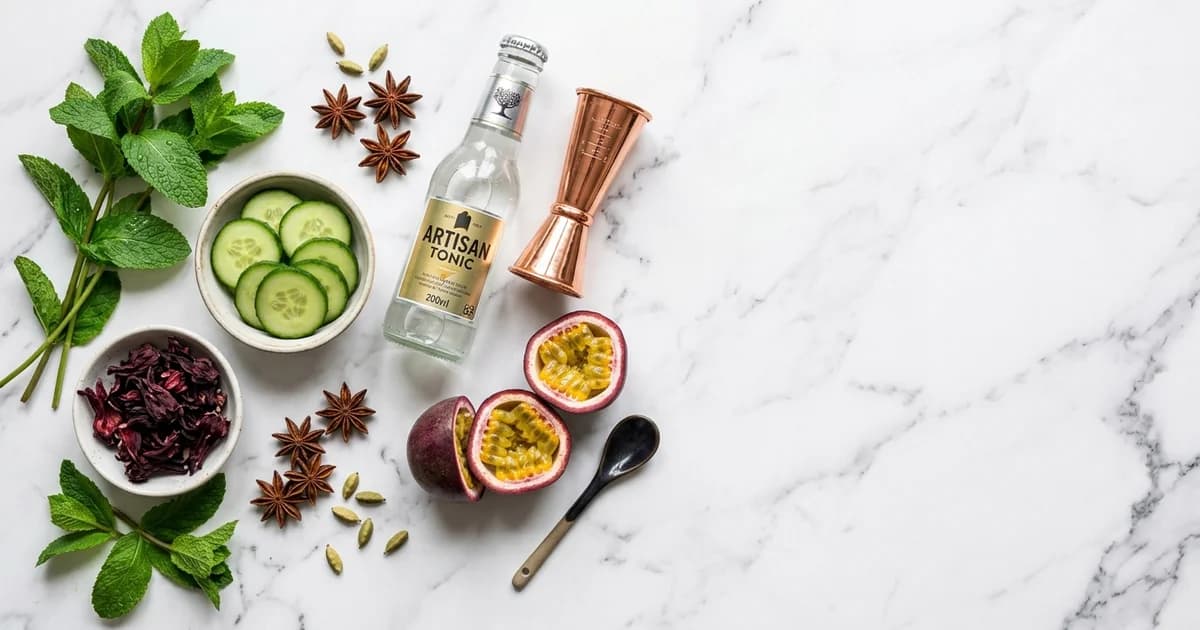
Craft Mocktail Recipes: The Only Guide That Respects Your Intelligence (and Your Taste Buds)
The best drink you'll make this year won't have a drop of alcohol in it. Craft mocktail recipes have moved far beyond the sad Shirley Temple your aunt used to order for you at Applebee's. That's not wishful thinking. It's where the market, the science, and the culture are all pointing. Today's craft mocktail recipes are complex, intentional, and built with the same rigor bartenders apply to a $22 Negroni.
The shift is real. According to Circana (formerly IRI), nearly half of Americans (49%) planned to drink less alcohol in 2025, a 44% increase from 2023. Among Gen Z, 65% said they intended to cut back, and 39% planned to go fully dry for the entire year. This isn't a fad. It's a generational recalibration of what a "good drink" actually means.
So if you're ready to build drinks that are worth talking about, without the hangover or the empty calories, here's everything you need to know about craft mocktail recipes that actually deliver.
Key Takeaways:
- Craft mocktail recipes rely on the same techniques as cocktails: balance, acidity, bitterness, and texture.
- You don't need a full bar. Five core ingredients and a few techniques will cover 90% of craft mocktail recipes.
- Sugar-heavy mocktails are a trap. The best ones prioritize complexity over sweetness.
- What you drink affects how you think, and that connection matters more than most people realize.
Why Craft Mocktail Recipes Took Over
The mocktail boom isn't just about sobriety. It's about standards.
The ready-to-drink mocktail market hit $8.26 billion in 2023, and it's still climbing. The global mocktail market is growing at a compound annual growth rate of over 7%. Bars in New York, Austin, and Atlanta now operate entirely without alcohol. This is a legitimate category, not a consolation prize, and craft mocktail recipes are at the center of it.
What's driving it? Three things.
Health awareness. Around 77% of consumers say they want to do more for their health, and alcohol is an easy target. It disrupts sleep, tanks recovery, and impairs cognition for longer than most people think. Craft mocktail recipes offer a way to keep the ritual without the damage.
Cultural permission. The "sober curious" movement gave people language for something they already felt. You don't need a clinical reason to skip the drink. You just need to not want one.
Better options. The non-alcoholic spirits market has exploded. Brands like Seedlip, Ritual Zero Proof, and Ghia make it possible to build craft mocktail recipes with real depth, not just juice and soda water.
The Anatomy of a Great Mocktail
A cocktail works because of balance. Sweetness against acidity. Bitterness against richness. Alcohol provides body, warmth, and a certain roundness on the palate. Remove it, and you have to replace those functions with something else. That's what separates great craft mocktail recipes from glorified juice.
Here's the framework every good craft mocktail follows:
The Five Elements
| Element | Role | Examples |
|---|---|---|
| Base | Provides body and flavor foundation | Non-alcoholic spirits, cold-brew tea, kombucha |
| Sweet | Balances acidity and bitterness | Honey syrup, agave, maple, fruit purees |
| Sour | Adds brightness and structure | Fresh citrus juice, shrubs, verjus |
| Bitter | Creates complexity and a "grown-up" finish | Aromatic bitters (most are NA), Angostura, tonic |
| Texture | Gives mouthfeel and visual appeal | Sparkling water, egg white, aquafaba, muddled herbs |
The mistake most people make is leaning too hard on sweetness. Without alcohol to cut through sugar, a poorly built mocktail tastes like a smoothie that lost its way. The fix is simple: add more acid and more bitter. That's it.
Techniques That Actually Matter
You don't need a $400 cocktail kit. But a few techniques separate a well-made craft mocktail from flavored water.
Muddling. Pressing fresh herbs (mint, basil, rosemary) releases their essential oils without pulverizing them. Use the flat end of a wooden spoon if you don't have a muddler. Gentle pressure. You're coaxing flavor out, not making pesto.
Shrubs. A shrub is just fruit + vinegar + sugar, left to macerate for a day or two. The result is a concentrated syrup with a sweet-tart backbone that gives any drink instant complexity. Raspberry, peach, and ginger shrubs are all excellent starting points for craft mocktail recipes.
Dry shaking. If you're using aquafaba (the liquid from a can of chickpeas) as a foaming agent, shake it hard without ice first. Then add ice and shake again. This creates a silky, stable foam that makes your drink look and feel like it belongs in a cocktail bar.
Fat-washing. This sounds advanced, but it's not. Infuse a liquid (like a simple syrup or a tea) with a fat (coconut oil, brown butter), let it solidify in the fridge, then strain it out. You keep the flavor and the richness without the grease. Brown butter syrup in an apple-spice mocktail is absurdly good.
Five Craft Mocktail Recipes Worth Your Time
These aren't just "pour juice in a glass" recipes. Each one uses real technique and real balance.
1. The Ginger-Turmeric Mule
- 2 oz fresh ginger juice (or strong ginger tea, chilled)
- 1 oz fresh lime juice
- 0.75 oz honey syrup (1:1 honey and warm water)
- Pinch of ground turmeric
- 4 oz sparkling water
- Lime wheel and candied ginger for garnish
Build over ice in a copper mug or rocks glass. Stir gently. The ginger provides the "burn" that replaces alcohol's warmth, and the turmeric adds an earthy, peppery layer underneath. This is one of the easiest craft mocktail recipes to scale for a crowd.
2. The Rosemary Citrus Spritz
- 1.5 oz rosemary simple syrup (simmer rosemary sprigs in 1:1 sugar water for 10 minutes, strain)
- 1 oz fresh grapefruit juice
- 0.5 oz fresh lemon juice
- 3 dashes aromatic bitters
- 4 oz sparkling water
Combine everything except sparkling water in a wine glass with ice. Top with sparkling water and stir once. Garnish with a rosemary sprig. This one reads like a spritz but drinks like something more serious.
3. The Blackberry Shrub Sour
- 2 oz blackberry shrub (equal parts blackberries, apple cider vinegar, and sugar, macerated 48 hours, strained)
- 1 oz fresh lemon juice
- 1 oz aquafaba
- Sparkling water to top
Dry shake the shrub, lemon juice, and aquafaba for 15 seconds. Add ice, shake again for 10 seconds. Strain into a coupe glass. Top with a splash of sparkling water. The foam should be thick and velvety. Of all the craft mocktail recipes here, this is the one that converts skeptics.
4. The Cold-Brew Tonic
- 3 oz cold-brew coffee (diluted to drinking strength)
- 3 oz quality tonic water
- 0.5 oz vanilla syrup
- Orange peel for garnish
Pour cold brew over a large ice cube in a rocks glass. Add vanilla syrup, then slowly pour tonic water down the side of the glass. Express the orange peel over the top and drop it in. The bitterness of the coffee meets the quinine in the tonic, and the vanilla rounds the whole thing out. This is an afternoon drink that actually improves your focus instead of wrecking it.
5. The Cucumber-Shiso Cooler
- 3 slices cucumber
- 4 shiso leaves (or basil as a substitute)
- 1 oz fresh lime juice
- 0.75 oz simple syrup
- 4 oz sparkling water
- Pinch of flaky sea salt
Muddle cucumber and shiso gently in a shaker. Add lime juice, simple syrup, and ice. Shake briefly. Strain into a Collins glass over fresh ice. Top with sparkling water and a pinch of sea salt. The salt amplifies every other flavor in the glass. Don't skip it.
The Sugar Trap (and How to Avoid It)
Most craft mocktail recipes you'll find online are sugar bombs disguised as wellness drinks. A virgin piña colada from a typical recipe can pack 40+ grams of sugar. That's more than a can of Coke.
This matters beyond the obvious. Research published in PMC (PubMed Central) found that excessive added sugar consumption is linked to impaired cognitive function, particularly in areas related to memory. The sugar crash is real, and it doesn't just make you tired. It makes you dull.
The fix for your craft mocktail recipes:
- Use honey or agave instead of simple syrup where possible. They're still sugar, but you tend to use less because the flavor is more concentrated.
- Let fruit do the work. Muddled berries, fresh citrus, and fruit shrubs add sweetness with fiber and acidity attached.
- Embrace bitterness. Tonic, bitters, and bitter citrus peels (grapefruit, especially) make a drink satisfying without sweetness doing all the heavy lifting.
- Taste as you build. The single best habit. Add your sweet component last, a quarter ounce at a time, until the drink balances. You'll almost always use less than the recipe calls for.
Functional Ingredients: The Next Wave of Craft Mocktail Recipes
The mocktail world is starting to borrow from a different playbook: functional nutrition. The best craft mocktail recipes are now doing more than tasting good; they're designed to make you feel good, too.
Food Navigator reports that the functional non-alcoholic drinks category is accelerating, with adaptogens for stress support, nootropics for cognitive performance, and gut-health ingredients becoming standard additions. This isn't fringe anymore. It's the direction the entire category is heading.
Some ingredients showing up in forward-thinking craft mocktail recipes and menus:
- Lion's mane mushroom extract, added to coffee-based mocktails for its association with nerve growth factor support.
- Ashwagandha, blended into tonic-style drinks for stress adaptation.
- L-theanine, the amino acid from green tea that promotes calm focus without sedation. A 2025 meta-analysis published in the Journal of Clinical Medicine reviewed randomized controlled trials and found promising effects of L-theanine on cognitive performance.
- Theacrine and methylliberine, two compounds related to caffeine that provide sustained energy without the jitter-crash cycle.
The logic is straightforward. If you're already building craft mocktail recipes with intention, choosing ingredients that actually support how your brain works is the obvious next step.
From Your Glass to Your Day
Here's what most mocktail guides won't tell you: what you drink is a cognitive decision, not just a lifestyle one.
Every sip of a sugar-loaded beverage is a small bet against your afternoon productivity. Every alcohol-free evening is a deposit into tomorrow morning's clarity. The people gravitating toward craft mocktail recipes aren't just "health-conscious." They're performance-conscious. They want to feel sharp at 3 PM, not just virtuous at 8 PM.
That same thinking is what led to Roon. It's a zero-nicotine sublingual pouch built on a stack of caffeine (80 mg), L-theanine, theacrine, and methylliberine, the same class of functional compounds now showing up in the best craft mocktail recipes at top bars. The difference is precision: a consistent dose, delivered sublingually for faster absorption, designed for 6 to 8 hours of sustained focus without the jitters or the crash.
If you're already rethinking what goes in your glass, it might be time to rethink what goes in the rest of your day too. Optimize your day.