Cocomelon Attention Span
Roon Team
Cocomelon Attention Span: What the Science Actually Says About Your Kid's Brain
Your toddler just watched three episodes of CoComelon. You turned it off, and now they're screaming, throwing toys, refusing to look at a book. Sound familiar? The conversation around the cocomelon attention span effect has exploded across parenting forums, TikTok, and pediatric offices. Parents want a straight answer: is this show rewiring their child's brain?
The short answer is complicated. The longer answer involves dopamine, scene pacing, executive function, and a broader problem that doesn't stop at childhood.
Key Takeaways:
- CoComelon's rapid scene changes (every 1 to 3 seconds) flood developing brains with stimulation that slower-paced shows don't.
- A 2011 study published in Pediatrics found that just 9 minutes of fast-paced cartoons impaired preschoolers' executive function.
- The American Academy of Pediatrics (AAP) has noted that CoComelon's pacing and shallow content rank below shows like Daniel Tiger and Ms. Rachel for educational value.
- The cocomelon attention span concern isn't limited to toddlers. Adults consuming rapid-fire digital content face similar cognitive consequences.
Why CoComelon Became the Center of the Cocomelon Attention Span Debate
CoComelon's YouTube channel has over 183 million subscribers and 190 billion views, making it one of the most-watched channels on the planet. It's colorful, musical, and keeps toddlers glued to the screen. That last part is exactly why the cocomelon attention span discussion has grown so loud.
The show features scene changes every 1 to 3 seconds, paired with bright, high-contrast animation and near-constant music. Compare that to a show like Daniel Tiger's Neighborhood or Bluey, where scenes hold for 7 seconds or longer and leave room for pauses, silence, and processing time.
A journalist who visited CoComelon's studio reported that the production team actively monitors which moments keep children's eyes locked on the screen and which don't. The goal, according to that report, isn't education. It's engagement retention.
This isn't a conspiracy theory. It's a business model. And understanding it matters because the neurological effects behind the cocomelon attention span concern are real.
What Happens in a Toddler's Brain During Fast-Paced Media
Here's the basic mechanism. Every time a scene changes, the brain's orienting response fires. This is an involuntary reaction: your attention snaps toward anything new in your environment. It's a survival instinct. A rustling bush. A sudden noise. A new camera angle every 1.5 seconds.
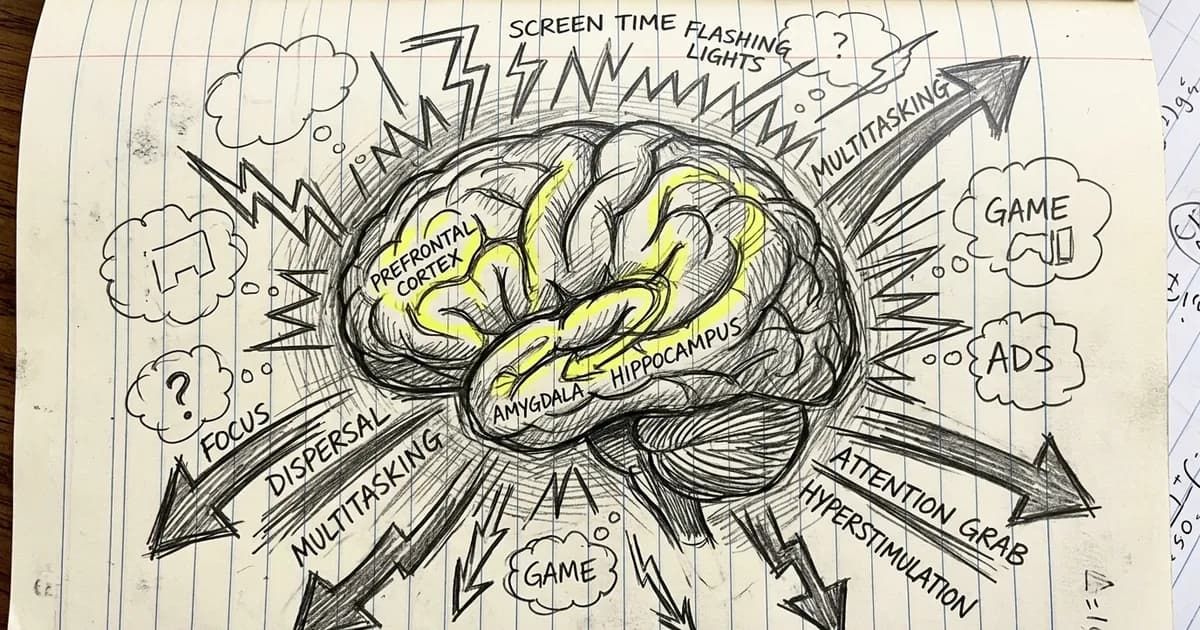
When scene changes happen this rapidly, the orienting response fires over and over again. The child isn't choosing to pay attention. Their brain is being hijacked by novelty. This creates what feels like focus but is actually the opposite: passive captivation without any active cognitive processing. This is the core of the cocomelon attention span problem that researchers have been studying.
A 2011 study published in Pediatrics by Angeline Lillard at the University of Virginia tested this directly. Sixty 4-year-olds were randomly assigned to either watch a fast-paced cartoon, watch an educational cartoon, or draw for 9 minutes. The children who watched the fast-paced cartoon performed worse on executive function tasks immediately afterward, including tests of self-regulation and working memory.
Nine minutes. That's all it took to demonstrate the kind of cocomelon attention span impairment parents describe anecdotally.
The Dopamine Problem Behind the Cocomelon Attention Span Effect
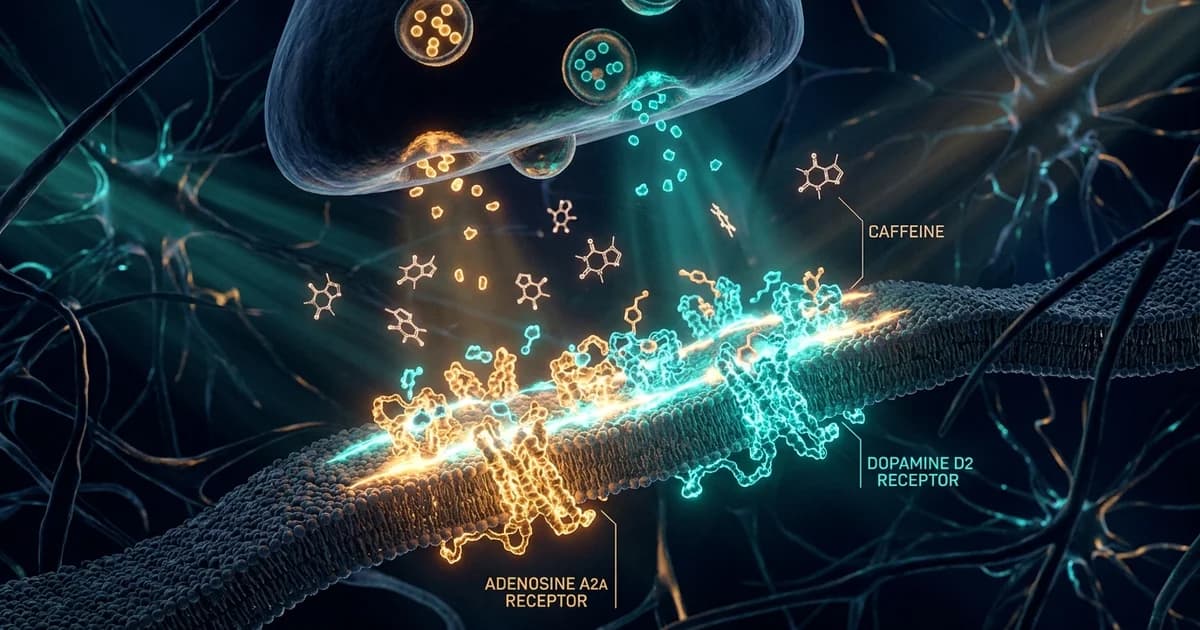
Fast-paced visual content doesn't just grab attention. It triggers dopamine release. Each new scene, each burst of color, each musical shift gives the brain a small hit of reward. Over time, this conditions the brain to expect that level of stimulation as the baseline. This dopamine loop is central to understanding why cocomelon attention span issues persist even after the screen is off.
Research on screen time and dopamine pathways shows that excessive screen exposure can dysregulate the anterior cingulate gyrus, a brain region involved in attention shifting, emotional regulation, and behavior control. When this area becomes overactivated by constant stimulation, children may struggle with delayed reinforcement, self-control, and emotional resilience.
This explains the post-CoComelon meltdown. The show delivers stimulation at a rate that real life can't match. Books don't change scenes every second. A parent's face doesn't shift through 40 colors per minute. When the screen goes dark, the child's brain is left understimulated relative to what it was just processing, and it protests.
Parents across social media have described this exact cocomelon attention span pattern. One viral TikTok by @thecircusbrain, viewed over 4 million times, compared CoComelon's pacing to that of My Little Pony and described the show as "crack" for kids. While that's hyperbolic, the underlying neuroscience supports the concern.
What the AAP Actually Says About Cocomelon Attention Span Concerns
The American Academy of Pediatrics has weighed in directly. According to the AAP's Q&A portal, child development experts have been critical of CoComelon for having "too fast a pace, features that capture a child's attention but don't let it go, and shallow educational content." The AAP notes that CoComelon is not rated as highly as shows like Daniel Tiger's Neighborhood or Ms. Rachel in terms of educational value.
The AAP also acknowledges a key gap: there isn't a study that isolates CoComelon specifically to measure its developmental effects. But the broader research on fast-paced media and executive function, the same research fueling the cocomelon attention span debate, is consistent and clear.
Here's a comparison of how different children's shows stack up:
| Show | Avg. Scene Length | Pacing | Educational Rating |
|---|---|---|---|
| CoComelon | 1-3 seconds | Very fast | Low (per AAP) |
| SpongeBob SquarePants | 3-5 seconds | Fast | Low |
| Daniel Tiger's Neighborhood | 7-10+ seconds | Slow | High |
| Ms. Rachel | 7-15+ seconds | Slow | High |
| Bluey | 5-8 seconds | Moderate | High |
The pattern is obvious. Shows rated highest for educational value tend to have slower pacing, longer scene holds, and more room for the child to process what they're seeing. The cocomelon attention span risk correlates directly with that rapid scene turnover.
The Cocomelon Attention Span Effect Isn't Just About Kids
Here's where this gets personal for adults reading this article.
The same neurological mechanism that drives cocomelon attention span problems in toddlers operates in grown-up brains consuming TikTok, Instagram Reels, and YouTube Shorts. The content is different. The dopamine loop is identical.
Research published in Environmental Research and Public Health has documented the effects of excessive screen time on cognitive function across age groups, including impaired sustained attention and disrupted sleep architecture. A 2025 rapid review in PMC specifically linked overexposure to rapid online content with "brain fog and decreased concentration," describing it as a growing public health concern.
You've probably felt this yourself. You pick up your phone to check one thing, and 45 minutes later you've watched 30 short videos and can't remember what you originally opened the app for. That's not a character flaw. That's your orienting response being exploited by the same design principles that keep a two-year-old locked onto CoComelon.
Which means the cocomelon attention span effects during early childhood, when two-year-old attention limits are already strained, may have longer-lasting consequences than the same exposure in adulthood.
Practical Steps That Actually Help With Cocomelon Attention Span Issues
Telling parents to "just turn off the screen" isn't useful advice. CoComelon exists because parents need breaks, and kids need entertainment. The question isn't whether your child will ever watch it. The question is how to minimize the neurological downside.
1. Limit session length. The Lillard study showed executive function impairment after just 9 minutes. Keep CoComelon sessions short, and follow them with unstructured play or outdoor time to counteract the cocomelon attention span drain.
2. Co-watch when possible. The AAP recommends singing along, asking questions, and encouraging your child to fill in words they know. This converts passive consumption into active engagement.
3. Swap in slower-paced alternatives. Ms. Rachel, Daniel Tiger, and Bluey deliver entertainment without the neurological fire hose. The transition may involve some protest. It's worth it.
4. Protect unstructured time. Boredom is not the enemy. It's the environment where children develop internal attention regulation. Every minute filled with screen stimulation is a minute not spent building that skill.
5. Watch your own consumption patterns. If you're scrolling rapid-fire content for hours a day, your own attention and focus are taking the same kind of hit, just with a more developed brain to absorb it.
6. Don't panic. Watching CoComelon a few times a week is not going to cause permanent brain damage. The research on cocomelon attention span points to problems with excessive, unsupervised, prolonged exposure. Context and dose matter more than any single show.
The Bigger Picture: Cocomelon Attention Span and the Future of Focus
The cocomelon attention span conversation is really a proxy for a much larger question about children born inside the smartphone era: what happens to human cognition when every piece of media is optimized for maximum engagement?
The answer, based on the research, is that attention degrades. Not permanently, not irreversibly, but measurably. And the younger the brain, the more vulnerable it is.
For adults, the effects show up as brain fog, difficulty concentrating on long tasks, and a constant pull toward distraction. The neurochemistry behind this involves the same pathways: adenosine buildup that makes you feel mentally sluggish, GABA imbalances that affect calm focus, and dopamine dysregulation that makes everything feel either boring or overwhelming.
This is where understanding the chemistry matters. If you know that your attention problems have a neurochemical basis, you can address them at that level, not just with willpower and screen time limits, but with targeted support for the pathways involved. The cocomelon attention span discussion reminds us that attention is a resource worth protecting at every age.
Roon was built around this idea. Its nootropic stack combines caffeine (80 mg), L-theanine, theacrine, and methylliberine to target the specific neurochemical pathways behind brain fog: adenosine, GABA, and dopamine. No nicotine. No jitters. No crash. Just cleaner signal where there used to be noise.
Cut through the fog at takeroon.com.