The Best Nootropics for Dopamine in 2026: What Actually Works
Roon Team
The Best Nootropics for Dopamine in 2026: What Actually Works
The best nootropics for dopamine target synthesis, receptor activation, or receptor sensitivity, and the six compounds with the strongest clinical backing are L-Tyrosine, theacrine, Rhodiola rosea, methylliberine, L-theanine, and citicoline. Each works through a different mechanism, which is why stacking several of them outperforms any single ingredient. Below, you'll find the research behind each compound, honest dosing ranges, a head-to-head comparison table, and a breakdown of how to combine them without running into the tolerance wall that ruins most dopaminergic supplements within weeks.
If you've been scrolling through listicles that rank products by affiliate commission instead of science, this one is different. We reviewed the actual clinical data, checked dosing protocols that hold up in controlled settings, and cut anything that's just marketing dressed up as neuroscience.
Key Takeaways
- Dopamine isn't just about "feeling good." It drives motivation, working memory, and the ability to start (and finish) hard tasks.
- The best nootropics for dopamine work on synthesis, signaling, or receptor sensitivity, not all three at once.
- Tolerance is the silent killer. Any compound that spikes dopamine hard will eventually stop working. The best nootropics for dopamine avoid this trap entirely.
- Stacking matters more than single ingredients. Combining compounds that work through different mechanisms produces more reliable results than megadosing one.
Comparing the Best Nootropics for Dopamine (2026)
| Compound | Primary Mechanism | Onset | Duration | Tolerance Risk | Typical Dose |
|---|---|---|---|---|---|
| L-Tyrosine | Dopamine precursor (TH substrate) | 30-60 min | 2-4 hrs | Low | 500-2,000 mg |
| Theacrine (TeaCrine) | D1/D2 receptor activation | 30-45 min | 4-6 hrs | Very Low | 100-300 mg |
| Rhodiola Rosea | MAO-A/B inhibition + adaptogen | 30-60 min | 4-6 hrs | Low | 200-600 mg (3% rosavins) |
| Methylliberine (Dynamine) | Adenosine/dopamine modulation | 10-15 min | 1-3 hrs | Low | 100-200 mg |
| L-Theanine | Alpha-wave promotion + glutamate modulation | 20-40 min | 3-5 hrs | None | 100-200 mg |
| Citicoline (CDP-Choline) | D2 receptor density + membrane support | 60+ min | 6-8 hrs | None | 250-500 mg |
| Roon (4-compound stack) | D1/D2 activation + precursor smoothing | 5-10 min (sublingual) | 6-8 hrs | Very Low | 1 pouch |
How Dopamine Actually Drives Performance (And Why the Best Nootropics for Dopamine Target It)
Dopamine doesn't just make you feel pleasure. That's the oversimplified version from a decade-old infographic. The real story is more useful.
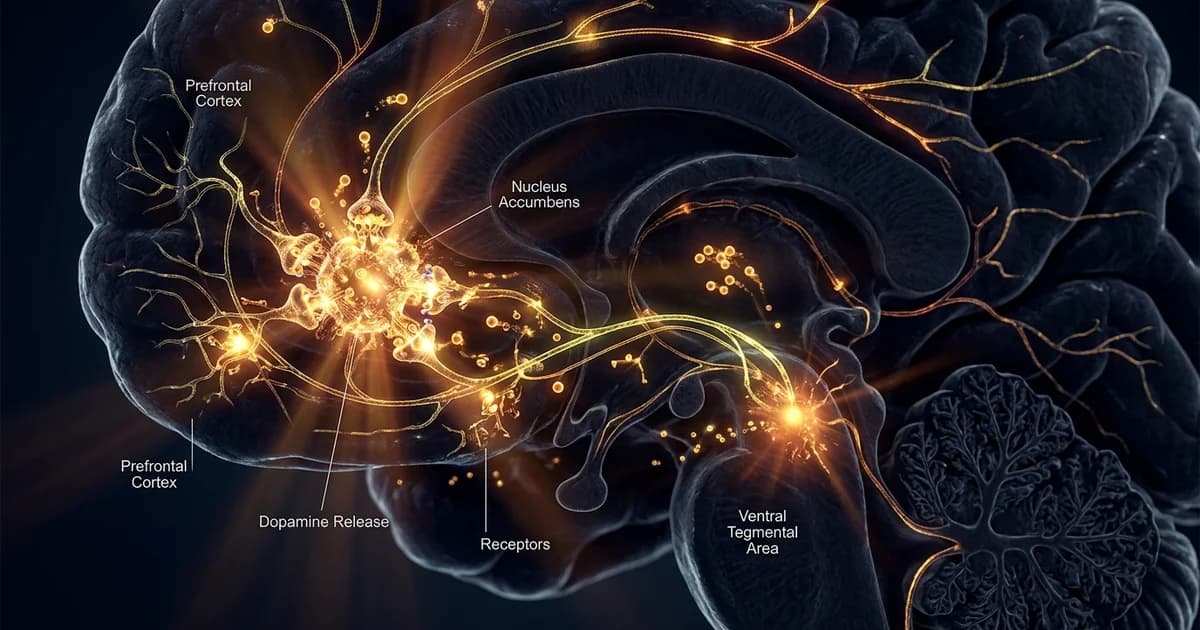
Dopamine operates through two main receptor families: D1 and D2. D1 receptors in the prefrontal cortex support working memory and cognitive flexibility. D2 receptors in the striatum handle motivation and reward prediction. When either system runs low, you don't just feel flat. You lose the ability to prioritize, to sustain effort, and to care about outcomes.
Understanding this biology is what separates the best nootropics for dopamine from compounds that simply overstimulate the system. The six compounds below target different parts of this dual-receptor architecture. Some supply raw precursors. Others modulate receptor sensitivity. A few activate dopamine pathways without triggering the tolerance cascade that makes most stimulants useless after 2-3 weeks.
1. L-Tyrosine (The Precursor)
L-Tyrosine is the amino acid your brain converts into L-DOPA, which then becomes dopamine. It's the most direct route to supporting dopamine synthesis, and it earns a spot among the best nootropics for dopamine under one specific condition: stress.
A review published in the Journal of Psychiatric Research found that tyrosine supplementation is most effective when cognitive resources are already depleted. Under normal conditions, your brain regulates tyrosine hydroxylase (the enzyme that converts tyrosine into L-DOPA) through end-product inhibition, meaning extra tyrosine doesn't automatically mean extra dopamine. But when you're sleep-deprived, overworked, or under acute stress, that regulatory mechanism loosens up, and supplemental tyrosine fills a real gap.
A separate systematic review in Military Medicine confirmed the pattern: tyrosine reliably mitigated cognitive decline under stress conditions like cold exposure, sleep deprivation, and multitasking overload, with effective single doses ranging from 150 mg/kg in acute-stress protocols.
Best form: N-Acetyl-L-Tyrosine (NALT) for better bioavailability. Typical dose: 500-2,000 mg, taken before demanding work. Limitation: Minimal benefit if you're well-rested and unstressed.
2. Theacrine (The Dopamine Activator That Doesn't Build Tolerance)
Theacrine is a purine alkaloid found in kucha tea, structurally similar to caffeine but pharmacologically distinct. Among the best nootropics for dopamine, theacrine stands out for one reason: it doesn't build tolerance.
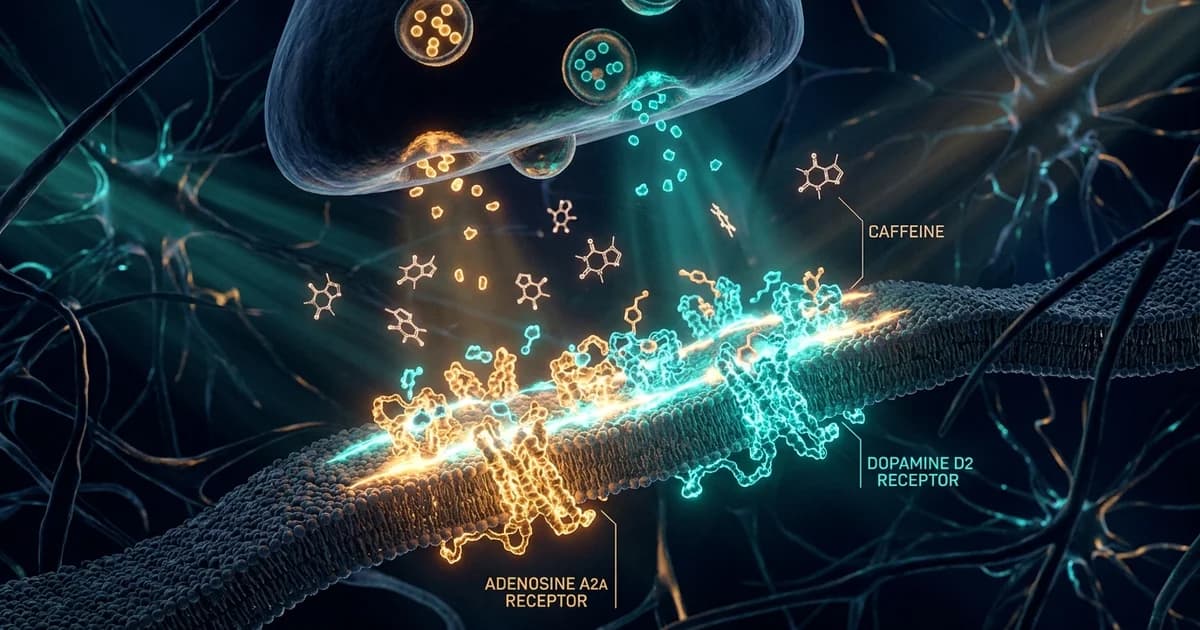
A study published in Pharmacology Biochemistry and Behavior demonstrated that theacrine activates both D1 and D2 dopamine receptors while also modulating adenosine signaling. The result is a clean increase in alertness and motivation without the jittery overstimulation of pure caffeine. The same study found that theacrine did not induce locomotor sensitization or tolerance after chronic exposure in animal models.
That last point matters more than anything else on this list. Caffeine builds measurable tolerance within 5-7 days of daily use. Most dopaminergic stimulants lose effectiveness within weeks. Theacrine appears to sidestep this entirely, making it one of the few compounds you can use daily without watching the effects fade. For anyone evaluating the best nootropics for dopamine, theacrine belongs at the top of the shortlist.
Typical dose: 100-300 mg. Best paired with: Caffeine (they potentiate each other; theacrine extends caffeine's half-life).
3. Rhodiola Rosea (The Stress-Dopamine Bridge)
Rhodiola is an adaptogen, which means it modulates your stress response rather than pushing neurotransmitters in one direction. But its dopamine effects are real and well-documented, earning it a place among the best nootropics for dopamine support during high-pressure work.
According to a review in Molecules, Rhodiola rosea acts as both an MAO-A and MAO-B inhibitor, reducing the enzymatic breakdown of dopamine (and serotonin) in the brain. Less breakdown means more dopamine stays active for longer. A separate randomized trial comparing Rhodiola to sertraline for major depressive disorder found that Rhodiola produced fewer side effects while still showing clinically meaningful mood improvements, likely driven in part by its dopaminergic and endorphin-modulating activity.
The practical result: better mental stamina under pressure, improved mood during prolonged cognitive work, and a subtle but consistent motivational lift. Research on the standardized SHR-5 extract has used doses of 340-680 mg/day with effects measurable within 1 week of daily use.
Typical dose: 200-600 mg standardized extract (3% rosavins, 1% salidroside). Best for: Sustained cognitive work under stress.
4. Methylliberine (The Fast-Acting Mood Amplifier)
Methylliberine (sold commercially as Dynamine) is theacrine's faster, shorter-acting cousin. Also a purine alkaloid, it hits within 10-15 minutes and clears within 1-3 hours. If you're building a stack of the best nootropics for dopamine, methylliberine serves as the rapid-onset component.
A double-blind crossover trial published in Nutrients (2023) tested methylliberine in 25 healthy men and women and found that it improved subjective ratings of energy, concentration, motivation, and mood at the 1-hour and 3-hour marks compared to placebo (p ≤ 0.050). It also improved stress tolerance without raising heart rate or blood pressure. The mechanism likely involves adenosine receptor antagonism combined with dopaminergic modulation, similar to theacrine but with a faster pharmacokinetic profile.
Where methylliberine really shines is in stacks. Paired with theacrine and a low dose of caffeine, it provides the initial kick while theacrine handles the sustained drive. Think of it as the first stage of a rocket: it gets you moving fast, then hands off to something with more endurance.
Typical dose: 100-200 mg. Limitation: Short duration means it works best in combination, not solo.
5. L-Theanine (The Dopamine Smoother)
L-Theanine doesn't spike dopamine. It does something arguably more useful: it smooths out the dopamine response from other stimulants while contributing its own modest dopaminergic effect. That's why it appears on nearly every serious list of the best nootropics for dopamine, not as a star but as the ingredient that makes stars perform better.
A 2024 systematic review in PMC confirmed that L-theanine administration increases monoamine neurotransmitter levels, including dopamine, in key brain regions such as the prefrontal cortex, hippocampus, and nucleus accumbens. It also increases alpha brain wave activity (8-13 Hz), the frequency band associated with relaxed, focused attention, at doses as low as 50 mg.
The reason L-theanine appears on every serious nootropic stack isn't because it's powerful on its own. It's because it makes everything else work better. Caffeine plus L-theanine is one of the most replicated nootropic combinations in the literature: you get the alertness without the jitter, the focus without the anxiety. The classic effective ratio is roughly 2:1 L-theanine to caffeine.
Typical dose: 100-200 mg. Best paired with: Caffeine (the 2:1 ratio is the most studied combination in nootropic research).
6. Citicoline (The Builder)
Citicoline (CDP-Choline) takes a different approach entirely. Instead of directly modulating dopamine receptors, it supports the structural health of dopaminergic neurons by providing the raw materials for phosphatidylcholine, a key component of cell membranes.
But citicoline also has a direct dopamine angle. A study in the British Journal of Pharmacology found that chronic CDP-choline treatment increased dopamine D2 receptor density by 11-18% in the striatum of aging mice, depending on dose (100-500 mg/kg). This is the opposite strategy from flooding the system with more neurotransmitter. You're making the receivers more sensitive instead of turning up the volume. For anyone researching the best nootropics for dopamine over the long term, citicoline deserves serious consideration.
Typical dose: 250-500 mg. Best for: Long-term dopamine system health, paired with faster-acting compounds.
The Stacking Principle: Why the Best Nootropics for Dopamine Work in Combinations
If you take one thing away from this list, make it this: no single nootropic optimizes dopamine on its own.
Your dopamine system has multiple bottlenecks, which is why building a dopamine menu for focus across different mechanisms outperforms any single approach. Precursor supply (tyrosine). Receptor activation (theacrine). Receptor sensitivity (citicoline). Breakdown rate (rhodiola). Neural environment (L-theanine). The best nootropics for dopamine address several of these bottlenecks simultaneously, which is why the most effective nootropic products combine ingredients rather than relying on one hero compound.
The worst approach? Taking a massive dose of a single dopaminergic compound and hoping for the best. That's how you get a two-week honeymoon period followed by tolerance, downregulation, and a motivational crater worse than where you started.
The Tolerance Problem Is the Whole Problem
The throughline across every compound on this list is the same: the best nootropics for dopamine work with your neurochemistry, not against it. They support natural production, protect receptor sensitivity, and avoid the tolerance spiral that makes most stimulants a dead end.
Compounds like theacrine and methylliberine exist in a rare category: dopaminergic activators that don't trigger the desensitization loop. L-theanine and citicoline protect the system from the downstream damage that high-stimulant approaches cause. And tyrosine and rhodiola fill specific gaps (precursor supply and enzymatic breakdown) without pushing the system past its natural limits.
If you're choosing between these six, the answer isn't to pick one. It's to pick three or four that cover different mechanisms and use them together.
Frequently Asked Questions
What is the best nootropic for dopamine?
There is no single best nootropic for dopamine because the dopamine system has multiple bottlenecks. Theacrine is the strongest standalone option for receptor activation without tolerance buildup. L-Tyrosine is the best precursor under stress. For most people, a stack combining 2-4 compounds that target different mechanisms (synthesis, receptor activation, breakdown inhibition, and signal smoothing) will outperform any single ingredient.
Can nootropics increase dopamine levels permanently?
No. Nootropics support dopamine function while you're taking them, but they don't permanently alter baseline levels. Citicoline comes closest to a lasting structural effect by increasing D2 receptor density by 11-18% in animal studies, but this requires consistent daily dosing. Lifestyle factors like sleep (7-9 hours), exercise (at least 150 minutes per week), and protein-rich nutrition remain the foundation of healthy dopamine levels.
Are dopamine nootropics safe to take every day?
Most of the compounds on this list have strong safety profiles at recommended doses. Theacrine and L-theanine show no tolerance buildup in clinical research, making them well-suited for daily use. L-Tyrosine is best reserved for high-stress days rather than daily supplementation, since it provides minimal benefit when your system isn't depleted. Always consult a healthcare provider before starting any new supplement regimen.
How long do dopamine nootropics take to work?
Onset varies by compound. Methylliberine (Dynamine) is the fastest at 10-15 minutes. Caffeine and L-theanine typically kick in within 20-40 minutes. Theacrine and tyrosine take 30-60 minutes. Citicoline is the slowest for acute effects (60+ minutes), but its receptor-density benefits accumulate over weeks of consistent use.
Do dopamine nootropics help with ADHD?
Dopamine nootropics are dietary supplements, not medications, and they are not approved to treat, cure, or diagnose ADHD or any medical condition. Some of the compounds on this list (L-tyrosine, L-theanine, citicoline) have been studied in the context of attention and focus, but they are not substitutes for prescribed ADHD treatments. Talk to your doctor if you suspect ADHD.
What's the difference between theacrine and caffeine for dopamine?
Both activate adenosine and dopamine pathways, but their tolerance profiles are completely different. Caffeine builds measurable tolerance within 5-7 days of daily use, requiring higher doses to maintain the same effect. Theacrine, according to a 2012 study in Pharmacology Biochemistry and Behavior, did not induce tolerance or locomotor sensitization after chronic exposure. This makes theacrine a better option for sustained daily dopamine support.
Can you stack multiple dopamine nootropics together?
Yes, and stacking is the recommended approach. The key is combining compounds that work through different mechanisms: a precursor (tyrosine), a receptor activator (theacrine), a breakdown inhibitor (rhodiola), and a signal smoother (L-theanine). Avoid stacking multiple compounds that all flood the system with dopamine through the same pathway, as this increases the risk of overstimulation and tolerance.
Is Mucuna pruriens a good nootropic for dopamine?
Mucuna pruriens contains L-DOPA, the direct precursor to dopamine, which makes it potent but risky for daily use. Unlike L-tyrosine, which your brain can regulate through end-product inhibition, L-DOPA bypasses that safety mechanism. This means Mucuna can cause dopamine spikes followed by receptor downregulation with chronic use. It didn't make this list because the tolerance and side-effect profile is worse than the six compounds above.
A Sublingual Stack Built for the Tolerance Problem
This entire article points to one conclusion: the best nootropics for dopamine are the ones you can take daily without watching the effects fade. That's a short list.
Roon was designed around exactly this problem. Each sublingual pouch delivers 80 mg caffeine, 60 mg L-theanine, 25 mg methylliberine (Dynamine), and 5 mg theacrine (TeaCrine), four of the six compounds on this list, combined in a format that absorbs in 5-10 minutes through the oral mucosa. The theacrine and methylliberine activate D1 and D2 receptors without the tolerance buildup. The L-theanine smooths the caffeine response. The result is 6-8 hours of sustained focus with no crash, no jitters, and no nicotine.
Roon is not a replacement for citicoline, rhodiola, or tyrosine. If you want precursor support or MAO-B inhibition, those are separate additions to your stack. What Roon does is handle the activation and smoothing layer in a single pouch you can use every day without cycling off.
Try Roon if you want the dopamine-activation side of this list in one step.
Written by Roon Team