Rhodiola Rosea: What the Science Actually Says About This Stress-Fighting Adaptogen
Roon Team
Rhodiola Rosea: What the Science Actually Says About This Stress-Fighting Adaptogen
Your brain doesn't crash all at once. It dims. The afternoon slump, the foggy third hour of deep work, the creeping inability to hold a complex thought. Most people reach for more coffee. But a growing body of clinical research points to rhodiola rosea, a high-altitude herb, as one of the more effective natural compounds for sustaining mental performance under stress.
The catch? Not every rhodiola supplement delivers what it promises. And rhodiola rosea alone may not be enough.
Here's what the research says, how the top rhodiola supplements compare, and where the gaps are.
Key Takeaways
- Rhodiola rosea is a well-studied adaptogen that helps the body resist physical and mental stress by modulating cortisol and supporting neurotransmitter balance.
- Clinical trials show rhodiola rosea benefits at doses of 200 to 600 mg daily, standardized to its active compounds rosavin and salidroside.
- Popular rhodiola supplements from brands like NOW Foods, Thorne, and Momentous vary widely in dosage, standardization, and third-party testing.
- Rhodiola rosea is a single-ingredient adaptogen. It doesn't address the full spectrum of cognitive performance needs, like sustained energy without tolerance buildup.
What Is Rhodiola Rosea?
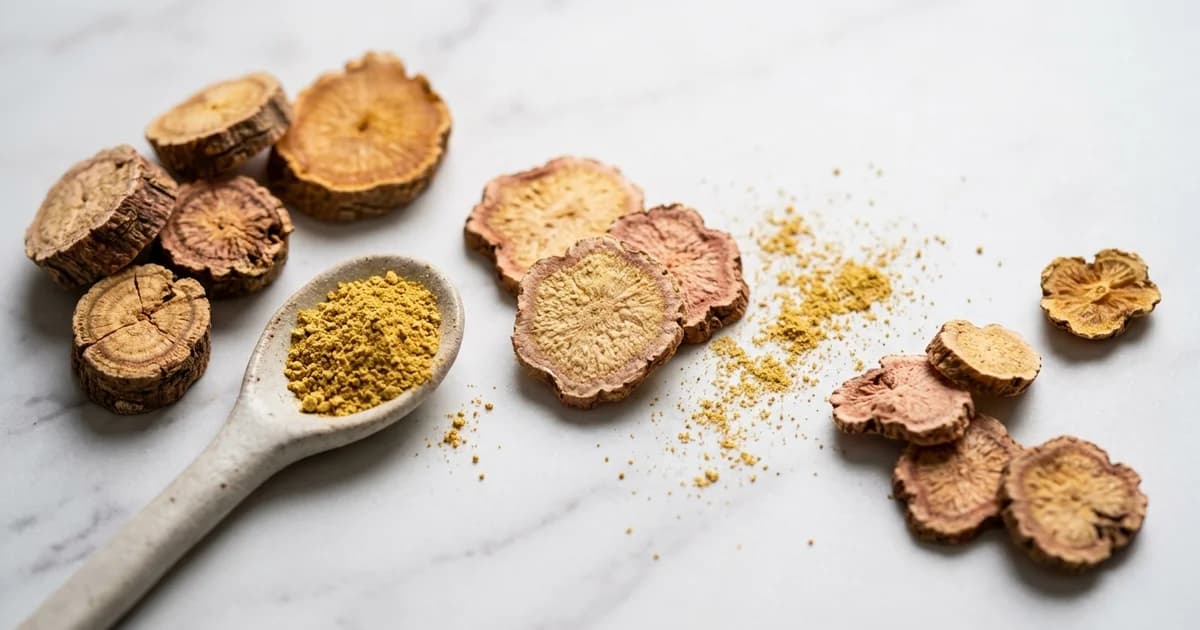
Rhodiola rosea (also called golden root or Arctic root) is a perennial herb that grows in cold, high-altitude regions of Europe and Asia. It has been used for centuries in traditional Scandinavian and Russian medicine to fight fatigue and improve resilience to harsh conditions.
What separates rhodiola rosea from the noise of the supplement aisle is its classification as an adaptogen, a compound that helps your body normalize its stress response rather than simply stimulating or sedating it, a category that also includes adaptogens like Tongkat Ali that work through different hormonal pathways. According to a review published in PMC, rhodiola rosea extract "aims to increase the body's resistance to the imposed stressors and has a normalizing effect independent of the direction of the pathological changes."
The two primary active compounds are rosavin and salidroside. These are responsible for most of rhodiola rosea's measurable effects on cognition, mood, and fatigue resistance.
How Rhodiola Rosea Affects the Brain
Rhodiola rosea doesn't work like caffeine. It doesn't block adenosine receptors or flood your system with adrenaline. Instead, it operates through several parallel mechanisms.
Cortisol Modulation
A randomized, double-blind, placebo-controlled study found that rhodiola rosea extract (SHR-5) improved the ability to concentrate and decreased cortisol response to awakening stress in burnout patients with fatigue syndrome. That matters because chronically elevated cortisol is one of the primary drivers of brain fog, poor memory consolidation, and decision fatigue.
Neurotransmitter Support
Rhodiola rosea influences serotonin, dopamine, and norepinephrine activity, placing it alongside other supplements for mood and energy that target neurotransmitter pathways. According to Nootropics Expert, rhodiola rosea has a reputation in the nootropic community for its energizing and anti-fatigue qualities, with users reporting improvements in mood, focus, and alertness.
Anti-Fatigue Effects
A clinical trial published on PubMed studied 100 subjects with prolonged or chronic fatigue symptoms using a daily rhodiola dosage of 400 mg of rhodiola rosea extract (WS® 1375). The results showed meaningful improvement in fatigue symptoms over the study period.
A 2025 dose-response study in PMC examined short-term rhodiola rosea supplementation in resistance-trained athletes and found that even acute dosing influenced cognitive function, though the researchers noted that evidence for dose-response effects in trained adults is still limited.
Rhodiola Rosea Benefits: What the Evidence Supports
Based on the clinical literature, here's where rhodiola rosea benefits hold up under scrutiny:
| Benefit | Evidence Level | Key Finding |
|---|---|---|
| Stress-related fatigue reduction | Strong | Multiple placebo-controlled trials show reduced fatigue in stressed populations |
| Mental performance under stress | Moderate-Strong | Improved concentration and cognitive function in burnout patients |
| Cortisol regulation | Moderate | Decreased cortisol awakening response in clinical trial |
| Mood support | Moderate | Influence on serotonin and dopamine pathways |
| Physical performance | Mixed | Some positive results in athletes, but dose-response data is limited |
| Anxiety reduction | Emerging | Animal studies show reduced anxiety-like behavior and lower corticosterone |
A 2024 review in the journal Integrative Cancer Therapies noted that as an adaptogen, rhodiola rosea "might also enhance physiological resistance or function, improving physical and cognitive performance in conditions that challenge homeostasis."
The key qualifier: most of these rhodiola rosea benefits emerge under conditions of stress or fatigue. If you're well-rested and relaxed, the effects will be less noticeable. This is an adaptogen, not a stimulant.
Rhodiola Dosage: How Much Do You Actually Need?
The rhodiola dosage question is where many supplements fall short.
According to Examine.com, daily preventative use of rhodiola rosea against fatigue has been reported effective at doses as low as 50 mg, while acute usage for fatigue and stress typically falls in the 288 to 680 mg range.
The clinical trial on chronic fatigue used a recommended daily rhodiola dosage of 400 mg. Other sources suggest 400 to 600 mg daily, typically divided as 200 mg twice daily, taken for a minimum of 4 to 6 weeks for full clinical benefit.
Here's the practical breakdown:
- For daily stress resilience: 200 to 400 mg per day
- For acute cognitive demand (exams, deadlines): 400 to 600 mg per day
- Standardization matters: Look for rhodiola rosea extracts standardized to 3% rosavins and 1% salidroside, the ratio found in the raw root
Timing also matters. Rhodiola rosea has mild stimulatory properties, so most practitioners recommend taking it in the morning or early afternoon. Taking it too late can interfere with sleep.
Comparing Popular Rhodiola Rosea Supplements
Not every rhodiola supplement is built the same. Here's how the major players stack up based on publicly available product information:
| Feature | NOW Foods Rhodiola | Thorne Rhodiola | Momentous Rhodiola |
|---|---|---|---|
| Rhodiola per serving | 500 mg | 100 mg | 100 mg |
| Standardization | 3% salidroside | Not fully disclosed | 3% rosavin, 1% salidroside |
| Servings per container | 60 | 60 | 60 |
| Price (approx.) | $25.99 | ~$22.00 | ~$22.60 (currently out of stock) |
| Third-party testing | GMP certified | Third-party tested | NSF Certified for Sport |
| Format | Capsule | Capsule | Capsule |
NOW Foods Rhodiola 500 mg
NOW Foods offers one of the higher-dose rhodiola rosea options at 500 mg per capsule, standardized to 3% salidroside. At roughly $0.43 per serving for the 60-count bottle, it's one of the more cost-effective choices. The downside: NOW doesn't disclose rosavin content separately, and it lacks sport-specific third-party certification.
Thorne Rhodiola
Thorne's rhodiola supplement contains just 100 mg of rhodiola rosea extract per capsule. According to a comparison on Momentous's blog, Thorne's product "does not have any third-party testing or certification," though Thorne as a brand is generally well-regarded for quality. The lower rhodiola dosage means you'd likely need to take multiple capsules to reach clinically studied ranges.
Momentous Rhodiola
Momentous provides 100 mg per serving with NSF Certified for Sport testing, which matters if you're a competitive athlete subject to drug testing. The product page on Amazon highlights its standardization to both rosavin and salidroside. The limitation: at 100 mg per capsule, you're getting well below the rhodiola dosage of 400 to 600 mg used in most clinical trials, and the product appears to be frequently out of stock.
What's Missing From Rhodiola Rosea-Only Supplements
Here's where the honest assessment comes in. Rhodiola rosea is a strong adaptogen with real clinical backing. But if your goal is sustained cognitive performance throughout a full workday, a rhodiola supplement alone has some clear gaps.
No Direct Energy Mechanism
Rhodiola rosea helps your brain cope with stress. It does not directly increase alertness or provide energy. It modulates your stress response, which can indirectly reduce fatigue, but it won't give you the focused drive you need for a four-hour deep work session. That's not what adaptogens do.
Slow Onset
Most clinical trials show rhodiola rosea benefits emerging over weeks of consistent use, not minutes. If you need cognitive support right now, for this meeting or this deadline, rhodiola rosea isn't designed for acute, on-demand performance.
Single-Pathway Approach
Every rhodiola supplement on the market is essentially the same thing: rhodiola rosea extract in a capsule. There's no complementary ingredient to smooth out the experience, extend the duration, or address the energy side of the equation. You're getting one tool for one job.
Dosing Inconsistency
As the comparison table shows, products range from 100 mg to 500 mg per serving. Many popular options (Thorne, Momentous) deliver doses well below what clinical trials actually used. You're often paying premium prices for sub-clinical rhodiola dosage levels.
No Tolerance Mitigation
While rhodiola rosea doesn't build tolerance the way caffeine does, a systematic review in PMC noted that most studies were short-term, and long-term tolerance data remains limited. Some practitioners recommend cycling rhodiola rosea (using it for several weeks, then taking a break), which creates gaps in your cognitive support.
Bridging the Gap: A Multi-Compound Approach to Cognitive Performance
Rhodiola rosea's strength is stress resilience. But cognitive performance isn't just about managing stress. It's about sustained alertness, clean energy, and the ability to maintain focus for hours without crashing.
That's the thinking behind Roon, a sublingual cognitive performance pouch built on a different philosophy: instead of relying on a single adaptogen like rhodiola rosea, it combines four compounds that work through complementary pathways.
Caffeine (80 mg) provides a controlled dose of alertness, comparable to a cup of coffee, but paired with complementary compounds that smooth out the experience. L-Theanine promotes calm, focused attention and smooths out caffeine's rough edges. Theacrine extends the energy curve and, because it acts on adenosine receptors differently than caffeine, research from Nootropics Depot suggests it may help reduce tolerance buildup. Methylliberine acts as a fast-onset complement, helping the stack kick in quickly while the other compounds sustain the effect over 6 to 8 hours.
The sublingual delivery format means faster absorption than a capsule that has to pass through your digestive system. And because it's zero-nicotine, it avoids the dependency issues that come with nicotine pouches that some professionals have started using for focus.
Rhodiola rosea is a solid ingredient for long-term stress management. If that's your primary goal, it deserves a place in your routine. But if you need reliable, on-demand cognitive performance without the crash, the jitters, or the wait, exploring nootropics for sustained productivity shows how a multi-compound approach addresses the gaps that rhodiola rosea alone can't fill.
Try Roon and see what sustained focus actually feels like.