Lion's Mane Mushroom
Roon Team

Lion's Mane Mushroom: What the Science Actually Says About Brain Health
A shaggy white mushroom is quietly becoming one of the most talked-about nootropic ingredients, sitting alongside other top performers reviewed in guides to the best mushroom nootropics. Lion's mane (Hericium erinaceus) has earned serious attention from neuroscientists, supplement companies, and productivity-obsessed professionals alike. The question worth asking: does the science hold up, or is this another overhyped health trend?
The answer is somewhere in between. And that middle ground matters if you're spending money on a lion's mane supplement.
Key Takeaways:
- Lion's mane contains two unique compound families, hericenones and erinacines, that can stimulate nerve growth factor (NGF) production in the brain.
- Human clinical trials show promising but early-stage results for cognitive performance and stress reduction.
- Most lion's mane benefits require weeks of consistent daily use before you notice anything.
- The supplement market is flooded with products that vary wildly in quality, extraction method, and active compound content.
How Lion's Mane Works in the Brain
Most nootropics work by tweaking neurotransmitter levels. Lion's mane mushroom does something different.
The two bioactive compound families in lion's mane, hericenones and erinacines, promote the synthesis of nerve growth factor (NGF). NGF is a protein your brain needs to maintain, grow, and repair neurons. It's essential for the health of the basal forebrain cholinergic system, the network most directly tied to memory and attention.
Hericenones and erinacines isolated from the medicinal mushroom Hericium erinaceus can induce NGF synthesis in nerve cells. This was established in research published on PubMed, and it separates lion's mane from nearly every other natural nootropic on the market.
Here's the structural detail that matters: hericenones are typically found in the fruiting body, while erinacines are derived from the mycelia of the mushroom. This distinction is the reason the "fruiting body vs. mycelium" debate rages in every supplement forum online. A product using only mycelium grown on grain may contain erinacines but miss the hericenones entirely, and vice versa.
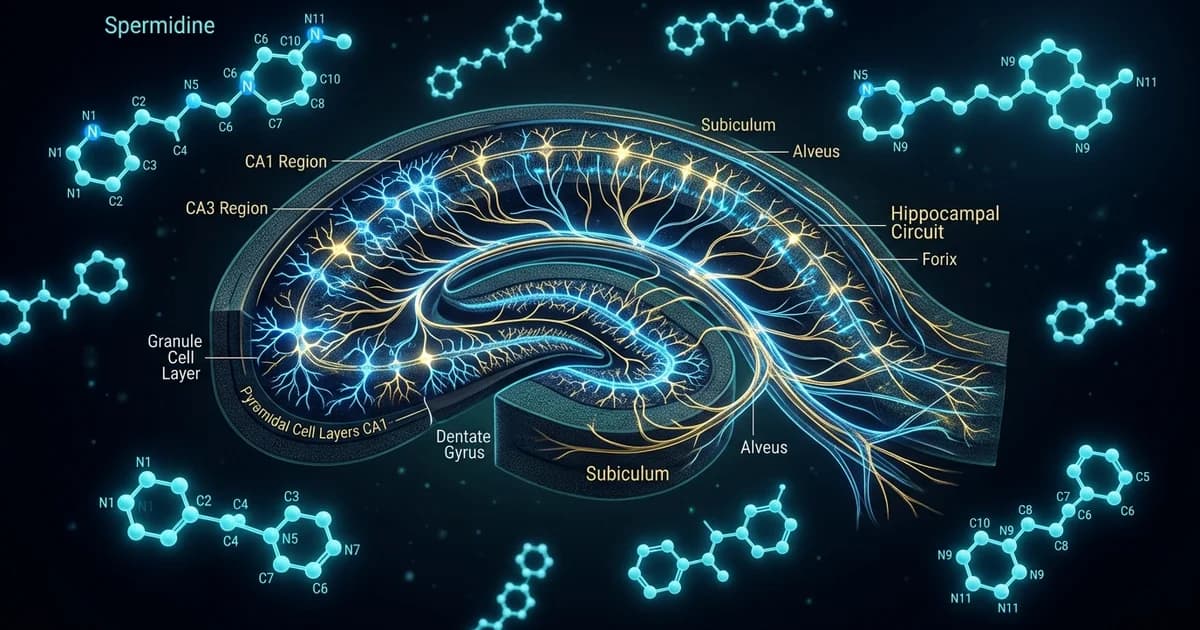
A 2023 study from the University of Queensland, published in the Journal of Neurochemistry, added another layer. Hericerin derivatives activate a pan-neurotrophic pathway in central hippocampal neurons converging to ERK1/2 signaling, enhancing spatial memory. In plain terms: compounds from lion's mane activated growth pathways in the exact brain region responsible for forming new memories.
What the Human Trials Show
Animal research on lion's mane is strong. Human research is catching up, but it's still early.
The most cited recent trial is a 2023 double-blind study published in Nutrients that tested lion's mane in healthy young adults. The study found that lion's mane shows promise in improving cognitive function and mood, though much of the human research has concentrated on chronic supplementation.
A separate 2025 study published in Frontiers in Nutrition looked at acute effects of a standardized lion's mane extract on cognition and mood in healthy younger adults using a double-blind, randomized, placebo-controlled design.
According to NutraIngredients, attention and processing scores improved measurably 48 hours after participants took the lion's mane mushroom, and subjective stress levels dropped as well.
A longer-duration trial examined patients with mild Alzheimer's disease. In a double-blind randomized controlled trial of 49 patients with mild AD, treatment with lion's mane mycelia (3 capsules daily, 350 mg/capsule containing 5 mg/g erinacine A) for 49 weeks improved Instrumental Activities of Daily Living score compared to placebo. This was documented in the Alzheimer's Drug Discovery Foundation's review.
These results are encouraging. But they come with caveats. Sample sizes are small. Many trials lack standardized dosing. And the gap between "statistically improved attention scores on a lab test" and "you'll feel sharper at work" is real.
The Bioavailability Problem No One Talks About
Here's where the lion's mane story gets complicated.
A key challenge in translating H. erinaceus into clinical and commercial applications is the lack of standardization in extraction methods and bioactive compound quantification. The variability in its polysaccharide, terpenoid, and phenolic content across different cultivation and processing methods is significant. This finding, from a 2025 review in PMC, is the single biggest issue facing the lion's mane supplement market.
Two capsules labeled "500mg Lion's Mane" from two different brands can contain completely different levels of active compounds. One might be rich in beta-glucans. The other might be mostly starch filler from the grain substrate the mycelium was grown on.
The extraction method matters enormously. Hot water extraction pulls out polysaccharides and beta-glucans. Alcohol (ethanol) extraction captures the hericenones and other fat-soluble terpenoids. A dual-extraction process gets both. But many brands skip dual extraction because it costs more.
Lion's Mane Benefits: What You Can Realistically Expect
Based on the available evidence, here's what a quality lion's mane supplement may support:
- Memory and learning: NGF stimulation supports hippocampal function, the brain's memory center.
- Attention and processing speed: The 2023 Nutrients trial showed measurable improvements in these areas.
- Stress response: Multiple trials report reduced subjective stress scores.
- Nerve health: NGF plays a role in peripheral nerve repair and maintenance.
- Immune function: Beta-glucans in lion's mane support immune cell activity (though this is less relevant to cognitive performance).
What you should not expect: immediate results. Most users will need to take lion's mane regularly for several weeks or 2 to 3 months before feeling a significant effect and reaping the long-term benefits. This timeline, noted by Novomins, is consistent across most clinical trials.
Lion's mane is a long game. If you need focus in the next 30 minutes, this isn't your tool.
Comparing Popular Lion's Mane Supplements
The mushroom supplements for focus market is crowded. Here's how three of the most recognized lion's mane brands stack up:
| Feature | Real Mushrooms | Host Defense | Om Mushrooms |
|---|---|---|---|
| Source | 100% fruiting body | Mycelium on grain | Mycelium + fruiting body blend |
| Extraction | Hot water extracted | Not specified (dried mycelium) | Not specified |
| Beta-glucan disclosure | Yes (>25% guaranteed) | No specific guarantee | No specific guarantee |
| Serving size | 2 capsules (1,000mg) | 2 capsules | 3 capsules (2,000mg) |
| Organic | Yes | Yes | Yes |
| Third-party tested | Yes | Yes | Yes |
| Best for | Purists wanting verified potency | Brand recognition, Paul Stamets backing | Convenience, versatile formats |
Real Mushrooms uses 100% fruiting body, no mycelium, no grain, which is detailed on their website. This matters because fruiting body extracts tend to contain higher concentrations of hericenones and verified beta-glucans.
Host Defense uses mushroom mycelium as their primary ingredient in their lion's mane capsules. The mycelium-on-grain approach has defenders (Paul Stamets among them), but critics point out that the final product can contain a high percentage of grain starch rather than mushroom compounds.
Om Mushrooms uses a blend of organic lion's mane mycelial biomass and fruit body, as listed on their Amazon product page. This split approach attempts to capture compounds from both sources, though the ratio isn't always transparent.
All three are reputable brands. None of them are scams. But the differences in sourcing and extraction mean you're getting meaningfully different products under the same "Lion's Mane" label.
What's Missing From Lion's Mane Supplements
After reviewing the research and the top products, a few gaps become clear:
1. No Immediate Cognitive Effect
Lion's mane works through neurotrophin pathways. It promotes the growth of neural infrastructure over weeks and months. That's valuable for long-term brain health. But it does nothing for the 2 PM meeting you need to be sharp for right now.
If you need on-demand focus, lion's mane alone won't deliver it.
2. No Stimulant or Alertness Component
Lion's mane doesn't contain caffeine or any stimulant compound. It won't increase alertness, reaction time, or wakefulness. For people who need both structural brain support and acute performance, a standalone lion's mane supplement leaves half the equation unsolved.
3. No Complementary Stack Design
Most lion's mane products are single-ingredient supplements. They don't combine lion's mane with other nootropic compounds that could amplify or complement its effects. You're left to build your own stack, which means guessing at dosages and hoping the ingredients play well together.
4. Inconsistent Quality and Dosing
As the research shows, the lack of standardization across the industry means two "lion's mane supplements" can be fundamentally different products. Without beta-glucan verification or standardized extraction, you're often buying on faith.
A Different Approach to Cognitive Performance
Lion's mane is a solid long-term investment, and it ranks among the best mushroom supplements for brain health when you prioritize quality sourcing and extraction. The NGF research is real, and the clinical data is moving in the right direction. If you want to support neuroplasticity and nerve health over months and years, a quality lion's mane supplement (look for dual-extracted, fruiting body, with verified beta-glucan content) is worth considering.
But if your goal is reliable, same-day cognitive performance, the tool needs to be different.
Roon was built for exactly that gap. It's a zero-nicotine sublingual pouch that combines 80 mg of caffeine with L-theanine, theacrine, and methylliberine, four compounds that work together to deliver 6 to 8 hours of sustained focus without jitters or a crash.
Here's why that combination matters. Research published on PubMed found that 97 mg of L-theanine in combination with 40 mg of caffeine helps to focus attention during a demanding cognitive task. Roon delivers 80 mg of caffeine paired with 60 mg of L-theanine, extended by theacrine and methylliberine, for 6 to 8 hours of sustained focus without building tolerance.
Where lion's mane builds the foundation over months, Roon delivers the performance you need today. They solve different problems. And for people serious about cognitive performance, understanding that distinction is the whole point.
If you want to learn more about how Roon's nootropic stack works, visit takeroon.com.