Neuro Gum Ingredients Breakdown: What's Really Inside?
Roon Team
Neuro Gum Ingredients Breakdown: What's Really Inside?
Short answer: Neuro Gum's Energy & Focus formula contains four active neuro gum ingredients per piece: 40mg natural caffeine, 60mg L-theanine, vitamin B6, and vitamin B12. Neuro publishes only those actives on its own site; the inactive list, sucralose included, comes from retailer listings rather than the brand. The caffeine-and-L-theanine pairing has clinical backing, though the 60mg L-theanine dose sits below the levels used in most studies.
You've seen the colorful packs at Whole Foods, scrolled past the ads on Instagram, and maybe even tossed a piece in your mouth before a meeting. Understanding the neuro gum ingredients is key to knowing whether this popular nootropic gum lives up to the hype. But strip away the branding and the neuro gum ingredients tell a more nuanced story than the marketing suggests.
The formula is simple: four active compounds, a handful of inactive ones, and a delivery system built around chewing. Some of those neuro gum ingredients are well-studied. Others raise questions. Here's what the label actually says, what the science supports, and where the gaps are.
Key Takeaways:
- The neuro gum ingredients in the Energy & Focus formula include 40mg caffeine, 60mg L-theanine, vitamin B6, and vitamin B12 per piece.
- The caffeine-plus-L-theanine stack is backed by solid clinical research, but the ratio and doses may not be optimal.
- Retailer listings and outside reviewers put sucralose in the gum, which has drawn criticism from health-conscious consumers. Neuro publishes no inactive-ingredient list of its own.
- The neuro gum ingredients lack newer compounds like theacrine and methylliberine that address caffeine's biggest weakness: tolerance.
The Full Neurogum Ingredients List
Let's start with what's on the label. According to Neuro's ingredients page, the Energy & Focus gum and mints contain a nootropic blend designed to optimize performance.
Here's the breakdown for the standard Energy & Focus gum. Neuro publishes the active doses on its own site. It does not publish an inactive-ingredient list, so those come from the CVS product listing:
Active Neuro Gum Ingredients (per piece):
| Ingredient | Amount | Role |
|---|---|---|
| Natural Caffeine | 40mg | Stimulant, alertness |
| L-Theanine | 60mg | Calming amino acid, focus |
| Vitamin B6 | ~41% DV | Serotonin production, mood |
| Vitamin B12 | ~100% DV | Energy metabolism, nerve function |
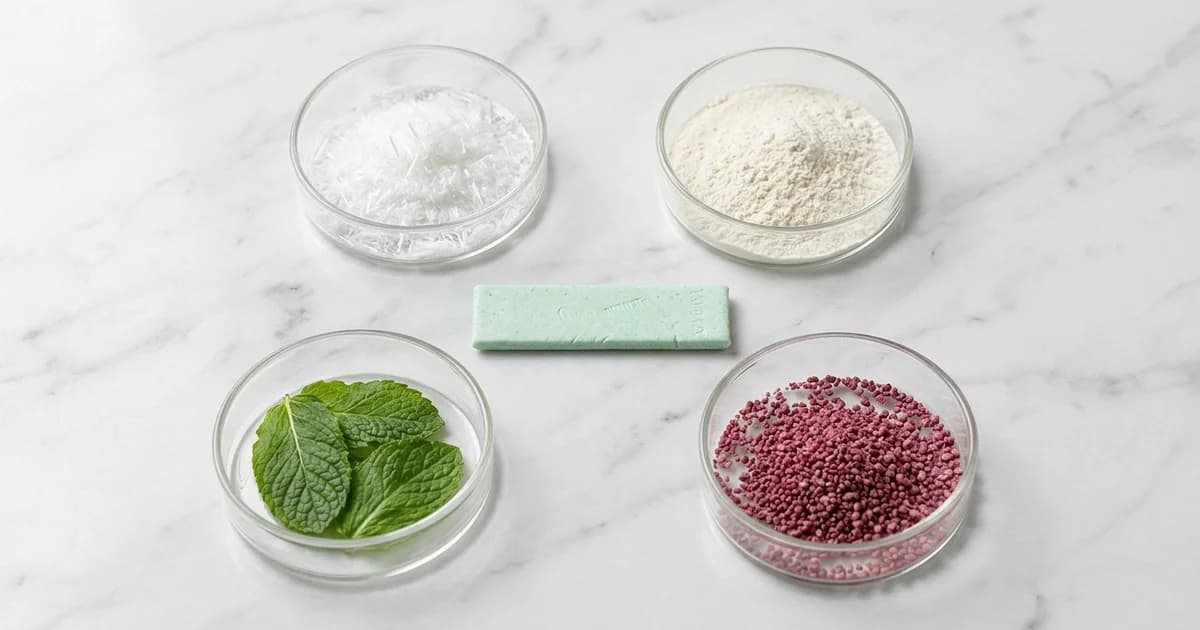
Inactive Ingredients (per the CVS listing, not published by Neuro): Sorbitol, Gum Base, Natural Flavors, Calcium Stearate, Spirulina Extract (for color), Sucralose, Monk Fruit Extract, Steviol Glycosides.
Neuro also offers an Extra Strength version with 100mg of caffeine per piece, plus the same L-theanine and B vitamins, and the brand's caffeinated mints for focus use a parallel setup. That's a full cup of coffee in a single piece of gum, which changes the neuro gum caffeine content equation considerably.
Breaking Down the Neuro Gum Caffeine Content
The standard neuro gum caffeine content sits at 40mg per piece, which is roughly half a cup of brewed coffee. Neuro's product page calls it natural caffeine but does not say where the caffeine is sourced from, and it publishes no suggested number of pieces.
That's a reasonable dose. Among the neuro gum ingredients, caffeine is the primary driver of alertness, and 40mg gives you enough to feel sharp without the jittery spike that comes from slamming a double espresso. And because buccal absorption through the mouth lining can deliver caffeine faster than swallowing a pill or drinking coffee, you may feel the effect within minutes.
The problem isn't the dose. It's what happens after weeks of daily use.
Research published in Pharmacology, Biochemistry and Behavior suggests that caffeine tolerance following continuous intake is driven by the upregulation of adenosine receptors. Your brain literally builds more of the receptors that caffeine blocks, which means you need more caffeine over time to get the same effect. According to Ultrahuman's research summary, this upregulation is the key caffeine tolerance mechanism, where more caffeine is needed over time to achieve the same blocking effect.
The neuro gum ingredients don't include anything that addresses this. It's a pure caffeine play with L-theanine sharpening focus and promoting calm alertness. That works on day one. By day thirty, your mileage will vary.
L-Theanine: The Smart Pairing (With a Caveat)
L-theanine is the best thing among the neuro gum ingredients. It's an amino acid found naturally in tea leaves, and it works by promoting alpha brain wave activity, the kind associated with calm, focused attention.
The combination of L-theanine and caffeine is one of the most studied nootropic stacks in existence. A study published in Nutritional Neuroscience found that the L-theanine and caffeine combination improved both speed and accuracy of attention-switching at 60 minutes, and reduced susceptibility to distracting information in memory tasks.
Another study, published in Nutritional Neuroscience, investigated 97mg L-theanine combined with 40mg caffeine and found improvements in cognitive performance and alertness compared to placebo.
Here's the caveat: that second study used a 97mg dose of L-theanine. The neuro gum ingredients include only 60mg. Most of the clinical literature showing strong results uses L-theanine doses between 100mg and 200mg. At 60mg, you're getting a sub-clinical dose unless you chew two pieces, which then bumps your neuro gum caffeine content to 80mg.
The ratio matters too. Many researchers use a 2:1 ratio of L-theanine to caffeine (for example, 200mg L-theanine with 100mg caffeine). The ratio found in the neuro gum ingredients is closer to 1.5:1, which is less generous on the L-theanine side.
The B Vitamins: Helpful or Just Label Filler?
The neuro gum ingredients include vitamin B6 and vitamin B12. According to BodySpec's review, the standard gum provides about 41% of the daily value for B6 and 100% DV for B12 per serving.
Both vitamins play real roles in brain function. B6 is involved in the production of serotonin and dopamine. B12 supports nerve function and energy metabolism. These aren't junk ingredients.
But here's the reality: B vitamin deficiency is relatively rare in people who eat a varied diet. If you're already getting enough B6 and B12 from food (meat, fish, eggs, fortified cereals), supplementing more won't give you a noticeable cognitive boost. The B vitamins among the neuro gum ingredients are more of an insurance policy than a performance enhancer.
They're not harmful. They're just not the reason anyone feels sharper after chewing a piece.
The Sucralose Question
This is where the neurogum ingredients list gets less clean.
Illuminate Labs' analysis flagged sucralose as the primary reason they don't recommend Neuro Gum, noting that sucralose is an artificial sweetener that may have a negative effect on insulin according to a 2024 medical review.
A study cited by OWYN found that sucralose may cause DNA damage and has been linked to gut permeability issues.
To be fair, the FDA approved sucralose as a general-purpose sweetener in 1999, and the amounts in a piece of gum are small. But for a product that markets itself as a clean, health-forward nootropic, finding sucralose among the neuro gum ingredients feels like an odd choice. Multiple Trustpilot reviewers have called out the disconnect between Neuro Gum's "Sugar/Aspartame Free" marketing and the actual presence of sucralose, calling the labeling misleading.
The CVS listing also puts sorbitol (a sugar alcohol that can cause digestive discomfort in some people) and steviol glycosides in the gum. The formula tries to cover multiple sweetener bases, which adds complexity without clear benefit.
What Real Users Say
The user feedback on the neuro gum ingredients and overall experience is genuinely mixed. According to Nootropics Expert, customers report the gum is effective for work, studying, or workouts, and the delivery system and formula taste good.
On the other hand, Thingtesting reviews describe the gum as having a weird initial texture that loses flavor quickly and becomes tough to stomach. And Innerbody's review noted that Neuro Gum lacks several cognitive-enhancing ingredients found in other nootropic supplements, like tyrosine and citicoline.
The general consensus across portable caffeine gum options like Neuro: the neuro gum ingredients work for a mild, short-term boost. Don't expect anything dramatic.
What's Missing From the Neuro Gum Ingredients
After breaking down every ingredient, a few specific gaps in the neuro gum ingredients stand out:
1. No tolerance mitigation. Caffeine is the engine of this formula, and caffeine builds tolerance. There's nothing in the neuro gum ingredients to counteract adenosine receptor upregulation over weeks of use. You'll need more pieces to get the same effect, which means more caffeine, more sucralose, and a higher daily cost.
2. Sub-optimal L-theanine dosing. 60mg is below the doses used in most clinical studies showing strong cognitive effects. You're getting a fraction of what the research supports.
3. No extended-release mechanism. The neuro gum caffeine content hits fast and clears fast. The half-life of caffeine is about 5 hours, and one third-party write-up puts Neuro Gum's felt effect at 2 to 4 hours. Neuro itself publishes no duration figure. There's no ingredient in the formula designed to extend the duration of focus.
4. Sucralose in a "clean" product. For a brand that positions itself as health-forward and natural, including an artificial sweetener that's drawing increasing scrutiny among the neuro gum ingredients is a notable trade-off.
5. No mood or motivation support beyond B vitamins. The neuro gum ingredients don't include any dopaminergic or adenosinergic compounds beyond caffeine itself. Once the caffeine wears off, there's no secondary system keeping you engaged.
Frequently Asked Questions
What are the main neuro gum ingredients?
The Energy & Focus formula lists four active ingredients per piece: 40mg natural caffeine, 60mg L-theanine, vitamin B6, and vitamin B12. Neuro does not publish an inactive-ingredient list; the CVS listing for the gum names sorbitol, gum base, natural flavors, calcium stearate, spirulina extract for color, sucralose, monk fruit extract, and steviol glycosides. The Extra Strength version raises caffeine to 100mg per piece.
How much caffeine is in Neuro Gum?
The standard neuro gum caffeine content is 40mg per piece, about half a cup of brewed coffee. Neuro publishes no suggested piece count, so a serving is whatever you chew: 40mg for one piece, 80mg for two. The Extra Strength version contains 100mg per piece, closer to a full cup of coffee. Buccal absorption through the mouth lining can deliver caffeine faster than swallowing a pill.
Does Neuro Gum contain sucralose?
Retailer listings say yes, naming sucralose alongside monk fruit extract and steviol glycosides. Neuro publishes no inactive-ingredient list on its own site. The FDA approved sucralose as a general-purpose sweetener in 1999, and the amount in one piece is small. Some reviewers have flagged a disconnect between the brand's sugar-free, health-forward marketing and the presence of an artificial sweetener.
Is the L-theanine dose in Neuro Gum high enough?
At 60mg per piece, the L-theanine dose sits below the 100mg to 200mg range used in most clinical research on the caffeine and L-theanine combination. One study pairing 97mg L-theanine with 40mg caffeine reported improvements in alertness and attention (Nutritional Neuroscience). Chewing two pieces raises L-theanine to 120mg but also doubles caffeine to 80mg.
What do the B vitamins in Neuro Gum do?
The formula provides about 41% of the daily value for vitamin B6 and 100% for vitamin B12 per serving. B6 is involved in serotonin and dopamine production, and B12 supports nerve function and energy metabolism. For people already getting enough from a varied diet, extra B vitamins act more as an insurance policy than a noticeable performance boost.
How do Neuro Gum ingredients compare to Roon?
Roon is a zero-nicotine sublingual pouch rather than a gum. Its current formula pairs 80mg caffeine and 60mg L-theanine with 25mg methylliberine and 5mg theacrine, two compounds Neuro Gum does not include, and it skips sucralose. The pouch absorbs under the lip instead of through chewing. You can see the full formula at https://www.takeroon.com/product.
A Formula Built to Fill Those Gaps
This is exactly the kind of problem that Roon was designed to solve.
Roon is a zero-nicotine sublingual pouch (not a gum) that delivers its active ingredients through the tissue under your lip, bypassing the digestive system entirely, and the pouches vs gum for focus difference starts with that delivery method. The formula contains four compounds: Caffeine (80mg), L-Theanine (60mg), Theacrine (5mg), and Methylliberine (25mg).
Roon's 80mg caffeine dose is comparable to a cup of coffee, double the standard Neuro Gum's 40mg. But the real advantage isn't the dose; it's the supporting cast.
Theacrine is structurally similar to caffeine but interacts with adenosine receptors differently. Research published in the Journal of the International Society of Sports Nutrition suggests that co-ingestion of caffeine, methylliberine, and theacrine can improve cognitive performance over a longer period compared to caffeine alone, based on their complementary pharmacodynamics and half-lives. And unlike caffeine, theacrine doesn't appear to produce the same tolerance curve, meaning the effect stays consistent over time.
Methylliberine acts faster than theacrine and complements caffeine's onset. A study summarized by Semantic Scholar found that the addition of theacrine and methylliberine to caffeine may lessen some undesirable effects of isolated caffeine ingestion on cognitive control and jitters.
Together, these four ingredients create a stack built around the reasons nootropic pouches beat gum: tolerance buildup, short duration, and the jitter-crash cycle.
| Feature | Neuro Gum | Roon |
|---|---|---|
| Caffeine | 40mg | 80mg |
| L-Theanine | 60mg | Yes |
| Theacrine | No | Yes |
| Methylliberine | No | Yes |
| Delivery | Chewing gum (buccal) | Sublingual pouch |
| Sucralose | Yes, per retailer listings | No |
| Nicotine | No | No |
| Duration of Effect | 2-4 hours (reported) | 6-8 hours |
| Tolerance Buildup | Yes (caffeine alone) | Reduced (theacrine + methylliberine) |
Roon isn't a magic solution, and it's not trying to replace your morning coffee. It's a focused tool for sustained cognitive performance that was specifically designed around the gaps that simpler caffeine products leave open. If the neuro gum ingredients left you wanting more, it might be worth looking at what a next-generation formula actually looks like.
By Roon Team