Executive Burnout Recovery: What the Science Actually Says
Roon Team

Executive Burnout Recovery: What the Science Actually Says (and What to Do About It)
You're not lazy. You're not weak. Executive burnout recovery starts with understanding one fact: you're running a brain that has been chemically and structurally altered by chronic stress, and no amount of "pushing through" is going to fix that.
Executive burnout recovery isn't a wellness trend. It's a neurological process with a measurable timeline, identifiable brain changes, and specific interventions that actually work. The World Health Organization classified burnout in the ICD-11 as an occupational phenomenon defined by three dimensions: energy depletion, mental detachment from your work, and reduced professional effectiveness.
And the numbers at the executive level are brutal. A 2024 analysis from Superhuman found that 56% of leaders reported feeling burned out, up from 52% the previous year. Meanwhile, 43% of companies lost half their leadership teams. This isn't a personal failure. It's a structural crisis that demands real executive burnout recovery strategies.
Key Takeaways:
- Burnout physically changes your brain, shrinking the prefrontal cortex and enlarging the amygdala.
- Executive burnout recovery takes three months to over a year depending on severity. A long weekend won't cut it.
- The most effective recovery combines rest with structural changes to how you work.
- Stimulant dependence during recovery creates a cycle that makes everything worse.
What Burnout Actually Does to Your Brain (and Why Executive Burnout Recovery Takes Time)
Here's where it gets uncomfortable. Burnout isn't just "feeling tired." It rewires your neural architecture, which is exactly why executive burnout recovery can't be rushed.
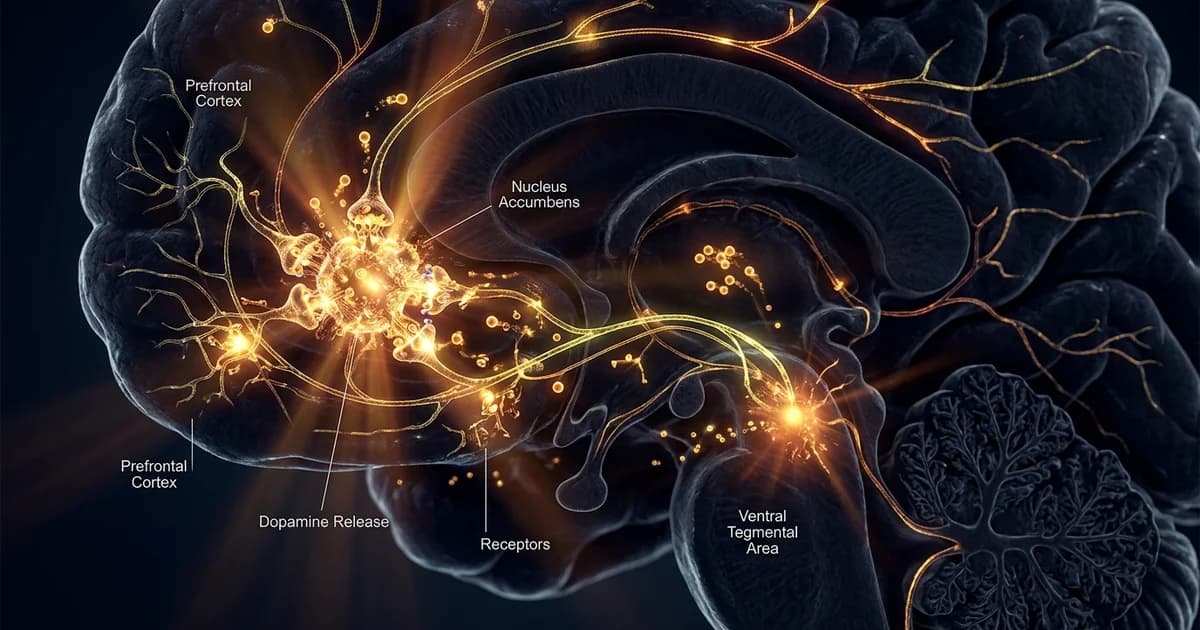
Research published by the Association for Psychological Science examined MRI scans of burnout patients compared to healthy controls. The findings were stark: the medial prefrontal cortex (mPFC), the region responsible for executive function and decision-making, showed more pronounced thinning in burnout patients. Their amygdalae were larger. The caudate nucleus, involved in motivation and goal-directed behavior, had shrunk.
In plain terms: the part of your brain that makes you a good executive gets smaller. The part that makes you anxious and reactive gets bigger.
A 2014 study covered by the PLOS Blog found that burnout patients showed weaker functional connectivity between the amygdala and the prefrontal cortex, even at rest. The emotional regulation circuitry that lets you stay calm in a board meeting, make measured decisions under pressure, or resist snapping at your COO? It degrades.
Research published in Frontiers in Human Neuroscience confirmed this pattern: burnout weakens the connections between the amygdala and the anterior cingulate cortex, the dorsolateral prefrontal cortex, and the motor cortex. The functional networks linking your limbic system to your prefrontal cortex start to fall apart.
This is why you can't just "decide" to focus. The hardware is compromised, and executive burnout recovery requires repairing it at the biological level.
How Long Executive Burnout Recovery Actually Takes
The timeline depends on how deep the hole is.
Jennifer Moss, workplace expert and author of The Burnout Epidemic, breaks it into three tiers. Mild burnout, characterized by fatigue and reduced enthusiasm, can improve within a few weeks with genuine rest and reduced stress. Moderate burnout, with persistent exhaustion and detachment, typically requires three to six months of structural changes. Severe burnout can take over a year.
A clinical review from South Florida Medical Group puts it even more bluntly: severe executive burnout recovery takes six months to two years or longer. Some individuals with severe clinical burnout did not fully recover even after four years.
The critical insight from the research: executive burnout recovery is faster and more sustainable when rest is combined with structural and environmental changes. Taking a two-week vacation and returning to the same 70-hour weeks, the same inbox, the same decision load? That's not recovery. That's a pause button.
The Five Pillars of Executive Burnout Recovery
Recovery isn't one thing. It's a system. Here's what the evidence supports for effective executive burnout recovery.
1. Sleep Architecture Repair
Sleep is where your brain clears metabolic waste, consolidates memory, and restores prefrontal cortex function. Most burned-out executives report fragmented sleep, early waking, or reliance on alcohol or sleep aids to get any rest at all. Repairing sleep is the foundation of any executive burnout recovery plan.
The fix isn't just "sleep more." It's protecting sleep architecture: consistent bed and wake times, eliminating screens 60 minutes before bed, keeping the room cold (65-68°F), and cutting caffeine after noon. If you're consuming 400mg+ of caffeine daily just to function, your adenosine system is wrecked. Tapering down is non-negotiable.
2. Physical Movement (Not Punishment)
Exercise reduces cortisol, increases BDNF (brain-derived neurotrophic factor), and promotes neurogenesis in the hippocampus. But the type matters. For someone in executive burnout recovery, crushing a CrossFit WOD five days a week adds physiological stress to an already overtaxed system.
Walking 30-45 minutes daily, strength training two to three times per week, and occasional zone-2 cardio. That's the protocol. Low-grade, consistent, restorative. Save the competitive athletics for after you've recovered.
3. Cognitive Load Reduction
Your prefrontal cortex is thinned and underperforming. Every decision you make, from what to eat for lunch to whether to acquire a competitor, draws from the same depleted pool. Reducing cognitive load is one of the most overlooked aspects of executive burnout recovery.
Practical steps:
- Delegate aggressively. If someone on your team can do it at 80% of your quality, let them.
- Batch decisions. Set specific windows for email, meetings, and strategic thinking. Stop context-switching.
- Eliminate low-value obligations. That advisory board seat you said yes to out of flattery? Resign.
- Automate the trivial. Same lunch. Same morning routine. Same workout time. Decision fatigue is real, and your prefrontal cortex can't afford it right now.
4. Psychological Boundaries and Identity Work
Most executives tie their identity to their output. When performance drops, self-worth collapses. This creates a vicious cycle: you feel bad about underperforming, so you work harder, which deepens the burnout, which worsens performance. Breaking this cycle is essential to executive burnout recovery.
Working with a therapist or executive coach who understands burnout (not just "stress management") can help you separate who you are from what you produce. This isn't soft. It's the difference between recovering in six months and spiraling for three years.
5. Stimulant Audit
This is the one nobody wants to hear during executive burnout recovery.
Most executives in burnout are running on a cocktail of caffeine, nicotine, or other stimulants just to maintain baseline function. The problem: high-dose stimulants mask fatigue signals, spike cortisol, create dependency, and produce crashes that make the underlying exhaustion worse.
The goal isn't zero stimulation. It's appropriate stimulation. Low-dose, clean, sustained energy that supports cognitive function without hammering your HPA axis.
The Stimulant Trap: Why Your Coffee Habit Is Slowing Executive Burnout Recovery
Let's talk about the 600mg-a-day coffee habit.
Caffeine blocks adenosine receptors, which temporarily reduces your perception of fatigue. But it doesn't eliminate the fatigue. It hides it. And at high doses, caffeine elevates cortisol, disrupts sleep architecture (even if you "feel fine"), and creates a tolerance cycle that demands ever-increasing doses for the same effect.
For an executive in burnout recovery, this is exactly backwards. You need your sleep signals intact. You need your cortisol rhythm normalized. You need your brain to accurately perceive its own state so you can calibrate your executive burnout recovery properly.
The answer isn't to white-knuckle through your days with zero support. It's to be strategic about what you put in your body and why.
| Factor | High-Dose Caffeine (400mg+) | Low-Dose Smart Stack |
|---|---|---|
| Energy Duration | 1-3 hours, then crash | 6-8 hours, gradual taper |
| Cortisol Impact | Spikes cortisol | Minimal cortisol disruption |
| Sleep Disruption | High (even afternoon doses) | Low (with proper timing) |
| Tolerance Buildup | Rapid | Minimal to none |
| Jitters/Anxiety | Common | Rare |
A study published on PubMed found that combining just 40mg of caffeine with 97mg of L-theanine improved accuracy during task switching and self-reported alertness while reducing tiredness, all without the jitters or crash of higher caffeine doses. The combination outperformed placebo on cognitive performance measures at both 20 and 70 minutes post-administration.
Separate research published in the Journal of the International Society of Sports Nutrition found that a combination of caffeine, methylliberine, and theacrine produced similar cognitive benefits to double the dose of caffeine alone, without the blood pressure spikes. The researchers noted that co-ingestion of these compounds can sustain cognitive performance over a longer period compared to caffeine by itself.
This is the principle behind smarter supplementation during executive burnout recovery: less stimulant, more sustained support.
Building a Post-Burnout Performance System
Executive burnout recovery isn't the end goal. The end goal is building a way of working that doesn't burn you out again in 18 months.
That means:
- Scheduled recovery blocks. Not vacations. Weekly and daily periods of genuine cognitive rest.
- Energy management over time management. Protect your peak cognitive hours for your highest-value work. Do admin when your brain is already tired.
- Regular biomarker monitoring. Track sleep quality, HRV, and resting heart rate. These are early warning systems.
- A sustainable stimulant protocol. Something that supports focus without creating dependency or crashing your system.
The executives who complete executive burnout recovery and stay recovered are the ones who treat their cognitive performance like a system to be maintained, not a resource to be extracted.
Sustainable Performance, Not Stimulant Crashes
If any of this resonates, the worst thing you can do is keep white-knuckling through your days on willpower and triple espressos. Real executive burnout recovery requires better tools.
Roon was designed for exactly this kind of recalibration. Roon's zero-nicotine focus pouches combine 80mg of caffeine with L-theanine, theacrine, and methylliberine, the same compounds the research above supports. That's roughly one cup of coffee's worth of caffeine, but L-theanine smooths the curve while theacrine and methylliberine extend it to six to eight hours of sustained focus without the cortisol spikes, tolerance buildup, or crashes that make burnout worse.
It's not a fix for burnout. Nothing in a pouch is. But as part of an executive burnout recovery system that includes sleep repair, cognitive load reduction, and real structural changes to how you work, it's a tool that supports your brain instead of punishing it.
Six to eight hours of clean focus. No jitters. No crash. No dependency cycle.
That's what sustainable performance actually looks like. Try Roon here.