Coffee Filter Replacement
Roon Team
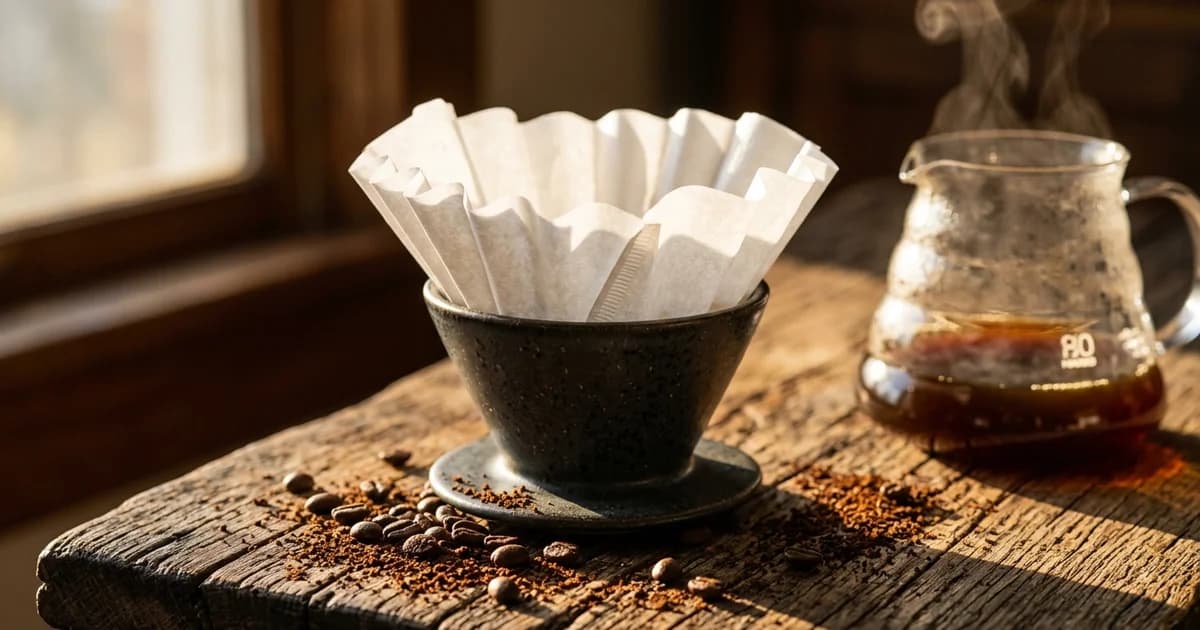
Coffee Filter Replacement: The Complete Guide to Better Brewing
Your coffee tastes off. It's bitter, flat, or just… wrong. You've tried new beans, adjusted the grind, and cleaned the carafe, but you haven't thought about a coffee filter replacement in months, maybe ever. That's the problem.
The filter is the most overlooked variable in your brew. It controls extraction, affects flavor, traps oils, and determines whether your morning cup is clean and bright or muddy and stale. Getting your coffee filter replacement right is simple once you know what you're working with.
Key Takeaways:
- Paper filters should be used once and discarded. Reusable metal filters need weekly deep cleaning and last years. Cloth filters need replacing roughly every 100 brews.
- The wrong filter size causes overflow, uneven extraction, and weak coffee.
- Paper filters remove cholesterol-raising compounds (cafestol and kahweol) that metal and cloth filters let through.
- Switching to the correct replacement coffee filters can noticeably improve taste without changing anything else about your setup.
Why Your Coffee Filter Replacement Matters More Than You Think
Every time you brew, hot water passes through ground coffee and a filter before reaching your cup. That filter isn't passive. It's doing real work.
Paper filters trap fine particles and coffee oils, producing a cleaner, brighter cup. Metal filters let those oils pass through, giving you a fuller body but also more sediment. Cloth sits somewhere in between.
The issue? Filters degrade, and a timely coffee filter replacement prevents flavor problems before they start. Paper filters are single-use by design. Reusable metal filters accumulate oil residue that turns rancid over time. Cloth filters clog and harbor bacteria if you don't maintain them. According to Wisely Market, microscopic particles of oils, coffee grinds, and moisture build up on the filter with every brew, and neglecting to clean reusable filters can lead to mold or bacterial growth.
That stale, slightly bitter undertone in your coffee? It might not be the beans. It might be a filter that's past its prime and overdue for a coffee filter replacement.
Coffee Filter Types: Paper vs. Metal vs. Cloth
Not all filters are interchangeable, and the material you choose shapes the cup you drink. Understanding each type helps you make a smarter coffee filter replacement decision. Here's how they compare:
| Feature | Paper | Metal (Stainless Steel) | Cloth (Cotton/Hemp) |
|---|---|---|---|
| Lifespan | Single use | Years (with care) | ~100 brews / a few months |
| Flavor Profile | Clean, bright, light body | Full body, more oils, some sediment | Smooth, medium body |
| Oil Filtration | Removes most oils | Allows oils through | Partial oil filtration |
| Maintenance | None (dispose after use) | Weekly deep clean | Rinse after every use, boil weekly |
| Cost Over Time | Recurring (pennies per filter) | Higher upfront, low ongoing | Moderate upfront, periodic replacement |
| Environmental Impact | Generates waste (compostable) | Minimal long-term waste | Low waste, requires water for cleaning |
Paper Filters
Paper is the default for most drip machines and pour-over setups. It produces the cleanest cup because it catches both fine sediment and the oily compounds that give unfiltered coffee its heavier mouthfeel. Paper is also the simplest coffee filter replacement to manage: use it once, toss it, grab a new one.
There's a health angle here too. A 2025 study from Uppsala University found that paper-filtered coffee contained far lower concentrations of cafestol and kahweol, two diterpenes linked to elevated LDL cholesterol, compared to unfiltered methods like French press or boiled coffee. The paper filter does the heavy lifting in removing those compounds.
Paper filters come in bleached (white) and unbleached (brown) varieties. Bleached filters go through a whitening process, typically with oxygen or a small amount of chlorine. Unbleached filters are more "natural" but can impart a slight papery taste if you don't rinse them before brewing. Performance-wise, the difference is minimal, so either option works as a reliable coffee filter replacement.
Metal Filters
Stainless steel and gold-plated filters are the go-to replacement coffee filters for people who want a reusable option. They let more coffee oils into your cup, which means a richer, heavier body. If you like the mouthfeel of French press coffee but prefer a drip setup, metal is your filter.
The trade-off: metal filters require consistent cleaning. A quick rinse after each use isn't enough. Wisely Market recommends a weekly deep clean for metal or mesh filters to prevent oil buildup that causes off-flavors. With proper care, a quality metal filter can last for years before you need a coffee filter replacement.
Cloth Filters
Cloth filters, typically made from cotton, linen, or hemp, are popular in pour-over brewing. They produce a smooth cup with more complexity than paper but less sediment than metal. According to Zavida Coffee, cloth filters need replacing roughly every 100 brews and require regular deep cleaning by boiling, or they'll clog and retain old flavors.
Cloth is the highest-maintenance option. You need to rinse it after every single use, boil it weekly, and store it properly (usually in water in the fridge) to prevent mold. For most people, that's too much work. But the cup quality is hard to beat, and the coffee filter replacement cycle is predictable once you track your brew count.
Coffee Filter Replacement Sizes: Getting the Right Fit
Buying replacement coffee filters sounds straightforward until you realize there are at least four standard sizes for cone filters alone. Use the wrong one and you'll get overflow, channeling, or under-extraction. Getting the right size is just as important as the coffee filter replacement itself.
Cone Filter Sizes
Cone filters are numbered #1 through #6. According to Coffee Bean Corral, the breakdown is:
- #1: Single-cup coffeemakers or small pour-overs
- #2: Two-to-six cup coffeemakers or one-to-two cup pour-overs
- #4: Eight-to-ten cup coffeemakers or larger pour-over systems
- #6: Ten-plus cup coffeemakers
The #4 is the most common size for standard home drip machines. If you're not sure what coffee filter replacement you need, check the manual for your brewer or measure the existing filter basket. A filter that's too small will collapse during brewing. One that's too large will fold over and block water flow, leading to uneven extraction.
Basket Filters
Flat-bottom basket filters don't follow the numbered system. They're matched to the diameter of your specific brewer. Most standard 8-12 cup drip machines use a basket filter that's roughly 3.25 inches tall and 4 inches across. Again, check your machine's specs before ordering replacement coffee filters. As Pro Coffee Gear notes, undersized filters may collapse while oversized ones can block proper water flow.
How Often Should You Replace Your Coffee Filter?
This depends entirely on the type. Knowing the right coffee filter replacement schedule keeps your brew tasting its best.
Paper filters: Every single brew. One and done. Reusing paper filters leads to clogged pores, slower extraction, and a stale taste. They cost a few cents each. Don't reuse them.
Metal filters: These don't need a coffee filter replacement in the traditional sense, but they do need weekly deep cleaning. Soak them in a mixture of hot water and white vinegar or baking soda to dissolve oil buildup. If the mesh starts to warp, develop holes, or produce a metallic taste even after cleaning, it's time for a new one. Most last two to five years.
Cloth filters: Replace every 90-100 uses, or roughly every three months if you brew daily. You'll know it's time for a coffee filter replacement when water drains noticeably slower, or the filter retains a stale smell even after boiling.
Charcoal water filters: Many machines (Keurig, Breville, some Cuisinart models) use a separate charcoal water filter to purify the water before it hits the coffee grounds, and Cuisinart filter replacement steps vary by model. These typically need replacing every two to three months, or about every 60 brew cycles.
Signs You Need a Coffee Filter Replacement
Sometimes the decline is gradual enough that you don't notice until the cup is genuinely bad. Watch for these:
- Bitter or stale taste that persists even with fresh beans
- Slower brew times than usual (clogged filter restricting flow)
- Visible residue or discoloration on reusable filters that won't come off with cleaning
- Grounds in your cup, which means a tear or worn mesh in a reusable filter
- Overflow during brewing, which could signal a filter that's the wrong size or has lost its structural integrity
If you're troubleshooting bad coffee and you've already ruled out water temperature, grind size, and bean freshness, a coffee filter replacement is your next move.
The Cost of Getting Your Coffee Filter Replacement Wrong
A worn-out or incorrect filter doesn't just affect taste. It affects extraction efficiency, which means you're wasting coffee. Under-extraction from a clogged or collapsed filter produces a sour, thin cup. Over-extraction from restricted flow (water sitting too long in the grounds) produces harsh bitterness.
The National Coffee Association reported that 66% of American adults drink coffee daily, with consumption at a 20-year high. That's a lot of people potentially brewing suboptimal cups because of a $0.03 paper filter or a metal filter that hasn't been deep-cleaned since the last presidential election.
The fix is cheap and fast. Stock up on the right size replacement coffee filters, or if you run out, learn the filter substitutes that actually work before committing to a cleaning schedule for your reusable one. Your coffee will taste better within a single brew cycle.
Beyond the Coffee Filter Replacement: Rethinking How You Get Your Caffeine
Optimizing your coffee setup is worth the effort. But here's something worth considering: even a perfectly brewed cup of coffee delivers caffeine in a spike-and-crash pattern. You get the hit, ride the wave for an hour or two, then slide into the afternoon fog. And that's before factoring in the jitters, the acid reflux, or the third cup you reach for just to stay level.
Research published in PMC confirms that L-theanine can counteract caffeine's common side effects, including anxiety and jitters, by balancing CNS excitation. That's the science behind pairing the two.
Roon is built on that pairing. It's a zero-nicotine sublingual pouch that combines 80 mg of caffeine with L-theanine, theacrine, and methylliberine to deliver 6-8 hours of sustained focus without the spike, the crash, or the third-cup dependency. No brewing required. No coffee filter replacement to worry about.
Clean energy, zero crash. That's the whole idea. Check it out at takeroon.com.