Theacrine vs Caffeine: The Stimulant That Doesn't Build Tolerance (And Why It Matters)
Roon Team
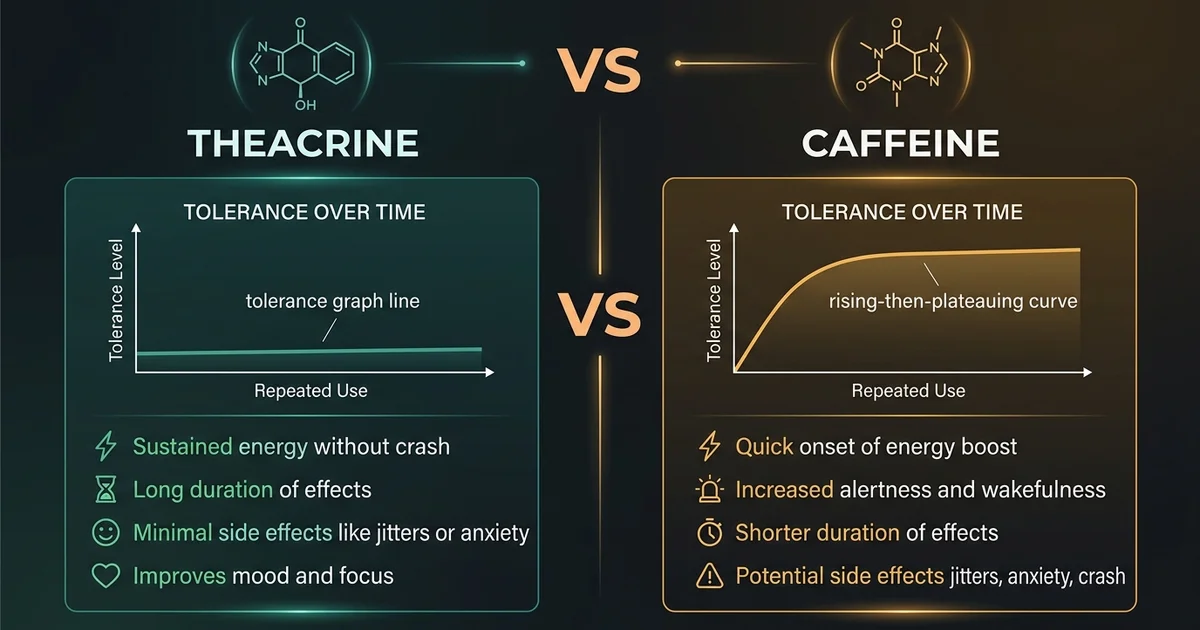
Theacrine vs Caffeine: The Stimulant That Doesn't Build Tolerance (And Why It Matters)
You drink the same coffee you drank two years ago, but it does about half as much. That is not in your head. That is tolerance, and caffeine is famous for it.
The theacrine vs caffeine question matters because one of these molecules appears to sidestep that exact problem. Theacrine looks almost identical to caffeine on paper, hits some of the same receptors, and yet behaves very differently over weeks of daily use. The short version: caffeine works fast and fades fast, while theacrine works slow, lasts long, and seems to hold its effect even when you take it every day.
This is a comparison, not a coronation. Both molecules have real strengths and real limits, and the smartest approach usually combines them rather than picking a winner.
Key Takeaways
- Caffeine is fast, cheap, and well studied, but it builds tolerance and can bring jitters and a crash.
- Theacrine is structurally similar to caffeine but has a much longer duration and shows little to no tolerance over weeks of daily dosing.
- Methylliberine (Dynamine) is a related molecule that acts faster than theacrine, often used to cover theacrine's slow onset.
- The most effective focus formulas pair a small caffeine dose with theacrine, L-theanine, and methylliberine rather than relying on stimulants alone.
What Is Theacrine? A Caffeine Cousin With Different Manners
Theacrine is a naturally occurring purine alkaloid found in the leaves of Camellia kucha, a relative of the tea plant, as well as in some coffee and cacao. Chemically it is closely related to caffeine, and your body actually converts a small amount of caffeine into theacrine. According to Wikipedia, theacrine and caffeine share a similar structure and overlap in how they affect adenosine and dopamine signaling.
That structural overlap is why theacrine feels stimulating. The differences are why it feels different.
Caffeine works mainly by blocking adenosine receptors, the molecules that make you feel sleepy as the day goes on. Theacrine appears to do something similar while also influencing dopamine pathways tied to motivation and mood. The supplement form sold in products is usually TeaCrine, a branded theacrine standardized for consistent dosing.
How Theacrine Differs From Caffeine
The biggest practical difference is timing. Caffeine peaks quickly and clears in a few hours, which is why an afternoon coffee can still wreck your sleep. Theacrine has a much longer half-life, which means it provides a smoother, more sustained effect rather than a sharp spike.
The second difference is tolerance, and it is the headline. Research on theacrine has reported that effects held steady across daily dosing for weeks, without the diminishing returns caffeine is known for. A study summarized by Nootropics Reference found that participants taking theacrine daily did not develop the tolerance or habituation typically seen with caffeine over the same period.
Theacrine Benefits: What the Research Actually Shows
The clearest theacrine benefits are sustained energy, focus, and mood support without the tolerance curve of caffeine. That is a meaningful claim, and it holds up reasonably well in the available studies.
A 2024 dose-response trial published in Scientific Reports examined theacrine's effects on cognitive performance and subsequent sleep. The researchers looked at how different doses influenced mental performance during the day and whether they disrupted rest at night, which is one of caffeine's biggest downsides.
Earlier work in the Journal of Caffeine Research examined how theacrine and caffeine interact when taken together in humans, looking at whether one molecule changes the blood levels or effects of the other. The takeaway across these studies is that theacrine behaves like a gentler, longer-acting relative of caffeine rather than a simple substitute.
Here is what theacrine tends to support, based on the current evidence:
- Sustained energy that ramps up rather than spikes.
- Focus and attention that lasts into the afternoon.
- Mood and motivation, likely through dopamine pathways.
- Minimal tolerance, so the dose you start with keeps working.
A fair caveat: theacrine has fewer large human trials than caffeine, which has been studied for decades. The science is promising and consistent, but it is younger.
Theacrine Side Effects: What You Should Know
Theacrine appears well tolerated at common doses, with theacrine side effects being mild and uncommon in the available research. Most studies use doses in the range of roughly 25 to 300 mg, and serious adverse events are rare at those levels.
According to WebMD, theacrine is used for energy and focus, and the entry notes the limits of current safety data rather than flagging major risks at typical doses. As with any stimulant, the sensible cautions apply.
- It is still a stimulant, so very high doses or late-day use can affect sleep.
- People who are sensitive to caffeine should start low.
- Pregnant or breastfeeding people, and anyone with heart conditions or on medication, should talk to a doctor first.
- Combining it with large amounts of caffeine and other stimulants stacks the load on your system.
None of this is medical advice. It is the same common sense you would apply to any caffeinated product.
The Slow-Onset Problem (And Where Methylliberine Comes In)
Theacrine's long duration comes with a trade-off: it can take a while to kick in. If caffeine is a sprinter, theacrine is more of a distance runner. That gap is exactly why formulators often add methylliberine, sold as Dynamine.
Methylliberine is another purine alkaloid, structurally related to both caffeine and theacrine, but it acts fast. According to Compound Solutions, the company behind Dynamine, the ingredient is positioned as a quick-acting energy compound that works well alongside its slower-acting cousin theacrine. Nootropics Depot describes methylliberine as fast-acting support for focus and energy.
The logic is simple. Methylliberine covers the first 30 minutes, theacrine carries the back half of the day, and a modest caffeine dose anchors the middle. You get the speed of caffeine, the staying power of theacrine, and fewer of the downsides of either.
Theacrine vs Caffeine vs Methylliberine: The Comparison Table
Here is how the three main stimulant molecules stack up side by side, along with how they show up in a finished product.
| Factor | Caffeine | Theacrine (TeaCrine) | Methylliberine (Dynamine) | Roon (full stack) |
|---|---|---|---|---|
| Onset | Fast (15-45 min) | Slow (45-90 min) | Very fast (under 30 min) | 5-10 min (sublingual) |
| Duration | Short (3-5 hr) | Long (sustained) | Short to moderate | 6-8 hr |
| Tolerance | Builds quickly | Little to none | Low | Built to limit tolerance |
| Jitters/crash | Common at higher doses | Smoother profile | Smooth | Designed for no jitters, no crash |
| Mood/motivation | Mild | Notable (dopamine) | Notable | Yes (combined) |
| Best role | The base stimulant | Sustained focus | Fast onset | All four, balanced |
The pattern is clear. No single molecule does everything. Caffeine is fast but fades and builds tolerance. Theacrine lasts and resists tolerance but starts slow. Methylliberine is fast and smooth but short. Each one covers a weakness in the others.
What's Missing When You Pick Just One
Choosing a single stimulant forces a trade-off, and most products on the shelf make you live with one of these gaps.
Plain caffeine gives you speed and a body of research, but you pay with tolerance, the afternoon crash, and jitters once you push the dose. Two weeks of daily use and your morning cup is doing less than it did.
Theacrine alone fixes the tolerance and duration problems, but the slow onset leaves you waiting. You feel it eventually, not when you sit down to work.
Methylliberine alone is fast and clean, but it does not last long enough to carry a full afternoon.
There is also a delivery gap that ingredient choice cannot solve. Capsules and powders go through your gut, which slows onset and adds variability. A sublingual format absorbs through the tissue under your tongue, which is why it can act in minutes rather than half an hour.
And almost none of the single-ingredient options include L-theanine, the amino acid from tea that smooths caffeine's edges. Pairing L-theanine with caffeine is one of the most reliable ways to keep focus sharp while cutting jitters.
The Stimulant Stack That Was Built Around the Tolerance Problem
Roon was designed to close the exact gaps this comparison exposes, rather than asking you to pick a side. It is a zero-nicotine sublingual pouch built around four molecules that cover each other's weak points.
Each pouch holds 80 mg caffeine as the base, 60 mg L-theanine to smooth the edge and protect focus, 25 mg methylliberine (Dynamine) for fast onset, and 5 mg theacrine (TeaCrine) for sustained, tolerance-resistant energy. The sublingual format absorbs under the tongue, which is how it reaches a 5 to 10 minute onset and a 6 to 8 hour window with no jitters and no crash.
Roon is not a substitute for sleep, and it is not a cure for anything. It is caffeine done with better company and a faster delivery, built specifically for people tired of the tolerance treadmill. If your coffee has stopped pulling its weight, that is the gap Roon was made to fill.
Conclusion
Theacrine is not a better caffeine. It is a different molecule that solves caffeine's two oldest problems: short duration and rising tolerance. The cost is a slower start, which is why pairing it with a fast molecule like methylliberine and a small caffeine base makes more sense than swapping one stimulant for another.
The real lesson from comparing these compounds is that the question was never which one wins. The molecules are complementary by design. Caffeine brings the punch, theacrine brings the staying power, methylliberine brings the speed, and L-theanine keeps the whole thing smooth. Choose your stimulants the way a good formulator does, and you stop fighting the trade-offs entirely.
Frequently Asked Questions
Is theacrine stronger than caffeine?
Not exactly. Theacrine is not necessarily more potent milligram for milligram, but it lasts much longer and resists tolerance. Caffeine hits harder and faster in the short term, while theacrine provides a smoother, more sustained effect. Many people find a small dose of theacrine alongside caffeine more useful than a larger dose of either one alone, because the two molecules cover different parts of the day.
Does theacrine build tolerance like caffeine?
This is theacrine's signature advantage. Research has reported that theacrine maintained its effects across several weeks of daily dosing without the habituation caffeine typically causes. That means the dose you start with tends to keep working, rather than requiring you to drink more coffee every few weeks just to feel normal. The evidence base is younger than caffeine's, but the tolerance findings have been consistent.
What is the difference between theacrine and methylliberine?
Both are purine alkaloids related to caffeine, but they differ in timing. Methylliberine (Dynamine) acts fast, often within 30 minutes, while theacrine starts slowly and lasts much longer. Formulators frequently pair them so methylliberine covers the early window and theacrine carries the rest of the day. Think of methylliberine as the sprinter and theacrine as the marathoner.
Are there side effects to taking theacrine?
Theacrine appears well tolerated at common doses, with reported side effects being mild and uncommon. Because it is still a stimulant, very high doses or late-day use can affect sleep, and caffeine-sensitive people should start low. Anyone pregnant, breastfeeding, taking medication, or managing a heart condition should check with a doctor before using it. This is general information, not medical advice.
Can you take theacrine and caffeine together?
Yes, and they are often combined on purpose. A study in the Journal of Caffeine Research examined how the two interact in humans when taken together. The common approach uses a moderate caffeine dose as the fast base and a smaller theacrine dose for sustained energy, so you get the quick lift of caffeine plus the long, tolerance-resistant tail of theacrine without doubling up on either.
How long does theacrine last?
Theacrine has a much longer duration than caffeine. While caffeine clears in a few hours, theacrine provides sustained energy that can carry through much of the day. That long tail is the reason it does not produce the same sharp crash caffeine often does, and also why timing matters if you are sensitive to stimulants near bedtime.
A Note on Sources
This article references research from peer-reviewed journals and ingredient science publications. For personalized guidance, talk to a qualified healthcare provider before adding any new stimulant to your routine.
Written by Roon Team