The Best Time to Drink Coffee (and Why the First Hour After Waking Is the Worst)
Roon Team
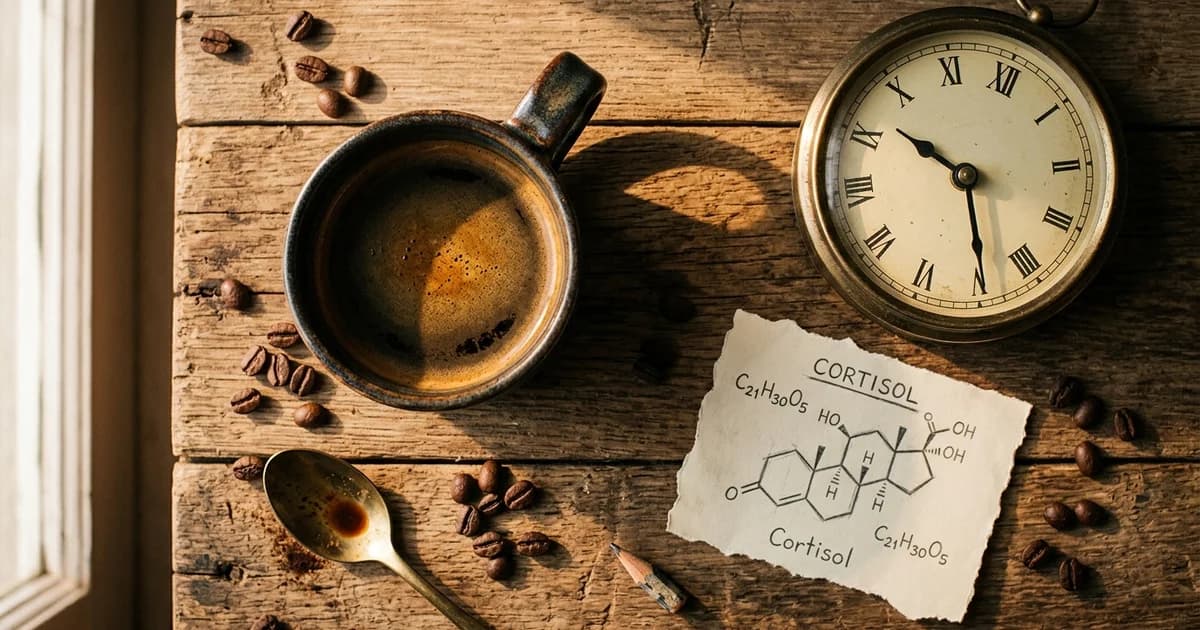
The Best Time to Drink Coffee (and Why the First Hour After Waking Is the Worst)
Most people pour their first cup of coffee on an empty stomach within minutes of opening their eyes. It feels like the right move. You're groggy, the kettle is right there, and caffeine is the closest thing to an off switch for morning fog.
The timing is working against you. Your body is already flooded with its own wake-up chemistry the moment you stir, and adding coffee on top of it does less than you think. Worse, it can set up the exact afternoon crash you're trying to avoid.
This piece breaks down when caffeine actually pays off, why the first hour after waking is the weakest window of your day, and whether drinking coffee on an empty stomach is the problem people claim it is.
Key Takeaways
- Your cortisol peaks naturally in the first 30 to 45 minutes after waking, so early coffee gets buried under your own alertness signal.
- The sweet spot for most people is mid to late morning, roughly 9:30 to 11:30 a.m., when cortisol starts to dip.
- Coffee on an empty stomach is unlikely to damage your gut, but it can spike stress hormones and trigger reflux in sensitive people.
- Caffeine has a 5 to 6 hour half-life, so an afternoon cup quietly steals sleep hours after you taste it.
Why the First Hour After Waking Is the Worst
Your body has its own caffeine, and it clocks in before you do. It's called cortisol, and it runs on a daily rhythm that peaks early in the morning.
According to the Cleveland Clinic, cortisol, a stress hormone, is highest in our body right as we wake up. That morning surge is part of your cortisol awakening response, the built-in signal that pulls you out of sleep and sharpens you for the day.
Here's the catch. When you drink coffee during that peak, you're stacking caffeine on top of an alertness system that's already running at full output. You get diminishing returns from the cup, and you may train your body to lean on caffeine for a job it was already doing for free.
The fix is timing, not abstinence. The principle points to waiting about 90 to 120 minutes after waking, because your body's cortisol awakening response peaks naturally within roughly 30 to 45 minutes of waking, making early coffee less effective. Delay the first cup, and the caffeine lands when your natural alertness is fading instead of when it's already maxed out.
The Best Time to Drink Coffee, According to Cortisol
The best time to drink coffee is mid to late morning, after your cortisol peak has passed. That's the window where caffeine does the most work for the least cost.
Cleveland Clinic dietitians put a clock on it. A mid- to late-morning cup between 9:30 a.m. and 11 a.m. may help you reap the most coffee benefits, because that's when cortisol levels start to dip. A separate report on the same guidance notes that drinking coffee from 9:30 to 11:30 a.m. can give you a boost to get through the mid-morning slump.
Worth being honest here. There's no hard scientific proof of a single universal "best time" to drink coffee. Your schedule, your sleep, and your caffeine sensitivity all move the target.
But the principle holds for nearly everyone. Drink when your own energy is dropping, not when it's already high. If you wake at 6:30 a.m., that points to a first cup somewhere around 8:30 to 9:30 a.m.
A simple rule for when to drink coffee
If you want one line to remember: wait 90 minutes after waking, then drink. That single habit shifts your caffeine from redundant to useful, and it tends to soften the afternoon dip that sends people back for cup number three.
Is It Bad to Drink Coffee on an Empty Stomach?
For most healthy people, drinking coffee on an empty stomach is not the gut disaster the internet makes it out to be. The bigger issues are stress hormones and reflux, and both depend heavily on the person.
Start with digestion. The fear is that coffee's acidity damages your stomach lining or wrecks your gut. The evidence for harm in healthy people is thin, and a strong stomach acid response to coffee happens whether or not there's food in your system.
Now the part that holds up better. A common argument is that drinking coffee on an empty stomach may increase levels of the stress hormone cortisol, which your adrenal glands produce to help regulate metabolism, blood pressure, and blood sugar levels. Caffeine on top of an already-elevated morning cortisol can push that signal higher than you want.
Reflux is the other real concern. If you're prone to heartburn or acid reflux, an empty-stomach cup can make symptoms worse, since there's no food to buffer the acid. For those people, eating first is a genuine fix, not a wellness myth.
So is it bad to drink coffee on an empty stomach? For a healthy person, mostly no. For someone with a sensitive gut, reflux, or a stress-driven morning, eating a little something first is the smarter call.
Who should pay attention
- People with acid reflux, GERD, or a history of heartburn.
- Anyone who feels shaky, anxious, or wired after morning coffee.
- People already running high stress, where extra cortisol is the last thing they need.
The Afternoon Trap: Caffeine's Long Tail
Caffeine sticks around far longer than its buzz suggests. That 2 p.m. pick-me-up is still in your system at bedtime.
The number that matters is half-life. Caffeine has a half-life of about 5 hours in the average adult, which means half of what you consume remains in your system that long, and a quarter can still be present after 10 to 12 hours. A 200 mg afternoon coffee can leave 50 mg circulating when you're trying to fall asleep.
This is why sleep researchers draw a hard line in the early afternoon. In one controlled study, caffeine taken even 6 hours before bed measurably cut total sleep time, so clinicians generally recommend cutting off caffeine at least 8 to 10 hours before bedtime, which for most people means no caffeine after 2 p.m., and earlier if you're especially sensitive.
The mechanism is adenosine. Throughout the day, this molecule builds up and creates sleep pressure, the growing urge to rest. Adenosine accumulates during wakefulness to make us ready for sleep, and caffeine works by blocking adenosine receptors in the brain. Block adenosine too late and you blunt the very signal that should be putting you to bed.
Comparing Your Morning Caffeine Options
Coffee is not the only way to get caffeine, and the delivery method changes how the dose hits you. Here's an honest comparison of common morning options, including where a sublingual pouch fits.
| Option | Typical caffeine | Onset | Empty-stomach friendly? | Crash risk |
|---|---|---|---|---|
| Drip coffee | 80 to 120 mg per cup | 30 to 45 min | Moderate (acid, reflux risk) | Moderate to high |
| Espresso | 60 to 80 mg per shot | 20 to 40 min | Moderate (acidic) | Moderate |
| Energy drink | 80 to 200 mg | 30 to 60 min | Low (sugar spike, acid) | High |
| Green tea | 30 to 50 mg | 30 to 45 min | Higher (gentler, has L-theanine) | Low |
| Roon sublingual pouch | 80 mg + 60 mg L-theanine | 5 to 10 min | Higher (no sugar, no acid load) | Low (L-theanine smoothed) |
The point isn't that coffee is bad. It's that some formats spike you fast and drop you hard, while others pair caffeine with compounds that flatten the curve. Green tea does this naturally with L-theanine, the amino acid that takes the edge off caffeine's jittery side.
If you want the science on pairing those two, our breakdown of how L-theanine and caffeine work together for clean focus covers why the combination outperforms caffeine alone.
How to Fix Your Coffee Timing in One Week
You don't need to quit coffee. You need to move it. Small shifts in when you drink change how the whole day feels.
- Push your first cup back 90 minutes. Drink water and eat something light when you wake up instead.
- Eat before or with your coffee if you get shaky, anxious, or reflux-prone on an empty stomach.
- Set a hard caffeine curfew at least 8 hours before bed. For a 10:30 p.m. bedtime, that's roughly 2 p.m.
- Cap the total dose. Most people do well staying under 400 mg of caffeine a day, spread out rather than slammed at once.
- Watch the crash, not just the buzz. If you're reaching for a third cup at 3 p.m., your morning timing is the real culprit.
For a deeper look at avoiding the dreaded slump, see our guide on how to beat the afternoon energy crash.
The Takeaway on Coffee Timing
Coffee works best when it fills a gap your body actually has, not when it doubles up on a peak you're already riding. The first hour after waking is the weakest window because your natural cortisol is doing the job for you, and stacking caffeine on top mostly wastes the dose.
Wait 90 minutes. Eat first if your stomach or stress levels demand it. Cut yourself off in the early afternoon so caffeine doesn't follow you into bed. Those three habits do more for your energy than any single brand of beans ever will.
The hardest part is breaking the reflex to drink the moment you wake up. Once you move that cup, the afternoon crash tends to fade on its own.
Frequently Asked Questions
Is it bad to drink coffee on an empty stomach?
For most healthy people, no. The claim that it damages your gut lining isn't well supported. The real concerns are a possible bump in the stress hormone cortisol and worse symptoms for anyone with reflux or heartburn. If coffee leaves you shaky or your stomach churns, eat something small first. For everyone else, an empty-stomach cup is unlikely to cause harm.
When is the actual best time to drink coffee?
Mid to late morning, after your cortisol peak fades. Cleveland Clinic dietitians point to roughly 9:30 to 11:30 a.m. for most people. A practical rule is to wait about 90 minutes after waking. That way caffeine lands when your natural alertness is dropping, instead of when your body is already wide awake on its own.
Why does coffee feel weaker right after I wake up?
Because your body already produced its own wake-up chemistry. Cortisol peaks within 30 to 45 minutes of waking, so adding caffeine during that surge gives you little extra alertness. It's like turning up a radio that's already at full volume. Delay the cup, and the same dose feels noticeably stronger.
How late is too late for caffeine?
Caffeine has a 5 to 6 hour half-life, and a quarter of it can linger 10 to 12 hours after you drink it. Sleep clinicians generally suggest stopping 8 to 10 hours before bed, which means no caffeine after about 2 p.m. for most people. If you're caffeine-sensitive or sleep poorly, push that curfew earlier.
Does eating before coffee actually help?
It helps specific people. Food buffers stomach acid, which can ease reflux and heartburn triggered by an empty-stomach cup. It can also blunt the cortisol and jitter response in those who feel anxious after morning coffee. If you tolerate black coffee fine on an empty stomach, you don't need to force a meal first.
How much caffeine is safe in a day?
Most health authorities consider up to 400 mg per day safe for healthy adults, which is roughly three to four cups of coffee. Spreading it out beats slamming it all at once, and your tolerance, sleep, and anxiety levels should guide where your personal ceiling sits.
Can I just switch to a lower-jitter caffeine source?
Yes. Pairing caffeine with L-theanine, the amino acid found in green tea, tends to smooth out the spike and reduce jitters. Green tea does this naturally, and some sublingual pouches are formulated around the same combination for a steadier curve without the sugar or acid of coffee and energy drinks.
The Cleaner Caffeine for People Cutting Back on Coffee
If you've read this far, the pattern is clear: the problem usually isn't caffeine, it's how and when you take it. Coffee on an empty stomach, a sugary energy drink, a dose that's still in your blood at midnight. Those are timing and format problems.
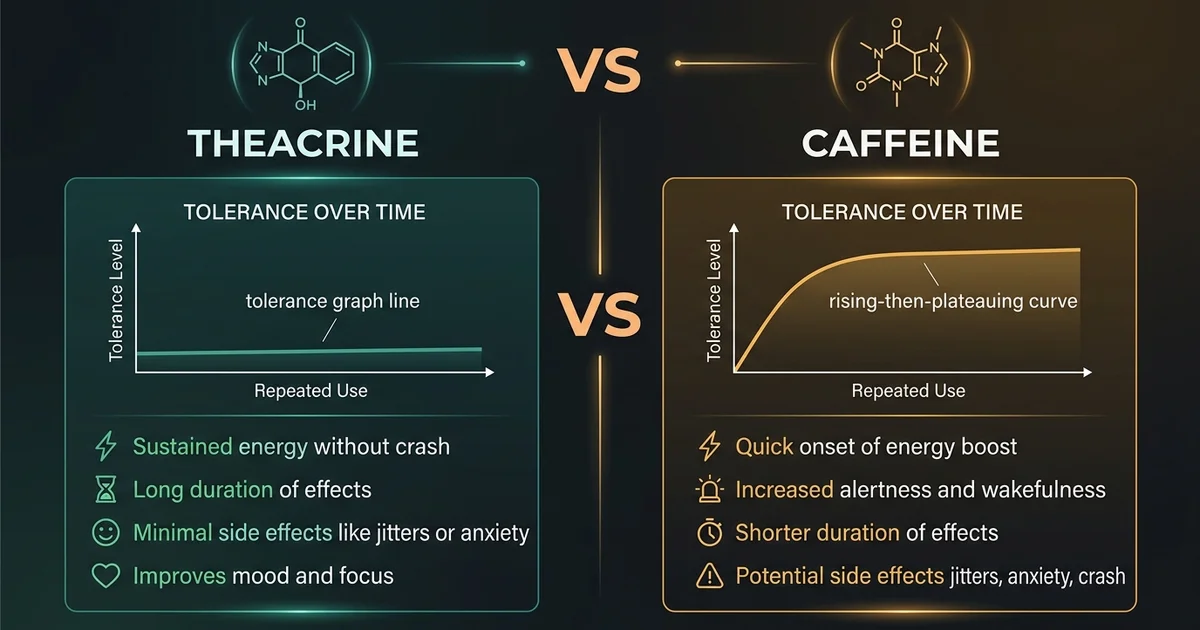
That's the gap Roon was built for. It's a sublingual pouch with a four-ingredient stack, 80 mg caffeine, 60 mg L-theanine, 25 mg methylliberine (Dynamine), and 5 mg theacrine (TeaCrine), that absorbs in 5 to 10 minutes and is designed for 6 to 8 hours of steady focus with no sugar, no acid load, and no hard crash. The L-theanine is there specifically to take the jittery edge off the caffeine.
To be straight with you, Roon contains caffeine. It is not a caffeine-free product, and it won't fix bad sleep or replace eating breakfast. What it does is give you a cleaner, faster, no-sugar way to dose caffeine on your own schedule. If you're trying to cut coffee or energy drinks without losing the focus, try Roon as your daytime swap.
Written by Roon Team