Gamers Are Quitting Nicotine Pouches: The Nicotine-Free Pouch They Use to Stay Locked In
Roon Team
Gamers Are Quitting Nicotine Pouches: The Nicotine-Free Pouch They Use to Stay Locked In
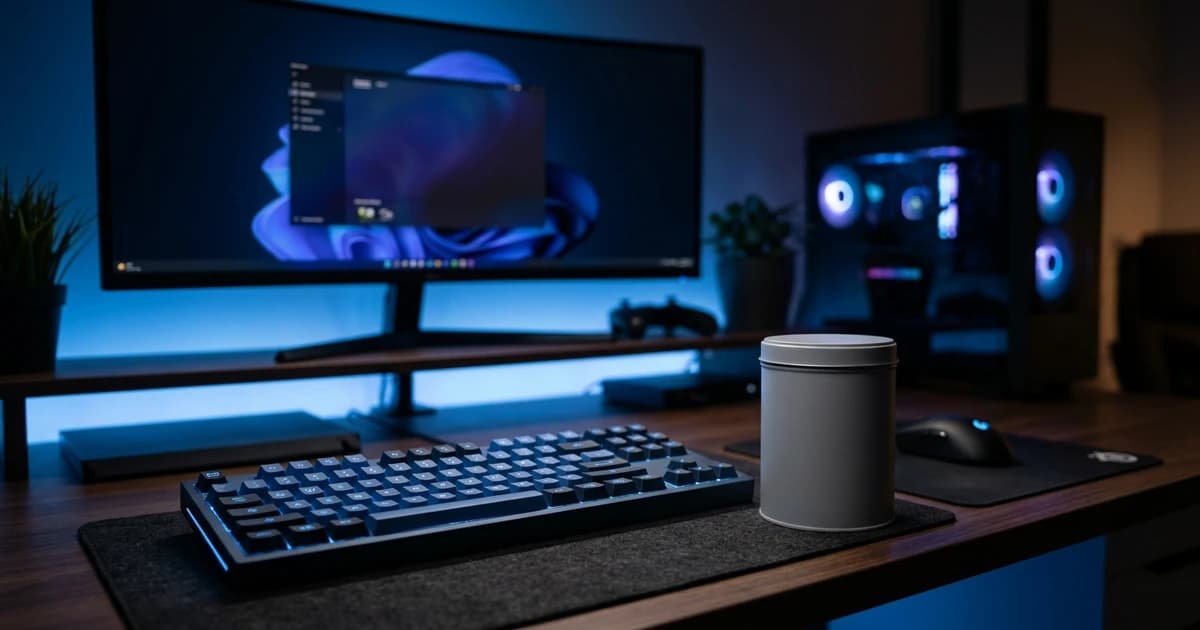
Walk into any ranked lobby, watch any Twitch stream, and you'll spot the little white tin tucked next to the keyboard. For a few years, nicotine pouches became the unofficial stimulant of competitive gaming. Now a growing number of players are putting them down and reaching for focus pouches with no nicotine instead.
The reason is simple. The thing that made nicotine feel like a performance edge is the same thing that turns it into a leash. You start using it to play better. You end up using it to feel normal.
This guide breaks down why gamers are switching, what actually drives focus in a pouch, and how to pick a nicotine-free option that holds up through a six-hour session.
Key Takeaways
- Nicotine pouch use among youth and young adults nearly quadrupled between 2022 and 2025, and gamers are a big part of that curve.
- Nicotine builds tolerance fast, so the dose that sharpened your aim last month barely registers today.
- The best nicotine free pouches swap nicotine for a stack built on caffeine and L-theanine, which has real evidence behind it for focus.
- A pouch can preserve the ritual without the dependency, but it is a performance supplement, not a quit-smoking treatment.
Why Gamers Picked Up Pouches in the First Place
Pouches solved a real problem for players. You can run one through an entire match without your hands leaving the keys, without smoke, and without anyone in the room knowing.
The gaming press leaned into this hard. One write-up claimed nicotine pouches act as stimulants and give gamers a boost in cognition, and can improve hand-eye coordination to give you better control over the game. The discretion mattered too, since pouches gave players a tobacco-free format they could use mid-session.
So the appeal was never random. Long sessions punish fading attention, and nicotine delivers a quick, sharp lift. The problem is what happens after the lift.
The Catch Nobody Streams About
Nicotine is a tolerance machine. Your brain adapts to a steady supply by dialing down its own receptors, so you need more product to reach the same effect you felt a week ago.
That creates a quiet spiral. The pouch stops being a boost and becomes maintenance. Miss your usual cadence and your focus dips below baseline, which is the opposite of what you wanted from a performance aid.
The trend data shows how fast this is spreading. According to the CDC Foundation, nicotine pouch use among youth and young adults has surged in recent years, nearly quadrupling between 2022 and 2025. The same brief reported that nearly two in five youth and young adults under 21 who use nicotine pouches show patterns the researchers flagged as concerning.
There's an oral health cost too. Parking a pouch against the same patch of gum for hours, every day, is a known irritant, and dentists have linked heavy use to gum recession over time.
None of this requires fear-mongering. The point is narrower. A tool that makes you dependent on it to perform is a bad deal for anyone who plays to win.
What Actually Drives Focus in a Pouch
Here's the part the nicotine debate misses: nicotine was never the only molecule that sharpens attention. It was just the one that came packaged in a pouch.
The most studied combination for clean focus is caffeine plus L-theanine. In a randomized trial published on PubMed, researchers found that a combination of L-theanine and caffeine improved accuracy during task switching and self-reported alertness, and the results suggest the pairing helps to focus attention during a demanding cognitive task. Task switching is most of what fast games demand: track the minimap, check cooldowns, reposition, fire.
Caffeine provides the drive. L-theanine smooths the edges, taking the jitter and tunnel-vision out of a caffeine hit so you stay sharp instead of wired.
Two newer ingredients round out the better stacks. Methylliberine (Dynamine) and theacrine (TeaCrine) are caffeine relatives that support energy and focus, and researchers have specifically tested them on players. A study posted on bioRxiv examined the effects of TeaCrine, Dynamine, and caffeine on gamer psychomotor performance in a first-person shooter scenario, the exact context that matters to this audience.
The takeaway is that you can rebuild the focus effect of a pouch without nicotine in it at all. That's the whole premise behind nicotine free focus pouches.
How to Choose the Best Nicotine Free Pouches
Lead with the formula, not the marketing. A pouch that only contains caffeine is just a slow energy drink in your lip. The ones worth using pair a stimulant with something that controls the comedown.
Use this checklist when you compare options:
- Real active doses. Look for a labeled caffeine amount in the 75 to 100 mg range, not a vague "energy blend."
- L-theanine included. This is the ingredient that keeps the focus calm instead of frantic.
- Sublingual delivery. Absorption through the cheek and gum is faster than swallowing a capsule, which is why a pouch can hit in minutes.
- No nicotine, no sugar crash. The point is to drop the dependency, not trade it for a sugar spike.
- A duration that matches your session. A two-hour pick-me-up is useless for a ranked grind that runs all evening.
Nicotine-Free Focus and Energy Pouches Compared
Here's how the main categories of energy pouches with no nicotine stack up against a standard nicotine pouch and a basic caffeine-only option.
| Option | Nicotine | Active stack | Onset | Focus window | Tolerance risk |
|---|---|---|---|---|---|
| Roon | None | 80 mg caffeine, 60 mg L-theanine, 25 mg Dynamine, 5 mg TeaCrine | 5–10 min | 6–8 hrs | Low |
| Standard nicotine pouch | 3–6 mg | Nicotine only | 2–5 min | 30–60 min | High |
| Caffeine-only energy pouch | None | Caffeine only | 10–15 min | 2–3 hrs | Moderate |
| Energy drink | None | Caffeine + sugar | 20–30 min | 1–2 hrs, then dip | Moderate |
| Plain coffee | None | Caffeine | 20–45 min | 2–4 hrs | Moderate |
The pattern is clear. Nicotine wins on raw speed and loses on everything that matters for a long night: duration, tolerance, and the crash on the back end.
The Switch Is Easier Than Quitting Cold
Most players don't actually miss the nicotine. They miss the ritual.
The act of seating a pouch before a match is a cue your brain reads as "time to lock in." Strip away the pouch entirely and you lose that trigger, which is why going cold turkey feels harder than it should. Keeping the format while changing the contents is the move.
That's the logic behind switching to a nicotine-free pouch instead of just stopping. You keep the muscle memory and the pre-game routine. You drop the receptor downregulation, the rising tolerance, and the gum irritation.
If you want a deeper look at the underlying science, our guides on how caffeine and L-theanine work together for focus and breaking the nicotine pouch habit go further than this overview can.
Conclusion
Nicotine gave gamers a fast lift and a slow trap. It works for the first match and quietly raises the price of every match after that, because tolerance climbs while the benefit shrinks.
The focus effect was never the problem. The dependency was. Caffeine paired with L-theanine, supported by methylliberine and theacrine, can deliver clean, sustained attention without putting you on a chemical schedule you didn't sign up for.
For competitive players, that math is hard to argue with. You can keep the pouch, keep the ritual, and keep your edge, without owing anything to a receptor that keeps asking for more.
Frequently Asked Questions
Are nicotine-free focus pouches as effective as nicotine pouches?
For sustained focus, often more so. Nicotine hits faster but fades within an hour and builds tolerance quickly. A well-formulated nicotine free pouch built on caffeine and L-theanine delivers attention support that holds for hours, and the research on that pairing shows improved task-switching accuracy and alertness during demanding cognitive work.
Will I get withdrawal switching from nicotine pouches to nicotine-free ones?
If you currently use nicotine, your body may still go through nicotine withdrawal, since a nicotine-free pouch contains no nicotine to taper. What it does preserve is the ritual and the oral cue, which is often the hardest part of stopping. These pouches are a performance supplement, not a medical quit aid, so talk to a clinician if you want a structured cessation plan.
Do nicotine-free pouches cause jitters or a crash?
A caffeine-only product can. The fix is L-theanine, which research pairs with caffeine specifically because it smooths out the jittery edge and tunnel vision. A balanced stack aims for steady focus that tapers gently instead of dropping you off a cliff mid-session.
How fast do nicotine-free focus pouches work?
Sublingual pouches absorb through the tissue in your mouth, so they act faster than a swallowed pill or capsule. Many are designed to come on within 5 to 10 minutes, which is quick enough to use right before a match rather than 45 minutes ahead like a cup of coffee.
Are energy pouches with no nicotine safe to use daily?
The main variable is total caffeine. Most adults tolerate moderate daily caffeine well, but stacking a pouch on top of coffee, pre-workout, and energy drinks adds up. Track your total intake, skip late-night doses if you want to sleep, and treat the pouch as one source among several rather than a free pass.
Why are gamers specifically switching away from nicotine?
Because the downside lands exactly where gamers feel it. Tolerance means the focus boost shrinks over weeks, dependency means your baseline focus drops without it, and long sessions of parking a pouch against the gums cause irritation. Removing the nicotine keeps the upside and deletes the trap.
The Pouch That Keeps Your Ritual, Not Your Dependency
If you came here because the tin next to your keyboard stopped feeling like an advantage, that's the exact gap Roon was built to fill. It is a zero-nicotine sublingual pouch carrying 80 mg caffeine, 60 mg L-theanine, 25 mg methylliberine (Dynamine), and 5 mg theacrine (TeaCrine). The format is the same one you already trust. The contents are not.
That stack is tuned for what a long session actually needs: a 5 to 10 minute onset, a 6 to 8 hour focus window, and no jitters, crash, or rising tolerance to chase. You keep the pre-match ritual and lose the receptor math.
Be clear about what it is, though. Roon is a cognitive performance supplement, not a nicotine-replacement therapy or a medical quit-smoking aid. If you're trying to stop nicotine for health reasons, loop in a clinician. If you just want to stay locked in without owing anything to nicotine, try Roon for your next session and see how the back half of the night feels.
Written by Roon Team